

We’re here to help.
Our friendly team is available to help Monday to Friday 9:00am – 5:00pm.
If you need urgent assistance, do not use this service. Call 111, or in an emergency call 999.
Our friendly team is available to help Monday to Friday 9:00am – 5:00pm.
If you need urgent assistance, do not use this service. Call 111, or in an emergency call 999.

Fast, discreet delivery
Free delivery over £40
100% UK-based pharmacy
All doctors & pharmacists UK-based
Free advice & support
Clinical support free · Mon–Fri 9am–5pm
Why Patients Choose Access Doctor
10+
Years serving UK patients
—
Verified patient reviews
1,000+
Licensed treatments
24/7
Consultation available
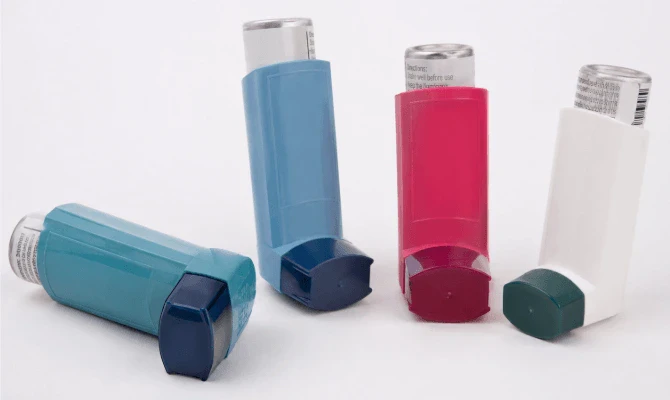
Ventolin Evohaler is a prescription-only reliever inhaler containing salbutamol, a fast-acting bronchodilator used to relieve sudden asthma symptoms such as wheezing, breathlessness and chest tightness. It's also used to relieve breathlessness caused by COPD, and can be taken 10–15 minutes before exercise to help prevent exercise-induced symptoms.
Order before 3pm — same-day dispatch (MON - FRI)
~5 min consultation
Secure & confidential · Reviewed by a UK prescriber
How it works: Salbutamol relaxes the muscles around the airways, allowing them to open within 2–5 minutes of use. Relief typically lasts around 4–6 hours. Unlike preventer inhalers, Ventolin doesn't treat the underlying inflammation that causes asthma — it's designed to ease symptoms once they've started.
Dosage: The usual dose is 1–2 puffs when symptoms occur, up to four times in 24 hours. If you find yourself needing it more than twice a week, this is generally a sign your asthma isn't fully under control, and it's worth discussing a preventer inhaler with your prescriber.
How Ventolin compares to alternatives: Ventolin and Salamol both contain the same active ingredient, salbutamol, at the same dose, and are considered bioequivalent — meaning they work identically. The main difference is the inhaler device and brand rather than the medicine itself, so switching between them isn't a clinical concern.
A pharmacist's tip: Using a spacer device with your inhaler can significantly improve how much medicine actually reaches your lungs, particularly if you find it tricky to time pressing the canister with breathing in. This is especially helpful for children or anyone who's found technique tricky in the past.
Ventolin is available following a short online consultation. One of our GPhC-registered pharmacist prescribers reviews your answers to check it's safe and suitable for you before it's dispensed. Once approved, your inhaler is dispatched with discreet, next-day delivery available across the UK. Read our guide on ordering asthma inhalers online For a full clinical overview of how salbutamol works, dosage and side effects, read our Ventolin inhaler guide.
Ventolin is the brand name for an inhaler containing salbutamol — It belongs to a group of medicines called short-acting beta-2 agonists, or SABAs, and it's almost always packaged in the familiar blue inhaler. Its job is to provide quick relief from asthma symptoms such as wheeze, breathlessness, chest tightness, and cough, and it's also used in chronic obstructive pulmonary disease (COPD) and to prevent exercise-induced bronchospasm. It's a reliever, not a preventer — which is an important distinction we'll come back to.
The airways in your lungs are wrapped in a thin layer of smooth muscle. During an asthma flare, that muscle tightens and the airways narrow, which is what produces the wheeze and the feeling of not being able to get enough air in. Salbutamol attaches to a receptor on those muscle cells and tells them to relax, opening the airways back up so air can move freely again. You can think of it as undoing a squeeze around a straw — once the squeeze releases, breathing through the straw becomes easy again. It starts working within about two to five minutes and the effect typically lasts for four to six hours.
This is one of the most important things to understand about asthma. A preventer inhaler — usually brown, purple, or orange, and most often containing an inhaled corticosteroid — works slowly and quietly in the background to reduce inflammation in the airways. It needs to be taken every day, even when you feel completely well, because its job is to stop attacks happening in the first place. Ventolin does nothing to treat that underlying inflammation; it only relieves the symptoms once they're already happening. Relying on Ventolin alone is a bit like using painkillers for a tooth abscess without ever seeing a dentist — you may feel better in the moment, but the underlying problem keeps getting worse.
Good technique matters enormously, because poor technique is one of the most common reasons inhalers seem not to work. Shake the inhaler well, breathe out fully away from the mouthpiece, then place the mouthpiece between your teeth and seal your lips around it. As you start to breathe in slowly and steadily, press down on the canister once, and keep breathing in until your lungs feel full. Hold your breath for around ten seconds (or as long as is comfortable), then breathe out gently. If you need a second puff, wait around 30 to 60 seconds before repeating. Asking your pharmacist or asthma nurse to watch your technique is one of the most useful five minutes you can spend, because small adjustments make a real difference to how much medicine actually reaches your lungs.
For most people, yes — and especially for children, anyone who finds coordination tricky, and during a flare-up. A spacer is a plastic chamber that sits between the inhaler and your mouth. It holds the dose as a fine cloud, which lets you breathe it in over several normal breaths instead of having to time everything perfectly in a single inhale. Spacers significantly increase the proportion of medicine that reaches the small airways, reduce the amount that lands on the back of the throat, and lower the risk of side effects such as hoarseness or oral thrush (a particular issue with steroid inhalers, but worth getting into the habit with both). For a young child, a spacer with a soft face mask is essential rather than optional.
The usual instruction is one to two puffs as needed for symptoms, with up to four puffs every four hours during a mild flare. In an asthma attack, the emergency dose can be much higher — typically up to ten puffs through a spacer, with a 999 call if symptoms don't quickly improve. The more important number to keep in your head, though, is how often you're reaching for it overall. UK and international guidelines now consider regular use of more than twice a week — or getting through more than one or two reliever inhalers a year — as a sign that your asthma isn't well controlled and that your treatment plan needs review.
This is genuinely important, and it's a message that has changed in recent years. Increasing reliever use almost always means the underlying inflammation in the airways is getting worse. Studies looking at people who have died from asthma have repeatedly shown that high reliever use, often without enough preventer treatment, was a feature in the months beforehand. Modern guidance from NICE, the British Thoracic Society and the Scottish Intercollegiate Guidelines Network now strongly favours combination inhalers — where a preventer and a reliever are delivered together every time you puff — over treating with a SABA like Ventolin alone. If you're noticing your blue inhaler running out faster than it used to, please book a review rather than just ordering another one.
Most people tolerate Ventolin well, particularly at standard doses. The most commonly reported effects are a fine tremor (typically in the hands), a faster or pounding heartbeat, headache, and occasional muscle cramps. These usually settle quickly, ease at lower doses, and often improve when a spacer is introduced because less medicine is absorbed systemically. At very high doses — for example during a hospital admission with nebulisers — salbutamol can cause low potassium levels, which is why blood tests are checked in that setting.
Some signs mean you should treat the situation as an asthma attack and act quickly. If your reliever isn't lasting four hours, if you're too breathless to speak in full sentences, eat, or sleep, if your peak flow has dropped below half your best, or if you feel that your symptoms are unusually severe, follow your personal asthma action plan if you have one — usually meaning up to ten puffs of Ventolin through a spacer — and call 999 if there's no clear improvement within ten minutes, or sooner if you're worsening. Asthma can deteriorate rapidly, and people sometimes underplay how unwell they are. If your instinct is telling you something isn't right, trust it.
Yes. Salbutamol has been studied extensively in pregnancy and is considered one of the safer asthma medicines to continue. Poorly controlled asthma is genuinely riskier for both mother and baby than the inhaled medicines used to treat it, because the developing baby relies entirely on the oxygen the mother brings in. The same broad reassurance applies to breastfeeding — only tiny amounts of inhaled salbutamol enter breast milk. If you're pregnant or planning to be, it's worth a review of your overall asthma plan, including your preventer, rather than relying more heavily on Ventolin.
There are a few interactions worth knowing about, even though Ventolin is generally well-behaved. Beta-blockers — including some used for blood pressure, heart conditions, migraine prevention (such as propranolol), and even some eye drops for glaucoma — can blunt the effect of salbutamol and, in some cases, trigger asthma symptoms in their own right. Taking Ventolin alongside high doses of other stimulant-type medicines, certain water tablets, or some antidepressants can amplify side effects like tremor or palpitations. It's always worth telling any prescriber that you have asthma so they can choose the safest option for you.
Keep it at room temperature, out of direct sunlight and away from heat. Don't pierce or burn the canister even when empty, because the propellant remains under pressure. Most modern Ventolin inhalers have a built-in dose counter on the back of the canister, which is by far the most reliable way of telling how many doses are left — feeling the weight, shaking it, or floating it in water are all unreliable. Replace your inhaler before it runs out, ideally well in advance, so you're never caught short during a flare.
Yes. Ventolin is a brand name; salbutamol is the active ingredient. You may also be prescribed a generic salbutamol inhaler (often labelled Salamol or Airomir in the UK). The dose, the way it works, and how to use it are essentially the same across these versions, although small differences in canister design and propellant can affect the way the spray feels when you breathe it in.
Yes, Ventolin is a prescription-only medicine. It can be supplied following a short online consultation with one of our prescribers, who will check it's safe and appropriate for you before it's dispensed.
Both contain the same active ingredient, salbutamol, at the same dose, and work identically. The difference is simply the brand and inhaler device — there's no clinical reason to prefer one over the other.
Helpful articles and clinical guides related to this treatment category.
Free consultation
Online review by a UK prescriber
Next-day delivery
Order before 3pm where offered
Discreet packaging
Plain outer packaging