


Using Avamys Nasal Spray for Hay Fever: Fluticasone Furoate Guide
When to start Avamys for pollen season, how to use it, and how to combine it with other hay fever treatments.
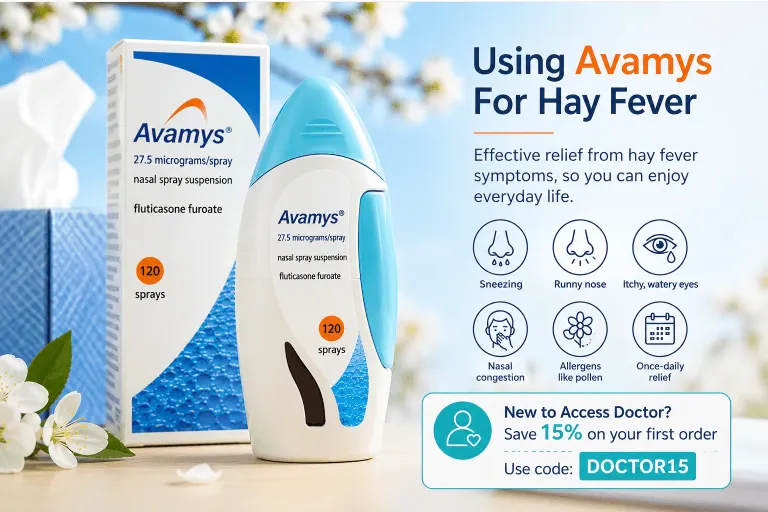
Part of the Access Doctor Allergy & Hay Fever guide.
Key fact: Avamys nasal spray (fluticasone furoate 27.5mcg) is a prescription-only intranasal corticosteroid considered one of the most effective treatments for hay fever in the UK. Unlike antihistamines which primarily address sneezing and itching, Avamys treats the underlying nasal inflammation that causes all hay fever nasal symptoms — making it the first-line recommendation for persistent or moderate-to-severe hay fever according to NICE guidelines.
This guide focuses on using Avamys for seasonal hay fever — when to start, how long to use it, and how to combine it with other treatments. For the full drug reference, including complete dosage, side effects, safety and brand comparisons, see our Avamys Nasal Spray: Complete UK Patient Guide.
Get Avamys Prescribed Online
Access Doctor provides Avamys following a GPhC-regulated online consultation. Prescription issued by pharmacist independent prescribers.
Order Avamys →What Is Avamys? Fluticasone Furoate Explained
Avamys contains fluticasone furoate — a second-generation intranasal corticosteroid with high receptor binding selectivity and very low systemic bioavailability (less than 1% of the dose is absorbed into the bloodstream). This means it delivers powerful anti-inflammatory action directly in the nasal passages with minimal risk of systemic side effects.
Hay fever occurs when pollen particles come into contact with the nasal lining in a sensitised individual. The immune system releases histamine and other inflammatory chemicals, producing nasal inflammation. Tree pollen triggers symptoms from late March to May, grass pollen (the most common trigger) from mid-May to July, and weed pollen from late June to September.
For a full overview of all hay fever treatment options, see our Hay Fever Treatment Guide.
How Avamys Works for Hay Fever
Corticosteroids work by suppressing the inflammatory response in the nasal mucosa — reducing the release of histamine, prostaglandins and other mediators that produce hay fever symptoms. Unlike antihistamines, which only block the effects of histamine after it is released, Avamys works upstream by preventing the inflammatory cascade from occurring in the first place.
Because Avamys treats the root inflammation rather than individual symptoms, it is effective across all nasal symptoms of hay fever — congestion, runny nose, sneezing and nasal itching — whereas antihistamines alone are less effective for nasal congestion.
When to Start Avamys for Hay Fever
Timing is the single biggest factor in how well Avamys controls your hay fever. Because its anti-inflammatory effect builds up over several days, it works best when started 1–2 weeks before your personal pollen season begins — so protection is already in place when pollen counts rise. Use the UK pollen calendar below to plan your start date.
| Pollen type | Typical UK season | Notes |
|---|---|---|
| Tree pollen | Late March – May | Birch, oak and plane are common triggers |
| Grass pollen | Mid-May – July | The most common hay fever trigger in the UK |
| Weed pollen | Late June – September | Includes nettle, dock and mugwort |
Already have symptoms? You can still start Avamys at any point in the season — just begin daily use straight away. It will take a few days to reach full effect, so adding a fast-acting antihistamine in the first week can help bridge the gap.
Dosage Guide
| Patient Group | Starting Dose | Maintenance Dose |
|---|---|---|
| Adults and adolescents 12+ | 2 sprays per nostril once daily (110mcg total) | 1 spray per nostril once daily once controlled |
| Children aged 6–11 | 1 spray per nostril once daily (55mcg total) | Adjust with prescriber guidance |
Always use at the same time each day and at the minimum effective dose. Do not exceed the prescribed dose. For full dosing detail and missed-dose advice, see the complete Avamys guide.
How to Use Avamys: Step-by-Step
Prime the spray
Before first use, or if not used for 30+ days, prime by releasing 6 test sprays away from your face.
Blow your nose gently
Clear nasal passages before application.
Tilt head slightly forward
Do not tilt back — the spray should target the nasal mucosa, not the throat.
Insert the nozzle
Insert gently into one nostril, angling slightly away from the nasal septum.
Spray and breathe in gently
Press the canister down and breathe in gently through the nostril simultaneously.
Breathe out through your mouth
Breathe out through your mouth after spraying, then repeat for the other nostril.
Timing matters: For best results, start using Avamys 1–2 weeks before hay fever season begins or before expected allergen exposure. Using it only during severe symptoms reduces its effectiveness. Regular daily use throughout the season maintains consistent anti-inflammatory protection.
How Long Does Avamys Take to Work?
| Timeframe | Expected Effect |
|---|---|
| 8 hours after first dose | Some initial improvement for some patients |
| 2–3 days | Increasing benefit as the medication builds up in the nasal mucosa |
| 1–2 weeks | Full therapeutic benefit established with regular daily use |
| After stopping | Symptoms return as pollen exposure continues |
Combining Avamys with Other Hay Fever Treatments
Avamys treats the nasal symptoms of hay fever, but many people also have itchy eyes or need faster relief in the first few days. Because it works locally in the nose, Avamys can be safely combined with other hay fever treatments:
- Antihistamine tablets — a non-drowsy option like fexofenadine adds whole-body and eye-symptom cover; drowsier Piriton tablets or Piriton syrup (chlorphenamine) are alternatives
- Decongestant sprays for a very blocked nose — such as Otrivine Allergy Relief or Otrivine Sinus Relief — for a few days only, not long term
For a detailed comparison of using a steroid spray alongside an antihistamine tablet, see our Avamys vs fexofenadine guide.
Side Effects of Avamys Nasal Spray
Avamys is generally well-tolerated. Common side effects (up to 1 in 10 users):
- Nose bleeds (epistaxis) — usually minor and self-limiting
- Headache
- Nasal burning or stinging after application
- Dry or irritated nasal passages
Rare but important: Nasal septum perforation has been reported with intranasal corticosteroids, particularly with prolonged use or improper technique (spraying directly onto the septum). If you experience pain, crusting or persistent bleeding from the nasal septum, stop using Avamys and consult a prescriber.
Children and growth monitoring: In children, intranasal corticosteroids should be used at the lowest effective dose. Regular height monitoring is recommended for children using them long-term, as a small risk of growth slowing exists with prolonged use.
Frequently Asked Questions
When should I start using Avamys for hay fever?
For the best results, start using Avamys about 1 to 2 weeks before your hay fever season begins, so the anti-inflammatory effect is already established when pollen levels rise. Tree pollen season runs from late March to May, grass pollen (the most common trigger) from mid-May to July, and weed pollen from late June to September. If you already have symptoms, you can still start Avamys at any point and use it daily throughout the season.
Should I use Avamys every day during hay fever season?
Yes. Avamys works by controlling background nasal inflammation, so it is most effective when used every day throughout the pollen season — not only on days when symptoms are bad. Using it intermittently significantly reduces how well it controls hay fever. Continue daily use until pollen levels fall at the end of your season.
How quickly does Avamys relieve hay fever symptoms?
Some people notice an improvement in hay fever symptoms within 8 hours of the first spray, but the full benefit builds over several days of regular daily use. This is why it is best started before, or at the very first sign of, hay fever rather than waiting until symptoms are severe.
Can I use Avamys with antihistamine tablets for hay fever?
Yes. Avamys (a steroid nasal spray) and antihistamine tablets such as fexofenadine, cetirizine or loratadine work in different ways and are safe to use together for hay fever. Combining them is a recommended approach when hay fever is moderate to severe, or when you have both nasal symptoms and itchy, watery eyes. A non-drowsy antihistamine is usually preferred for daytime use.
Is Avamys or an antihistamine better for hay fever?
For nasal symptoms such as congestion, runny nose and sneezing, a steroid nasal spray like Avamys is generally more effective than antihistamine tablets, and NICE recommends intranasal corticosteroids as first-line treatment for moderate-to-severe hay fever. Antihistamines are better suited to itching and eye symptoms. Many people with significant hay fever get the best control using both together.
Other Hay Fever Treatments
Avamys treats nasal symptoms of hay fever. For eye symptoms or as an antihistamine alongside your nasal spray, Access Doctor also offers:
Nasal spray · Rx
Flixonase Nasal Spray
Fluticasone propionate 50mcg. Alternative intranasal corticosteroid for hay fever.
View product →Eye drops · Rx
Opatanol Eye Drops
Olopatadine 1mg/ml. For allergic conjunctivitis — itchy, watery hay fever eyes.
View product →Antihistamine · Rx
Fexofenadine
Non-drowsy antihistamine tablet. Often prescribed alongside a nasal corticosteroid spray.
View product →References
- National Institute for Health and Care Excellence (NICE). Allergic rhinitis: Clinical Knowledge Summary. Updated 2023. cks.nice.org.uk/topics/allergic-rhinitis
- NHS. Hay fever — treatment. nhs.uk/conditions/hay-fever/treatment
- Fokkens WJ et al. EPOS 2020: European position paper on rhinosinusitis and nasal polyps. Rhinology. 2020. PubMed: 32077450
- Electronic Medicines Compendium. Avamys 27.5 micrograms/actuation nasal spray: Summary of Product Characteristics. medicines.org.uk/emc/product/5524
Medical disclaimer: This article is for informational purposes only and does not constitute medical advice. Always consult a qualified healthcare professional for diagnosis and treatment. In a medical emergency, call 999.