


Part of our complete guide to periods in the UK.
Norethisterone Side Effects: What to Expect After Period Delay Tablets
A UK clinical guide to norethisterone side effects — common effects such as spotting, breast tenderness, nausea and mood changes, how to manage them, serious warning signs, and what happens when the course ends.
▶ What are the side effects of norethisterone?
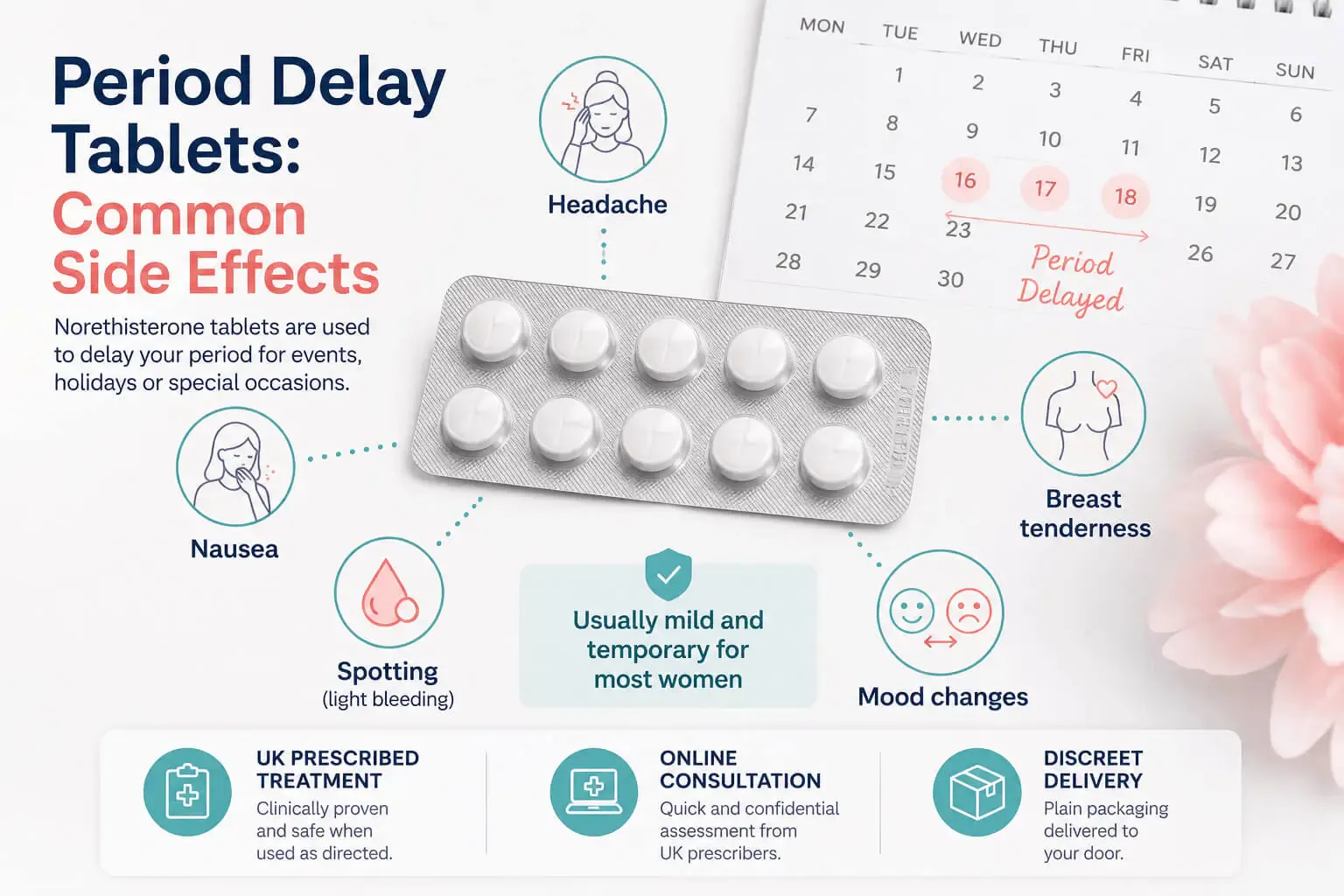
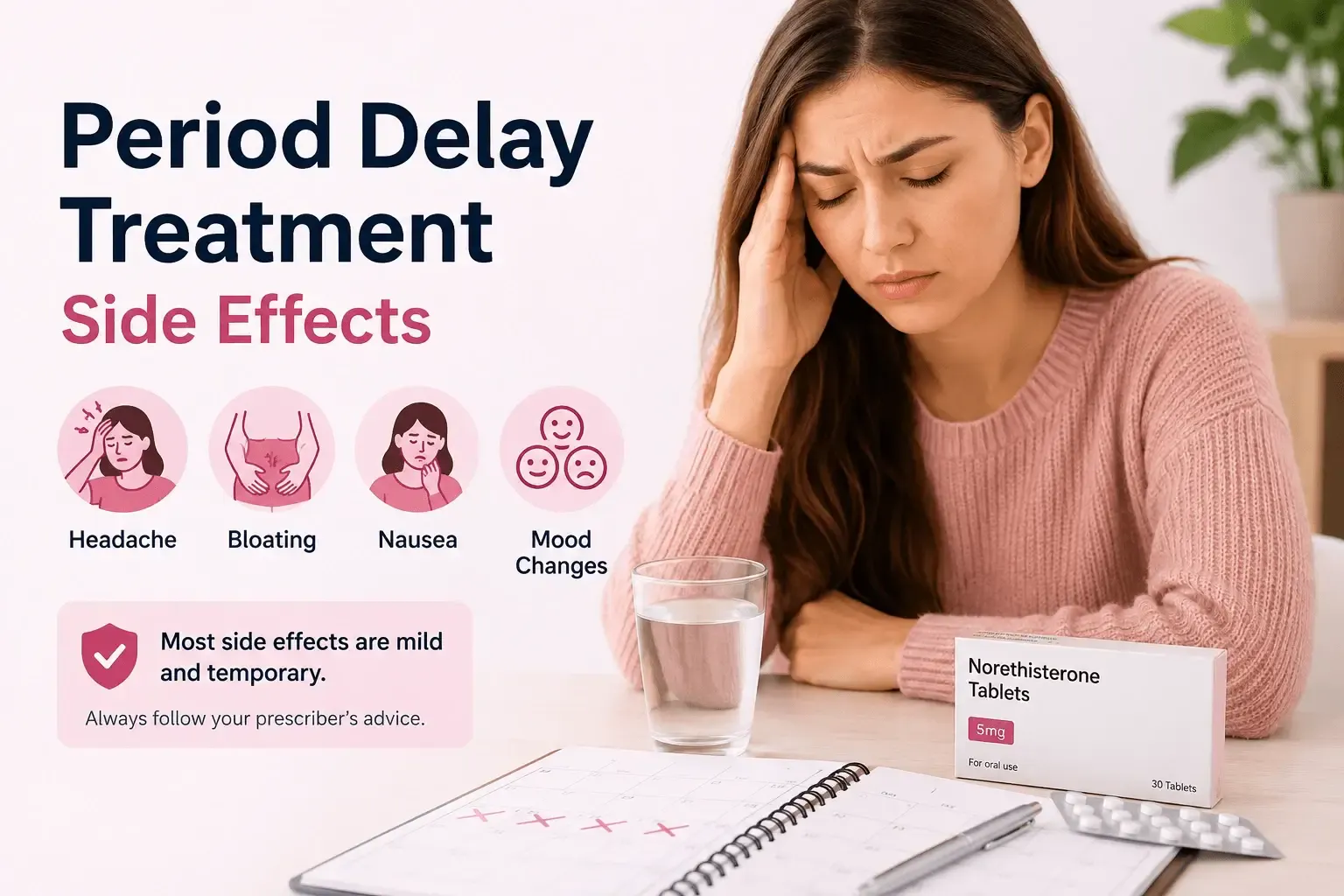
Common norethisterone side effects include breast tenderness, bloating, nausea, headache, mood changes and light spotting (in ~1 in 10 women). Most are mild and resolve after stopping. Seek emergency care for chest pain, breathlessness, sudden severe headache, or severe leg pain — these may indicate a blood clot.
Most women tolerate norethisterone well for the short courses used in period delay. Side effects tend to be mild and temporary — resolving when the course ends. This guide covers each side effect, how common it is, how to manage it, and when to stop and seek medical advice. For dosing and contraindications, see: Norethisterone complete guide.
Get Norethisterone Online
GPhC-registered pharmacist independent prescribers. GPhC pharmacy #9011198. Discreet next-day delivery.
Get Norethisterone →Common Side Effects
| Side effect | How common | Management |
|---|---|---|
| Breast tenderness or swelling | Common | Supportive bra; resolves after stopping |
| Bloating and fluid retention | Common | Mild — resolves after stopping; reduce salt intake |
| Nausea | Common (first few days) | Take with food; usually settles after day 2-3 |
| Headache | Common | Paracetamol; ensure adequate hydration |
| Mood changes (low mood, irritability) | Common | Usually mild; resolves after stopping. Contact prescriber if severe. |
| Light spotting / breakthrough bleeding | Common (~1 in 10) | Continue taking tablets; this is normal. Contact prescriber if heavy. |
| Reduced libido | Uncommon | Temporary; resolves after stopping |
| Skin changes or acne | Uncommon with short-course use | Usually mild; resolves after stopping |
| Diarrhoea or constipation | Uncommon | Usually mild; stay hydrated. Contact prescriber if severe or persistent |
| Night sweats | Uncommon | Mild and temporary; resolves after stopping |
| Sleep disturbance (insomnia) | Uncommon | Usually mild; resolves after stopping |
| Tiredness or fatigue | Uncommon | Usually mild; resolves after stopping |
| Abdominal cramping | Uncommon | Mild; a warm compress and paracetamol may help |
Understanding Spotting and Breakthrough Bleeding
Around 1 in 10 women experience light spotting while taking norethisterone. This is one of the most common concerns — but it does not mean the medication has failed or that your period has started. Light spotting while taking norethisterone is a known side effect, not a treatment failure. Continue taking the tablets at the normal dose and schedule.
When spotting becomes a concern: If bleeding becomes heavy (comparable to a normal period or heavier), contact your prescriber. Heavy bleeding while taking norethisterone warrants clinical review — it may indicate that the dose is insufficient or that something else needs investigation.
Weight Gain and Bloating
True weight gain from a short course of norethisterone (10-14 days for period delay) is uncommon. What most women experience is mild fluid retention and bloating — a sensation of fullness or heaviness — which is progesterone-related and resolves within days of stopping. Avoiding excess salt and staying well hydrated helps manage bloating during the course.
Mood Changes
Low mood, irritability, or mild anxiety affect some women taking norethisterone. This is a recognised progestogen effect and is usually mild and short-lived. If you have a history of depression or anxiety, mention this during your consultation — your prescriber will weigh this up when deciding whether to prescribe. If mood changes feel significant while taking norethisterone, contact your prescriber rather than stopping abruptly.
For women using longer-term hormonal treatments such as Evorel patches or Kliofem HRT, mood changes can sometimes be part of the broader hormonal picture. This is different from the short-lived progestogen effect seen with norethisterone used for period delay.
How Long Will I Bleed After Taking Norethisterone?
Once you take your last tablet, your withdrawal bleed typically starts within 2-3 days. For most women this bleed lasts around the same length as a normal period — roughly 3-7 days — though it can be slightly heavier or lighter than usual as the uterine lining sheds. Some women notice their first period back is a little heavier, and this settles by the second cycle. If you're planning ahead for an event, our norethisterone tablets guide covers timing your course so the withdrawal bleed doesn't clash with your dates.
If you haven't started bleeding within 3-4 days of stopping, or if you've had no period at all several days after finishing the course, this is usually not a cause for alarm but is worth mentioning to your prescriber — particularly if there's any chance of pregnancy. Equally, if bleeding is unusually heavy or prolonged (lasting more than 10 days), contact your prescriber for review.
Serious Side Effects — When to Stop Immediately
Stop norethisterone immediately and call 999 if you experience: sudden chest pain or tightness · breathlessness · coughing up blood · sudden severe headache · severe leg pain, redness or swelling · sudden visual disturbance. These could indicate a blood clot (DVT or pulmonary embolism) and require immediate emergency assessment.
Also stop and contact your prescriber (rather than 999, unless severe) if you develop:
- Jaundice (yellowing of skin or whites of eyes)
- Severe abdominal pain
- Heavy vaginal bleeding
- Severe, persistent headache or migraine
- Signs of allergic reaction (rash, facial swelling, difficulty swallowing)
Side Effects After Stopping
Once you stop taking norethisterone, side effects typically resolve within a few days. Your period will arrive within 2-3 days of taking the last tablet, and may be slightly heavier or longer than usual as the uterine lining sheds. This is expected. Your cycle should return to normal within 1-2 cycles. If any side effects persist for more than a week after stopping, speak to your GP or prescriber.
Get Norethisterone Online
GPhC-registered pharmacist independent prescribers. GPhC pharmacy #9011198. Discreet next-day delivery.
View Period Delay Treatment →Frequently Asked Questions
What are the most common side effects of norethisterone?
The most common side effects are breast tenderness or swelling, bloating and fluid retention, nausea (particularly in the first few days), headache, mood changes including low mood or irritability, and light spotting or breakthrough bleeding in around 1 in 10 women.
Does norethisterone cause spotting?
Yes, around 1 in 10 women experience light spotting or breakthrough bleeding while taking norethisterone. This does not mean the medication has failed and is not a reason to stop. If bleeding becomes heavy, contact your prescriber.
Does norethisterone cause weight gain?
Weight gain is listed as a possible side effect, but it is uncommon with the short courses used for period delay (typically 10-14 days). Most women notice mild fluid retention and bloating rather than true weight gain, which resolves once the course ends.
Does norethisterone affect mood?
Some women experience mood changes including low mood, irritability, or anxiety. These are generally mild and resolve when the course ends. If mood changes are severe, contact your prescriber.
When should I stop taking norethisterone?
Stop immediately and seek medical advice if you experience sudden chest pain, breathlessness, severe leg pain or swelling, or sudden severe headache — these could indicate a blood clot. Also stop and contact your prescriber if you develop jaundice, severe abdominal pain, or heavy vaginal bleeding.
How long do side effects last?
Side effects from norethisterone typically resolve within a few days of stopping the course. They are not permanent. If side effects persist beyond a week after stopping, speak to your prescriber.
Can I drink alcohol while taking norethisterone?
There's no specific interaction between norethisterone and alcohol, but alcohol can worsen side effects such as nausea, headache and bloating, and may affect how well you tolerate the tablets. Drinking in moderation is generally considered acceptable, but it's sensible to keep intake light during your course.
Does norethisterone affect fertility or future periods?
No. Norethisterone used for short-term period delay does not affect your long-term fertility. Your natural cycle typically returns to normal within 1-2 cycles of stopping, and it does not act as a contraceptive during or after the course, so contraception is still needed if relevant.
Can norethisterone cause thrush?
Thrush isn't among the most common side effects, but hormonal changes from progestogens like norethisterone can occasionally alter vaginal flora and make some women more prone to it. If you develop itching, soreness or discharge, this is treatable and worth mentioning to your prescriber or pharmacist.
Is norethisterone safe?
Norethisterone is a well-established, MHRA-licensed medicine that has been used safely for period delay for decades when prescribed appropriately after a clinical assessment. Like any medicine it carries some risk — particularly around blood clots in women with certain risk factors — which is why a prescriber reviews your medical history before it's dispensed. See our norethisterone product page for eligibility details.
Should norethisterone be taken with food?
Norethisterone can be taken with or without food. Taking it with food or a light snack can help reduce nausea, particularly in the first few days of the course.
What if I have no period after stopping norethisterone?
Most women bleed within 2-3 days of taking their last tablet. If several days have passed with no bleeding, it's not usually a sign of a problem, but you should contact your prescriber — especially if there is any possibility of pregnancy or if this is unusual for you.
Will norethisterone stop bleeding once my period has already started?
Norethisterone is licensed to delay a period before it starts, not to stop bleeding that is already underway. Taking it once a period has begun is less predictable and doesn't reliably halt bleeding. If your period has already started, speak to your prescriber before taking it — they may advise a different approach.
Can I get pregnant while taking norethisterone?
Norethisterone at the dose used for period delay is not a reliable contraceptive and should not be relied on to prevent pregnancy. If you're sexually active and don't want to conceive, continue using your usual contraception alongside it.
Can I stop taking norethisterone suddenly?
Yes — stopping norethisterone at any point simply brings on the withdrawal bleed sooner, usually within 2-3 days. There's no need to taper the dose down for short courses used in period delay. If you're stopping early because of side effects, let your prescriber know.
Does norethisterone cause blood clots?
Blood clots (DVT or pulmonary embolism) are a rare but serious risk with norethisterone, which is why prescribers assess personal and family history — including smoking, obesity, previous clots, and certain other conditions — before prescribing. See the serious side effects section above for the warning signs to watch for.
References
- MHRA. SPC: Norethisterone 5mg tablets. 2024. medicines.org.uk/emc
- NHS. Norethisterone — side effects. nhs.uk/medicines/norethisterone/side-effects
- NICE. Norethisterone: CKS. 2024. cks.nice.org.uk
Medical disclaimer: This article is for informational purposes only. Norethisterone is a prescription-only medicine in the UK. A clinical consultation is required before it can be dispensed. In a medical emergency, call 999.