


We’re here to help.
Our friendly team is available to help Monday to Friday 9:00am – 5:00pm.
If you need urgent assistance, do not use this service. Call 111, or in an emergency call 999.
Our friendly team is available to help Monday to Friday 9:00am – 5:00pm.
If you need urgent assistance, do not use this service. Call 111, or in an emergency call 999.
Fast, discreet delivery
Free delivery over £40
100% UK-based pharmacy
All doctors & pharmacists UK-based
Free advice & support
Clinical support free · Mon–Fri 9am–5pm
Why Patients Choose Access Doctor
10+
Years serving UK patients
—
Verified patient reviews
1,000+
Licensed treatments
24/7
Consultation available
Prescribed to help prevent altitude sickness on trips above 2,500m. Also known by the brand name Diamox. Half a tablet twice a day.
Order at least 2 weeks before you travel, and take a trial dose at home for 1 to 2 days. Side effects such as tingling are easier to recognise before you’re on the mountain.
Order before 3pm — same-day dispatch (MON - FRI)
~5 min consultation
Secure & confidential · Reviewed by a UK prescriber
Suitable age
18 years +
Max per order
28 tablets (56 for expeditions over 3 weeks, if the prescriber agrees)
Consultation
Yes, about your trip and your health
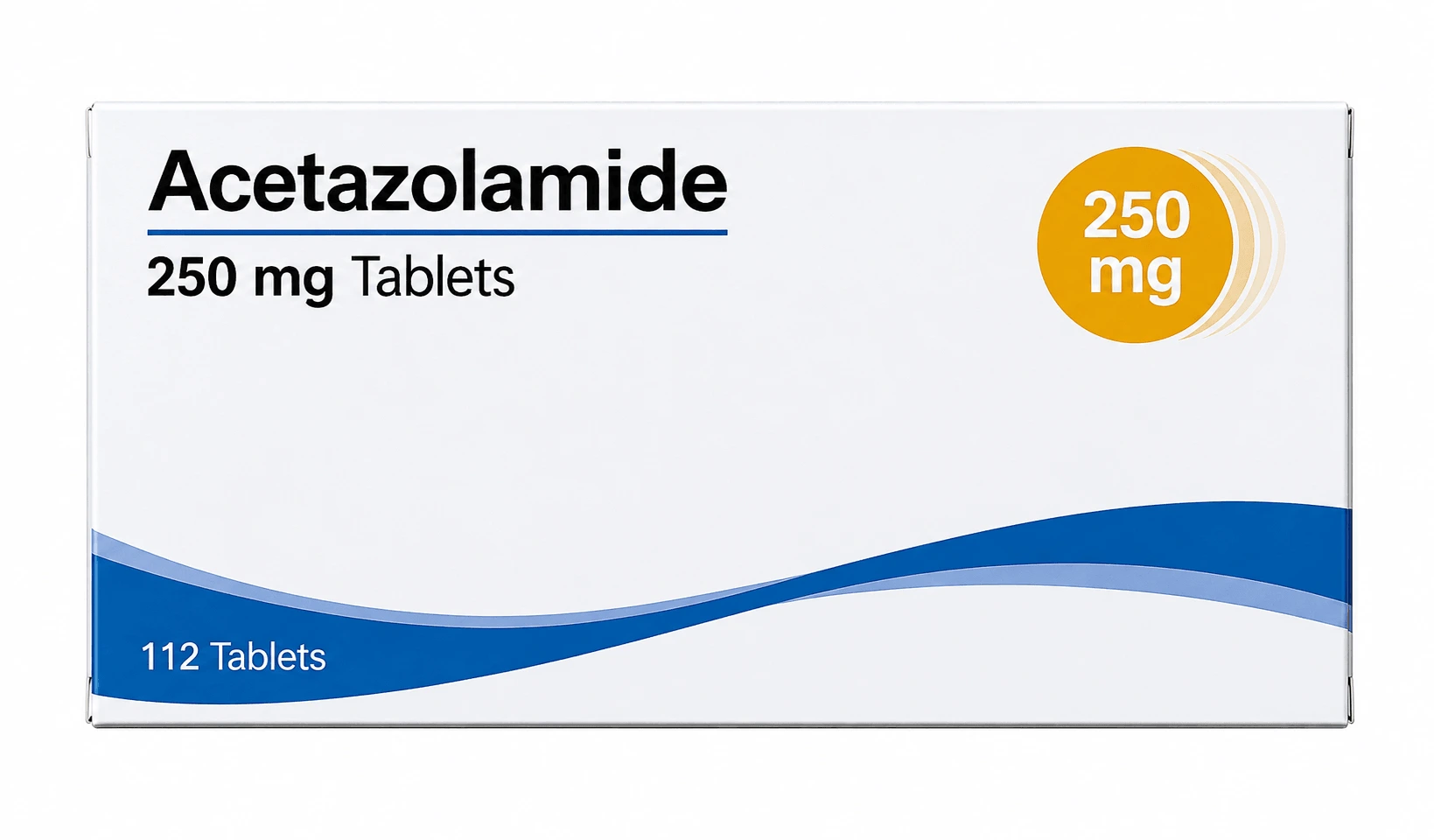
Acetazolamide is a prescription medicine used to help prevent altitude sickness (acute mountain sickness) on trips above about 2,500m. It’s also known by the brand name Diamox.
It works by making you breathe a little faster and deeper, so you take in more oxygen. That’s the same change your body makes naturally over several days at altitude, so it helps you acclimatise sooner. It lowers your risk but doesn’t replace a gradual ascent.
Acetazolamide isn’t licensed in the UK for altitude sickness, so it’s prescribed “off-label”. UK travel health services (NaTHNaC and the NHS Specialist Pharmacy Service) recommend it when a preventive medicine is needed. For the dose and side effects in detail, read acetazolamide for altitude sickness.
| Active ingredient | Acetazolamide 250mg |
| Also known as | Diamox (brand name) |
| Used for | Helping to prevent altitude sickness (off-label) |
| Usual dose | 125mg (half a tablet) twice a day |
| When to start | 1 to 2 days before going up |
| When to stop | At least 2 days after reaching your highest point |
| Legal status | Prescription-only medicine (POM) |
• Trial dose: take half a tablet twice a day for 1 to 2 days at home, a couple of weeks before you travel.
• Start 1 to 2 days before you begin going up.
• Dose: half a 250mg tablet (125mg) in the morning and half in the early evening, with water. Take the evening dose at dinnertime, not bedtime.
• Stop at least 2 days after reaching your highest point, or when you start coming down from a summit if you have no symptoms.
• If you miss a dose, take it when you remember, unless it’s nearly time for the next one. Don’t take a double dose.
• Drink enough fluid: you’ll pass more urine, especially in the first few days.
• Higher doses: doctors sometimes use a whole 250mg tablet twice a day to treat altitude sickness, or for very fast ascents. We don’t supply it at this dose. Don’t increase your dose yourself.
We prescribe it to help prevent altitude sickness on trips above about 2,500m. It’s licensed for other conditions, such as glaucoma, and is used off-label for altitude sickness.
Yes. Diamox is a brand name for acetazolamide. We supply generic acetazolamide 250mg tablets, which contain the same medicine.
One tablet for each day from the day before you go up until 2 days after your highest point, plus 2 for a trial. A 7-day Kilimanjaro climb needs about 10 to 12 tablets.
Yes. It’s a prescription-only medicine. Our pharmacist prescribers can prescribe it after an online consultation about your trip and your health.
Yes. The 250mg tablets have a break line, and the usual preventive dose is half a tablet twice a day. A tablet cutter makes this easier.
Tingling in the fingers and toes, passing more urine and taste changes are the most common. See our acetazolamide guide.
Not on our prescription. Doctors sometimes use 250mg twice a day to treat altitude sickness, or for very fast ascents. We prescribe acetazolamide for prevention only, at half a tablet twice a day, so take the dose on your label.
There’s no known problem with the common malaria tablets, but tell the prescriber everything you take. See our malaria tablets page.
No reviews yet. Be the first to write one.
Helpful articles and clinical guides related to this treatment category.
Free consultation
Online review by a UK prescriber
Next-day delivery
Order before 3pm where offered
Discreet packaging
Plain outer packaging