


We’re here to help.
Our friendly team is available to help Monday to Friday 9:00am – 5:00pm.
If you need urgent assistance, do not use this service. Call 111, or in an emergency call 999.
Our friendly team is available to help Monday to Friday 9:00am – 5:00pm.
If you need urgent assistance, do not use this service. Call 111, or in an emergency call 999.
Fast, discreet delivery
Free delivery over £40
100% UK-based pharmacy
All doctors & pharmacists UK-based
Free advice & support
Clinical support free · Mon–Fri 9am–5pm
Why Patients Choose Access Doctor
10+
Years serving UK patients
—
Verified patient reviews
1,000+
Licensed treatments
24/7
Consultation available
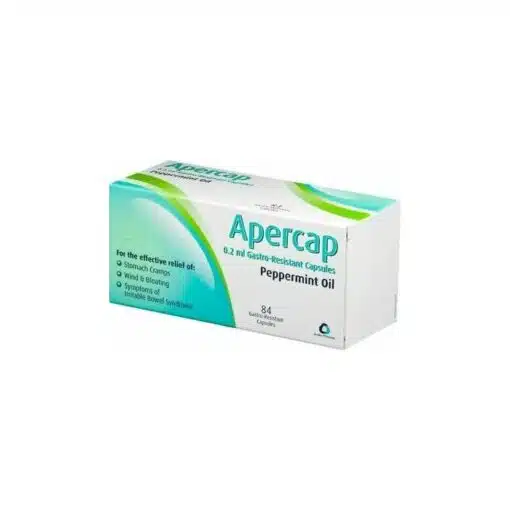
Gastro-resistant peppermint oil capsules for the bloating, wind and cramps of IBS
The coating on these capsules is what makes them work. It carries the peppermint oil past the stomach so it is released in the bowel, where the spasm is. Swallowing a capsule whole matters, and so does leaving a gap from indigestion remedies, since antacids and acid-reducing medicines can break the coating down too early.
Order before 3pm — same-day dispatch (MON - FRI)
~5 min consultation
Secure & confidential · Reviewed by a UK prescriber
Suitable age
Adults
Consultation
Yes — free online consultation
Peppermint oil is a herbal antispasmodic with a long record in irritable bowel syndrome. The active part is menthol, which relaxes the smooth muscle in the wall of the bowel. That eases the cramping pain, and it also lets trapped wind move on, which is why it tends to suit people whose main complaint is bloating and wind rather than pain alone.
These capsules are licensed for the symptomatic relief of irritable bowel syndrome and spastic colon. Each one has a gastro-resistant coating so the oil is delivered further down the gut rather than released in the stomach. Take them before meals with a little water, and not straight after food. They must be swallowed whole, because breaking or chewing a capsule releases the oil in the wrong place and usually causes heartburn.
Treatment normally runs until symptoms settle, and can be continued for up to two or three months. If your symptoms have not improved, or they are getting worse, have them reviewed rather than carrying on.
| Active ingredient | Peppermint oil 0.2ml per capsule |
| Type of medicine | Herbal antispasmodic |
| Formulation | Gastro-resistant capsule |
| Licensed for | Symptomatic relief of irritable bowel syndrome and spastic colon |
| Standard dose | One capsule three times a day, before meals |
| Maximum | Two capsules three times a day for severe symptoms |
| Length of use | Until symptoms settle; may continue for up to 2 to 3 months |
Take one capsule three times a day. For more severe symptoms this can be increased to two capsules three times a day.
Take them before meals with a small amount of water, and not immediately after food.
Swallow the capsules whole. Do not break or chew them. The coating is there to carry the peppermint oil past the stomach and release it in the bowel, which is both what makes it work and what stops it causing heartburn.
Leave a gap between these capsules and any indigestion remedy. Antacids and acid-reducing medicines such as proton pump inhibitors can break the coating down too early.
Keep taking them until your symptoms settle. They can be continued for up to two or three months if they are helping.
If your symptoms have not improved, or they are getting worse, speak to a clinician rather than carrying on.
Peppermint oil capsules are a herbal antispasmodic used to ease the symptoms of irritable bowel syndrome (IBS), particularly the cramping abdominal pain and bloating that follow meals. Each capsule typically contains 0.2 ml of peppermint oil (extracted from the leaves of Mentha piperita) in an enteric-coated shell — a special coating that's resistant to stomach acid and only dissolves once the capsule reaches the small intestine, releasing the oil exactly where it can act on the gut wall. They're available in the UK both as prescription items and as pharmacy products, and they're recommended by the National Institute for Health and Care Excellence (NICE) as one of the first-line antispasmodic options for IBS.
Yes — and this is worth saying clearly because peppermint oil is sometimes dismissed as a "natural alternative" rather than recognised as the genuine, evidence-based treatment it actually is. Multiple high-quality clinical trials and several meta-analyses have shown that peppermint oil capsules reduce IBS pain and improve global IBS symptoms compared with placebo. The evidence base is at least as good as for the conventional antispasmodics like mebeverine and alverine — in some analyses, slightly better. NICE includes peppermint oil alongside the other antispasmodics in its IBS guidance, and many gastroenterologists recommend it as a first-line option. So if your prescriber suggests peppermint oil, they're not fobbing you off with herbal remedies; they're offering a treatment with real clinical evidence behind it.
The main active component of peppermint oil is L-menthol, the same molecule that gives peppermint sweets and toothpaste their cooling sensation. In the gut, menthol does two main things. First, it blocks calcium channels in the smooth muscle of the gut wall — calcium is the trigger that tells muscle to contract, so blocking it relaxes the spasm at source. This is similar in principle to how mebeverine and alverine work, although the mechanism is slightly different. Second, menthol activates TRPM8 receptors, the same "cold receptors" that produce the cooling feeling on your tongue — in the gut, this seems to dial down the heightened pain sensitivity (visceral hypersensitivity) that's a hallmark of IBS, helping the gut feel less twitchy and reactive overall. There's also evidence that peppermint oil has mild antimicrobial effects on the gut bacteria, which may contribute further, although that mechanism is less well understood.
All four medicines treat IBS-related spasm, but they go about it differently. Mebeverine (Colofac) and alverine (Spasmonal) are direct smooth muscle relaxants — they act on the muscle of the gut wall to dampen exaggerated contractions, without affecting nerves elsewhere. Buscopan (hyoscine butylbromide) is an anticholinergic — it blocks the nerve signal telling the muscle to contract, and it has a slightly broader side effect profile (dry mouth, blurred vision) as a result. Peppermint oil uses a third route — calcium channel modulation plus the cooling effect on visceral pain pathways — and brings its own distinctive side effects (heartburn and the occasional unusual sensation we'll come to). The practical upshot is that they're not interchangeable, and many people who don't respond to one will respond to another. It's reasonable to try two or three different antispasmodics in turn before concluding that this class of medicine isn't right for you.
The enteric coating is the single most important design feature of peppermint oil capsules, and damaging it undermines the whole treatment. Peppermint oil in its raw form is irritating to the oesophagus and stomach lining — if it dissolves in the stomach, you get heartburn, reflux, and "minty burps", and the medicine never reaches the lower gut where it's needed. The enteric coating is specifically designed to be resistant to stomach acid and only dissolve in the more neutral environment of the small intestine, releasing the oil exactly where the IBS symptoms are. This means two practical rules matter enormously: never chew, crush, or break the capsules open, and don't take them at the same time as antacids or medicines that reduce stomach acid (we'll come back to that point in the interactions question). Swallow them whole with water, and let the coating do its job.
The standard regimen is one or two capsules three times a day, taken 30 to 60 minutes before meals. The pre-meal timing matters because the capsule needs time to leave the stomach and reach the intestine before it dissolves and releases the oil — taking it immediately before or with food slows gastric emptying and can mean the capsule dissolves in the stomach rather than the gut. Swallow each capsule whole with a full glass of water, and stay upright for at least 30 minutes afterwards — lying down soon after taking it can let the capsule sit at the top of the stomach and increase the chance of reflux. Most people start at one capsule three times daily and step up to two capsules per dose if needed.
Some people feel a useful effect within the first week, particularly on post-meal cramping. Others build up to a noticeable benefit over two to four weeks of consistent use. As with other antispasmodics, peppermint oil works best when taken regularly rather than only during flares — the calcium-channel and TRPM8 effects build up with steady exposure to the gut wall. A fair trial of peppermint oil is usually four to eight weeks at the full dose before concluding it isn't helping. Some trials have used the medicine continuously for up to twelve weeks before judging overall response.
Two side effects come up specifically with peppermint oil and are worth knowing about. The first is heartburn or reflux — sometimes called "minty burps". This happens because peppermint oil naturally relaxes the lower oesophageal sphincter (the muscle that normally keeps stomach contents from refluxing back up), and even small amounts that escape the enteric coating can produce this effect. It's more common in people who already have reflux, hiatus hernia, or weak sphincter function. The second is anal burning or perianal irritation — a slightly unusual side effect that occurs because some of the menthol still has activity by the time it reaches the lower bowel, and TRPM8 receptors are present in anal skin too. Both effects are usually mild, but if they're significant or persistent, the medicine may need to be stopped. Less common effects include mild headache, occasional nausea, mouth or throat irritation (almost always from chewing or breaking the capsule — don't do this), and rare skin reactions to menthol.
A few situations call for caution. Significant gastro-oesophageal reflux disease (GORD) and hiatus hernia are relative contraindications because peppermint oil tends to worsen reflux symptoms. Achlorhydria (low or absent stomach acid, sometimes seen after gastric surgery or in older patients) can mean the enteric coating dissolves earlier than intended, defeating the purpose. Pregnancy and breastfeeding are generally periods when peppermint oil is avoided because the safety data is limited, although small amounts in food are widely considered safe. Children under twelve aren't generally treated with peppermint oil capsules for IBS without specialist input. And as with any medicine, known allergy to peppermint or menthol is a clear reason to avoid it.
A few interactions are worth keeping in mind. Antacids, proton pump inhibitors (PPIs), and H2 blockers — medicines that reduce stomach acid — can disturb the enteric coating, because the coating relies on stomach acidity to stay intact until the capsule reaches the intestine. If your stomach pH is artificially raised, the coating may dissolve in the stomach itself, releasing the oil early and producing heartburn rather than IBS relief. The simplest workaround is to space them: take your peppermint oil capsule at least two hours apart from any antacid or acid-reducing medicine. Peppermint oil can also mildly inhibit certain liver enzymes (CYP3A4 and CYP1A2), which means it can theoretically affect levels of some other medicines, including the calcium channel blocker felodipine, certain statins, and some immunosuppressants like cyclosporine. These interactions are usually clinically minor at standard doses, but it's worth mentioning peppermint oil to any prescriber considering a new medicine.
There's no direct interaction between peppermint oil and alcohol. A glass of wine or a beer is unlikely to cause a problem from the medicine itself. The wider issue is that alcohol is a recognised IBS trigger for many people — it can speed gut transit, irritate the gut lining, and disturb the gut microbiome — and it's also a recognised trigger for reflux, which peppermint oil can already worsen. So while there's no strict medical reason to abstain, the combination of alcohol and peppermint oil in someone who's already prone to heartburn can be uncomfortable. Moderate, mindful drinking is fine; heavy nights tend to worsen both IBS and reflux at the same time.
For most people, no — and this is one of the most useful things to understand about IBS care broadly. The evidence is now strong that dietary and lifestyle measures play at least as big a role as medication in long-term IBS control. The most effective dietary approach for many people is the low-FODMAP diet, a structured elimination and reintroduction of certain fermentable carbohydrates that ferment in the gut and produce gas, distension, and loose stool — ideally guided by a dietitian, because done badly it can become unnecessarily restrictive. Beyond diet, regular exercise, adequate hydration, attention to sleep, stress management, and gut-directed psychological therapies such as cognitive behavioural therapy or hypnotherapy have all been shown to make meaningful differences. Peppermint oil sits within that broader plan as a useful tool for the spasm-and-pain dimension of IBS, rather than instead of one.
Several alternatives exist, and one approach often works where another doesn't. Mebeverine (Colofac) and alverine (Spasmonal) are direct smooth muscle relaxants — different mechanism, different molecule, and worth trying if peppermint oil hasn't helped. Buscopan (hyoscine butylbromide) works on the nerve signal rather than the muscle itself and gives faster acute relief during flares. For diarrhoea-predominant IBS, loperamide helps slow gut transit. For constipation-predominant IBS, fibre adjustments, ispaghula husk (Fybogel), or specific laxatives may be more useful. Low-dose tricyclic antidepressants (such as amitriptyline) and SSRIs are sometimes used not for depression but for their effect on gut-brain signalling and visceral pain, and can be transformative for people with persistent IBS pain. If peppermint oil alone hasn't been enough after a fair trial, the next step is usually to broaden the approach in conversation with a clinician.
A few situations call for prompt medical review rather than self-management — and they matter, because IBS is what's known as a diagnosis of exclusion, meaning other conditions need to be ruled out first. The features that warrant urgent assessment, often called "red flags", include unintentional weight loss, rectal bleeding or blood in the stool, persistent diarrhoea (especially at night, which IBS doesn't typically cause), iron-deficiency anaemia, a family history of bowel or ovarian cancer, new bowel symptoms starting after age 50, an abdominal or rectal mass, and any markedly worsening symptoms. None of these features fits IBS, and they need investigation to exclude inflammatory bowel disease (Crohn's, ulcerative colitis), coeliac disease, and bowel cancer. Beyond the red flags, a clinical review is also worthwhile if symptoms aren't responding to standard measures, if they're significantly affecting your quality of life, work, or sleep, or if you've never had a formal diagnosis. There's no need to push through quietly — modern IBS care can make a transformative difference.
Helpful articles and clinical guides related to this treatment category.
Free consultation
Online review by a UK prescriber
Next-day delivery
Order before 3pm where offered
Discreet packaging
Plain outer packaging