


We’re here to help.
Our friendly team is available to help Monday to Friday 9:00am – 5:00pm.
If you need urgent assistance, do not use this service. Call 111, or in an emergency call 999.
Our friendly team is available to help Monday to Friday 9:00am – 5:00pm.
If you need urgent assistance, do not use this service. Call 111, or in an emergency call 999.
Fast, discreet delivery
Free delivery over £40
100% UK-based pharmacy
All doctors & pharmacists UK-based
Free advice & support
Clinical support free · Mon–Fri 9am–5pm
Why Patients Choose Access Doctor
10+
Years serving UK patients
—
Verified patient reviews
1,000+
Licensed treatments
24/7
Consultation available
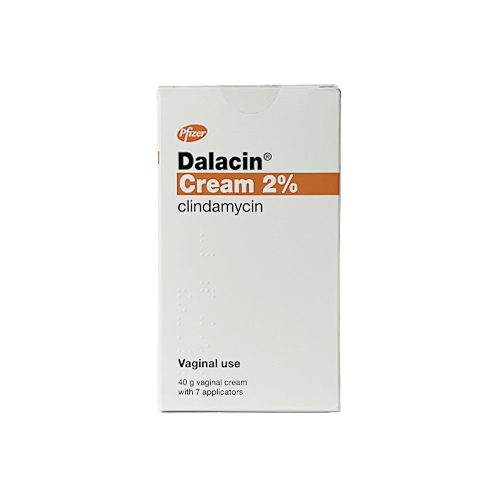
Dalacin 2% is a vaginally applied cream used to treat bacterial vaginosis . It contains an antibiotic, clindamycin phosphate, as its active ingredient. The cream contains 20mg of clindamycin per gram and is manufactured by Pfizer.
Order before 3pm — same-day dispatch (MON - FRI)
~5 min consultation
Secure & confidential · Reviewed by a UK prescriber
Dalacin 2% is a vaginally applied cream used to treat bacterial vaginosis . It contains an antibiotic, clindamycin phosphate, as its active ingredient. The cream contains 20mg of clindamycin per gram and is manufactured by Pfizer.
Dalacin is a vaginal cream containing clindamycin, an antibiotic from a group called lincosamides. It's used to treat bacterial vaginosis as an alternative to metronidazole — particularly useful for women who can't tolerate metronidazole, who can't avoid alcohol during treatment, or who simply prefer a topical approach to a systemic one.
Clindamycin works in a quite different way from metronidazole. It binds to a specific part of the bacterial ribosome (the cell's protein-making machinery) and stops the bacteria producing the proteins they need to survive and replicate. It's particularly active against the anaerobic bacteria that overgrow in BV, including Gardnerella vaginalis. Because Dalacin is applied directly to the vaginal lining, the medicine concentrates where the imbalance is, and only small amounts are absorbed into the bloodstream.
The standard regimen is one applicator-full (around 5 g of cream, containing 100 mg of clindamycin) inserted into the vagina at bedtime for seven consecutive nights. Each applicator is single-use and prefilled. Bedtime is recommended because lying down for several hours improves contact between the cream and the vaginal lining and reduces leakage. Wear a panty liner overnight if you're concerned about discharge onto underwear.
This is the single most important safety point with Dalacin and is genuinely critical to know. The cream contains an oily base (mineral oil and similar ingredients) that physically weakens latex and polyisoprene materials. That means it can damage condoms, diaphragms, and contraceptive caps to the point where they can fail — splitting or developing tiny holes that allow sperm or infections through. This isn't a theoretical risk; it has been demonstrated in laboratory studies. The implication is that during your course of Dalacin, and for several days afterwards, latex barrier methods cannot be relied on for contraception or for STI protection. We'll cover the timing in the next question.
The product information advises avoiding latex condoms and diaphragms during treatment and for up to five days after the last dose, to allow the cream to clear from the vaginal tissue. During this time, it's worth either avoiding penetrative sex altogether, using a non-latex condom (such as polyurethane), or relying on a different form of contraception that isn't affected by oil-based products. If pregnancy or STI prevention matters in your situation, talk this through with your prescriber before starting Dalacin so you have a plan.
The most commonly reported are a yeast infection (vaginal thrush) developing during or shortly after treatment, mild vulvovaginal irritation, itching, and occasional discharge or cramping. Thrush after antibiotic treatment is reasonably common because antibiotics can suppress the bacteria that normally keep yeast in check; if you develop classic thrush symptoms, it's straightforward to treat with an antifungal. A small amount of clindamycin is absorbed systemically, which means rare side effects can include nausea, abdominal pain, or headache, though these are far less common than with oral clindamycin.
Oral clindamycin is associated with an increased risk of Clostridioides difficile (C. diff) infection — a serious bowel infection — because it can disturb gut flora. With vaginal clindamycin cream the systemic absorption is much lower, so the risk is significantly reduced, but it's not zero. Anyone developing severe or persistent diarrhoea during or after using Dalacin should stop the cream and seek medical advice promptly, particularly if there's blood in the stool or significant abdominal pain.
Most women notice an improvement in discharge and odour within two to three days, with full resolution of symptoms by the end of the seven-night course. If symptoms haven't started to improve by mid-course, or if they're getting worse, it's worth checking in with a clinician, because occasionally the diagnosis needs revisiting.
Yes. In fact, in some pregnancy BV protocols, vaginal clindamycin is preferred, particularly in early pregnancy, because it has a long safety record in this setting and avoids any of the historic concerns around oral metronidazole in the first trimester. As with any treatment in pregnancy, the decision is best taken with your midwife or GP rather than alone.
The product information generally recommends avoiding use during menstruation, partly because the cream is more easily washed out by menstrual flow, which can reduce its effectiveness, and partly because tampons can interfere with the cream's distribution. Most prescribers either delay starting Dalacin until the period has finished or suggest using sanitary pads rather than tampons during treatment.
Several reasons. It avoids the alcohol restriction, which matters for some patients socially or practically. It avoids the metallic taste and gastrointestinal upset that bother some metronidazole users. It's a useful alternative in people with metronidazole intolerance or sensitivity. And in pregnancy, particularly early in pregnancy, vaginal clindamycin is sometimes the preferred option. The trade-offs are the condom issue, the small risk of post-antibiotic thrush, and slightly higher cost than generic metronidazole tablets.
As with metronidazole, around half of women experience a recurrence of BV within twelve months even after a successful course. The same general principles apply: avoid douching and scented intimate products, consider condom use with new partners, and discuss longer or maintenance regimens with your clinician if the pattern is persistent. There's no clear evidence that Dalacin gives better or worse long-term outcomes than metronidazole — they tend to be roughly equivalent in cure rates and in recurrence.
Helpful articles and clinical guides related to this treatment category.
Free consultation
Online review by a UK prescriber
Next-day delivery
Order before 3pm where offered
Discreet packaging
Plain outer packaging