

Lifestyle and environment
Warm, damp conditions favour fungi. Enclosed footwear worn for long periods, communal changing rooms and pools, minor nail or skin damage, and sharing towels, clippers or footwear all raise the risk.

Our friendly team is available to help Monday to Friday 9:00am – 5:00pm.
If you need urgent assistance, do not use this service. Call 111, or in an emergency call 999.

Fungal infections of the skin and nails are common, and the two often occur together. Athlete's foot usually responds to a cream within a couple of weeks, while an infected nail takes months to grow out. Complete a short online consultation and one of our UK-registered prescribers will assess which treatment suits your situation.
Fungal infections happen when fungi grow on the skin, in the nails, or both. The same organisms are usually responsible, which is why an infection often spreads from the skin to a nearby nail, or from one nail to another.
Fungal nail infection (onychomycosis) is common, especially in toenails, and becomes more likely with age. It is often linked to athlete's foot, and is more likely if your feet sweat a lot, you wear tight or enclosed shoes, use communal showers or pools, or have injured the nail. The nail may become thickened, discoloured (white, yellow or brown), brittle or crumbly, and can lift away from the nail bed. It is rarely serious, but it does not usually clear up on its own and can spread to other nails.
Not every thickened or discoloured nail is a fungal infection. Psoriasis, injury and other skin conditions can look very similar, and some nail changes need to be checked in person by a doctor. That is why our consultation asks about your symptoms and health, and for photos of the affected nails. A UK-registered prescriber reviews everything before deciding whether treatment is suitable for you, and if it is not, we will explain why and where to get help.
The nail turns white, yellow or brown, thickens, becomes brittle, and may crumble at the edge or lift away from the nail bed. Changes usually start at the tip or side and spread slowly towards the base.
Itchy, red, flaking or scaling skin. Between the toes it often looks soggy and white, and the skin may crack. On the body it can form a ring-shaped patch with a clearer centre.
Most commonly between the toes and on the soles, but also the groin, the body, and the skin around the nails. It frequently spreads from one area to another.
Warm, damp conditions favour fungi. Enclosed footwear worn for long periods, communal changing rooms and pools, minor nail or skin damage, and sharing towels, clippers or footwear all raise the risk.
Diabetes, poor circulation, psoriasis, a weakened immune system and increasing age all make infection more likely and harder to clear.
The right treatment depends on where the infection is and how much is affected. Skin infections respond well to creams. Mild nail infections at the tip or sides of up to two nails can be treated with a medicated lacquer. Where more of the nail is involved, or the infection reaches the base of the nail, oral tablets are usually needed. If you have both, treating the skin as well as the nail matters — untreated athlete's foot is one of the most common reasons a nail becomes reinfected.



| Treatment | Best for | How it works | Notes |
|---|---|---|---|
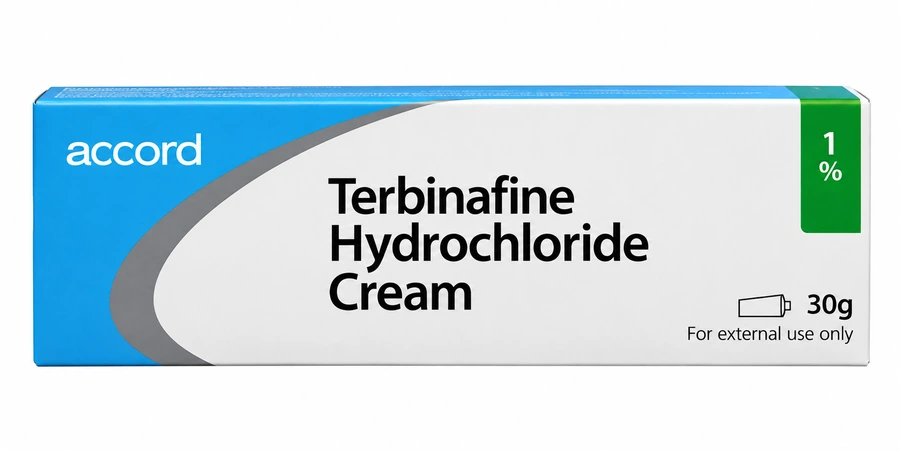
| Terbinafine 1% cream | Athlete's foot, jock itch, ringworm of the body | An antifungal cream applied to the affected skin | 1 to 2 weeks. Not a treatment for infected nails |
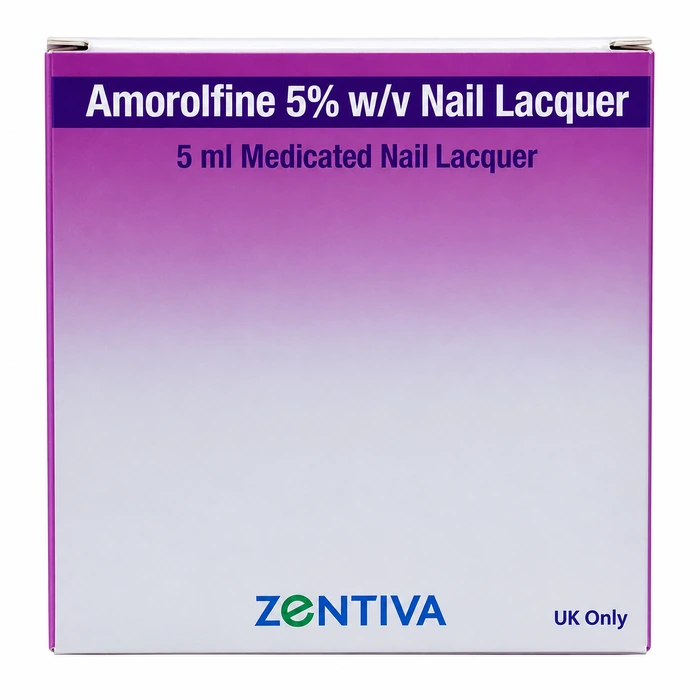
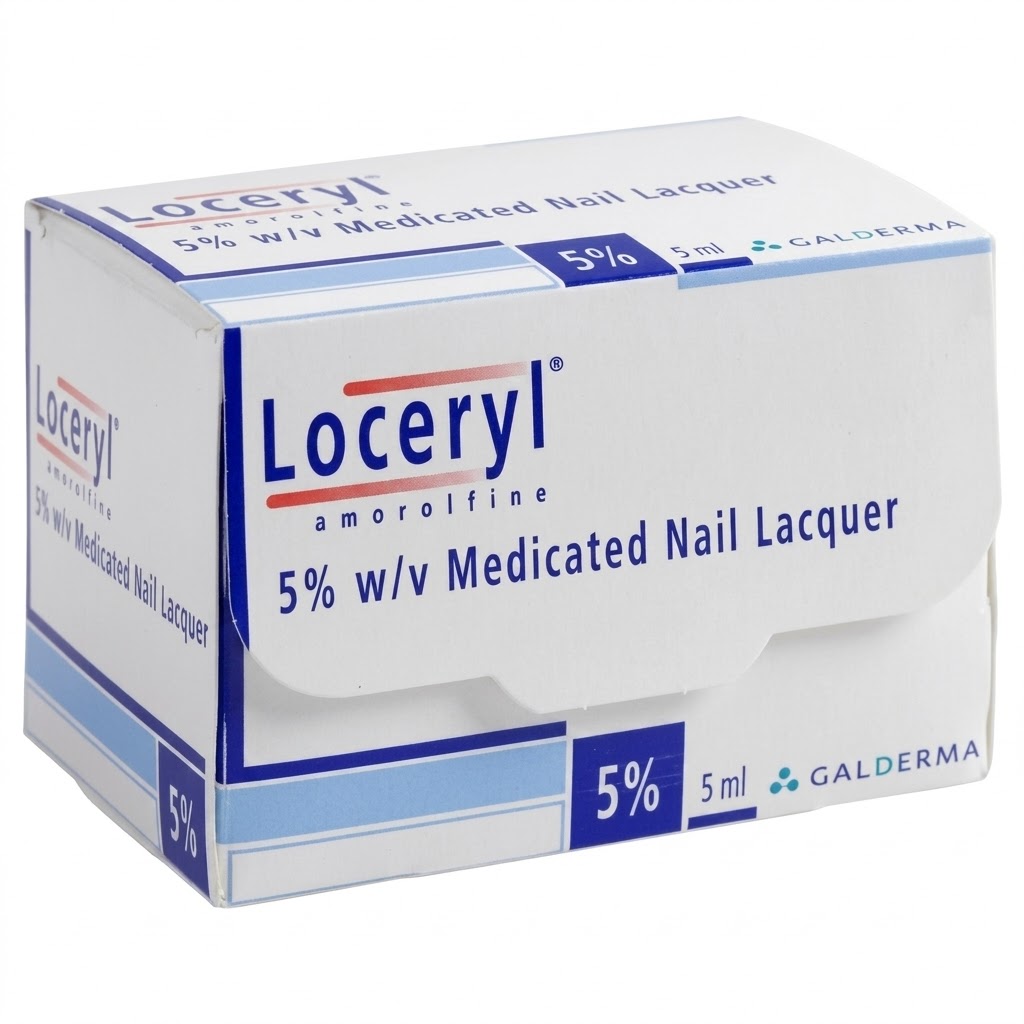
| Amorolfine 5% nail lacquer | Mild nail infection, up to two nails, nail base not involved | A medicated lacquer that stays active in the nail plate between applications | Applied once weekly. 6 months fingernails, 9-12 months toenails |
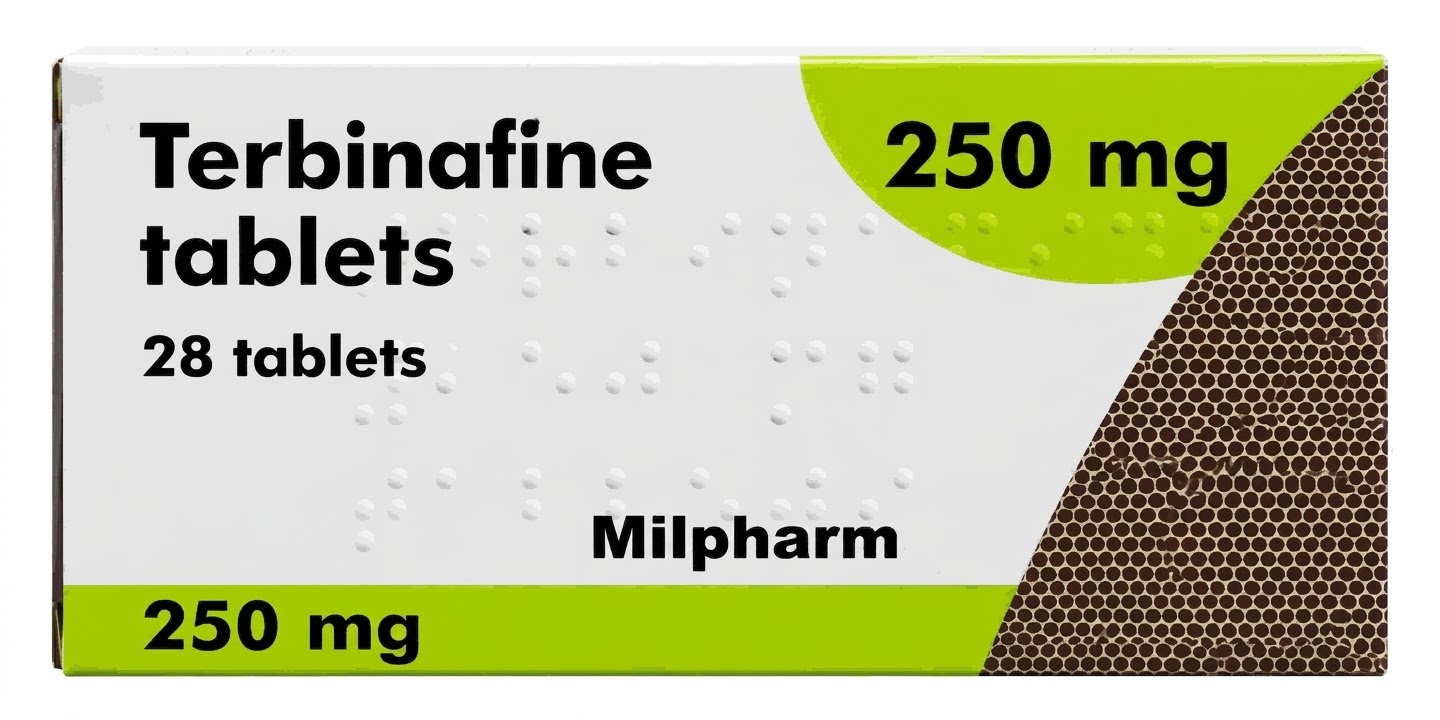
| Terbinafine 250mg tablets | Confirmed nail infection where more of the nail is involved | Oral treatment reaching the nail bed through the bloodstream | 6 weeks fingernails, 12-16 weeks toenails. Requires liver blood tests |
| Tioconazole 28% nail solution | Nail infection involving the surrounding skin | An antifungal solution applied to the nail and skin around it | Applied twice daily, typically 6-12 months |
Not sure which option is right for you?
Read more about recognising, treating and preventing fungal skin and nail infections.
Most are caused by dermatophyte fungi, the same group responsible for athlete's foot. They thrive in warm, damp conditions, which is why toenails are affected far more often than fingernails. Communal changing rooms, swimming pools, enclosed footwear, minor nail damage and sharing clippers or towels all increase the risk.
Longer than most people expect. Topical treatment does not restore the infected part of the nail; it stops the fungus spreading while healthy nail grows out to replace it. That means roughly six months for a fingernail and nine to eighteen months for a toenail. Stopping early is one of the most common reasons treatment fails.
Often, but not always. If the infection has been present for a long time, or the nail has been damaged, some thickening or ridging can remain even after the fungus has cleared. Nails that were distorted before the infection are less likely to return to a completely normal appearance.
Topical lacquers are intended for mild to moderate infection affecting up to two nails, where the base of the nail is not involved. If more nails are affected, or the infection reaches the nail base near the cuticle, oral antifungal tablets are usually needed. Your GP can assess you for these, as they require blood test monitoring and are not available through this service.
It can spread, though not easily. The fungus can pass from one of your own nails to another, and can be picked up from shared surfaces such as changing room floors, or from shared towels, footwear and nail clippers. Keeping feet dry, wearing flip-flops in communal areas and not sharing clippers all reduce the risk.
No. Nail polish and false nails prevent the treatment reaching the nail plate and trap moisture, which encourages the fungus. Nails need to be left bare for the duration of treatment. Your prescriber will explain how to file and clean the nail surface before each application.
Helpful reads related to this treatment area.