

Lifestyle factors
Smoking, drinking alcohol, stress and being overweight can all make psoriasis worse or trigger a flare-up.

Our friendly team is available to help Monday to Friday 9:00am – 5:00pm.
If you need urgent assistance, do not use this service. Call 111, or in an emergency call 999.

Psoriasis is a long-term skin condition that causes raised, scaly patches, most often on the elbows, knees, lower back and scalp. There is no cure, but the right treatment can clear patches or greatly reduce flare-ups. Complete a short online consultation and a UK clinician will review whether treatment is suitable for you.
Psoriasis is a common, long-term inflammatory skin condition. It affects around 2 in 100 people in the UK and can start at any age, although it most often begins in adults under 35.
In psoriasis, the immune system speeds up the production of new skin cells. Skin cells are normally replaced every three to four weeks, but in psoriasis this happens in just a few days. The cells build up on the surface of the skin, forming raised, scaly patches known as plaques.
Psoriasis is not contagious. It tends to come and go, with flare-ups followed by periods when the skin is clearer. The most common type is plaque psoriasis. Other types include scalp psoriasis, guttate psoriasis, inverse (flexural) psoriasis, which affects skin folds, and nail psoriasis.
Symptoms vary from person to person and can change between flare-ups. The most common signs include:
Red, pink or darker patches (depending on your skin tone) covered in silvery-white scales, most often on the elbows, knees, lower back and scalp.
Patches can itch, sting or feel sore. The skin around them may become dry and cracked, and can sometimes bleed.
Thick scales on the scalp, along the hairline or behind the ears. Scalp psoriasis is often mistaken for severe dandruff.
Pitting, discolouration or thickening of the nails, or the nail lifting away from the nail bed.
The exact cause of psoriasis is not fully understood. It involves the immune system and often runs in families. Many people find that certain things set off a flare-up.
Smoking, drinking alcohol, stress and being overweight can all make psoriasis worse or trigger a flare-up.
Throat infections, hormonal changes and some medicines, including lithium, some beta-blockers and some antimalarials, can trigger or worsen psoriasis. Do not stop a prescribed medicine without speaking to your doctor first.
A cut, scrape, insect bite or sunburn can trigger new patches where the skin was injured. Cold, dry weather can also make symptoms worse.
Psoriasis is usually treated first with products applied to the skin. A clinician will recommend an option based on where your psoriasis is, how severe it is and what you have tried before. Prescription treatments are only supplied after a clinician has reviewed your consultation.
| Treatment | Best for | How it works | Notes |
|---|---|---|---|
| Emollients | All types of psoriasis, used every day | Soften and hydrate the skin and reduce scaling and itching | Use generously, even when the skin is clear |
| Coal tar preparations | Mild plaque and scalp psoriasis | Slow down skin cell production and reduce scaling and itching | Can stain clothing and bedding and has a strong smell |
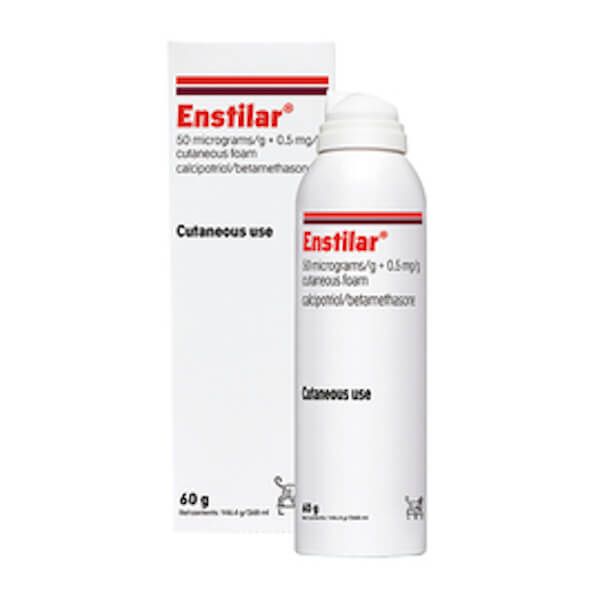
| Vitamin D-like treatments | Plaque psoriasis on the body and scalp | Slow down the growth of skin cells | Often used with, or combined with, a steroid |
| Topical corticosteroids | Short-term control of flare-ups | Reduce inflammation, redness and itching | Used for limited periods; strength depends on the area treated |
| Salicylic acid preparations | Thick scale, especially on the scalp | Soften and lift scale so other treatments work better | Often combined with other treatments |
Not sure which option is right for you?
Most psoriasis can be managed with treatment applied to the skin, but some symptoms need to be checked by a doctor in person.
Psoriasis can look similar to other skin and scalp conditions. Find out more about the treatments we offer for these.
Common questions about psoriasis and getting treatment online.
There is currently no cure for psoriasis, but it can be well controlled. Treatment can clear patches or greatly reduce them, and many people have long periods with few or no symptoms. Most people need to use treatment again when their psoriasis flares up.
No. Psoriasis cannot be passed from person to person through touch, sharing towels or any other contact. It is caused by the immune system, not by an infection.
Both conditions cause red, inflamed skin, but psoriasis patches are usually thicker, more clearly defined and covered in silvery-white scales. Psoriasis often affects the elbows, knees, lower back and scalp, while eczema tends to affect skin creases such as the inside of the elbows and behind the knees, and is usually itchier. A clinician can help work out which condition you have.
Yes, if it is suitable for you. You will complete a short online consultation, and a UK clinician will review your answers and any photos you upload. If treatment is appropriate, it will be sent to you in plain packaging. If your symptoms need to be checked in person, the clinician will advise you to see your GP instead.
Most treatments applied to the skin start to make a noticeable difference within a few weeks. How quickly yours works depends on the treatment, where your psoriasis is and how severe it is. Your clinician will explain how long to use your treatment for and what to do if it does not help.
See your GP if you have painful, swollen or stiff joints, if your psoriasis covers large areas of your body or affects your face, genitals or skin folds, or if it has not improved with treatment. Get urgent medical help if your skin suddenly becomes red, hot and painful over a large area, or you develop pus-filled spots and feel unwell.
Start a short online consultation and our clinical team will review your answers and recommend a suitable treatment if it is appropriate for you.