


EMLA Cream for Premature Ejaculation: Does It Work and How to Use It
▶ In short — EMLA cream for premature ejaculation
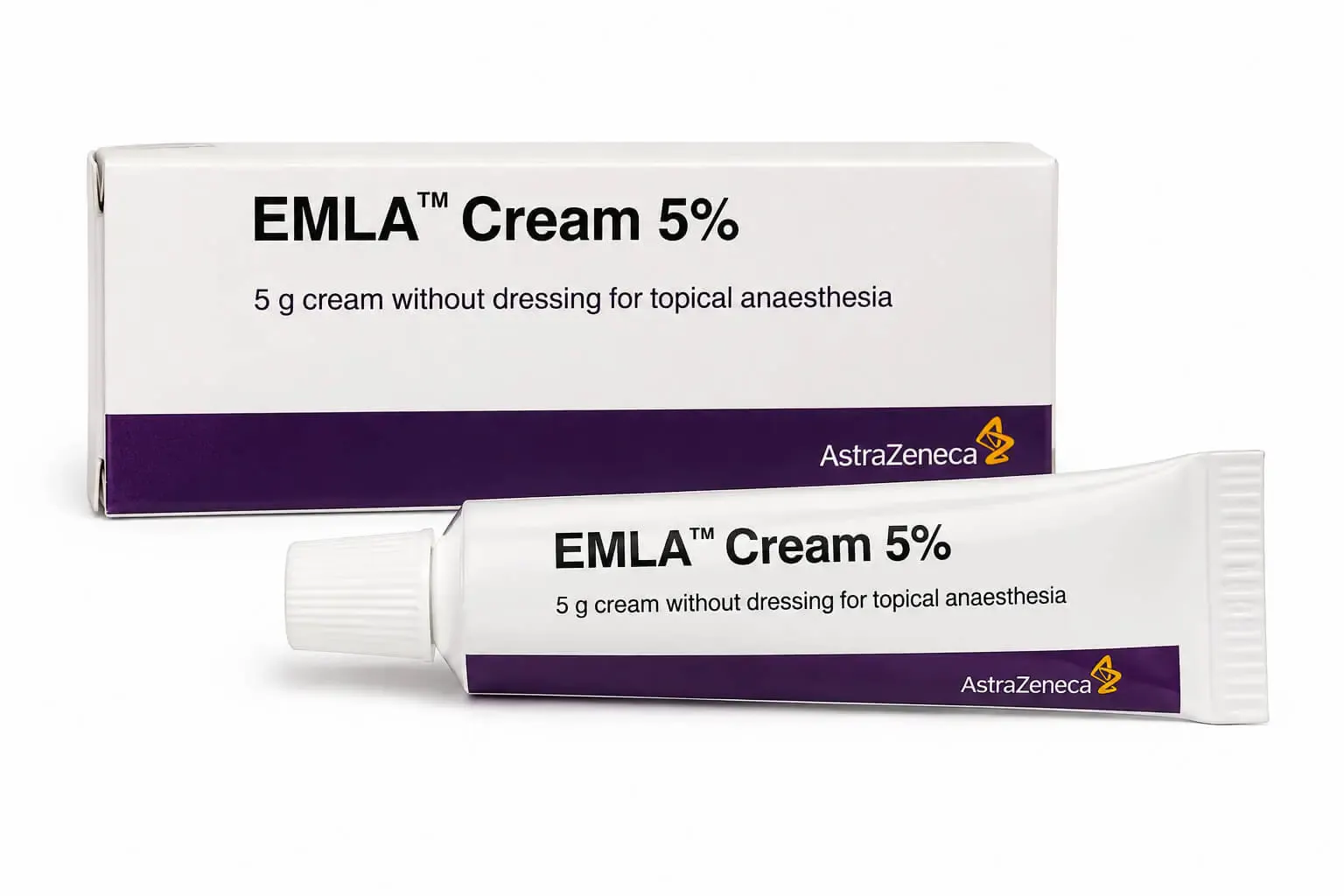
EMLA cream (lidocaine 2.5% and prilocaine 2.5%) is used to help premature ejaculation by lightly numbing the head of the penis, reducing the over-sensitivity that causes you to climax quickly. Apply a thin layer to the glans 20–30 minutes before sex, then wipe it off before intercourse so the numbness isn't passed to your partner. Using it for premature ejaculation is an off-label use.
Part of the Access Doctor Premature Ejaculation guide.
Does EMLA Cream Work for Premature Ejaculation?
Yes — for many men EMLA meaningfully delays ejaculation. Premature ejaculation is often driven by over-sensitivity of the head of the penis and a low ejaculatory threshold. EMLA is a local anaesthetic: applied to the glans, it slightly dulls that sensitivity, which can lengthen the time to climax considerably. Studies of topical anaesthetics for PE have shown they can increase the time to ejaculation several-fold compared with no treatment.
It is worth checking first that what you are treating meets the definition — a third of men who think they are too quick are within the normal range. Our guide to how long is normal sets out the measured figures.
An important point on "off-label" use. EMLA is licensed as a skin-numbing cream, and using it for premature ejaculation is an off-label use — widely done, but outside its original licence. The topical product licensed specifically for PE in the UK is Fortacin, a lidocaine/prilocaine spray. Both work the same way; a prescriber can advise which suits you.
How EMLA Works
EMLA contains two local anaesthetics — lidocaine and prilocaine. Applied to the skin, they temporarily block the nerve signals that carry sensation. On the glans (the head of the penis), this reduces the intensity of stimulation during sex, raising the threshold at which the ejaculatory reflex is triggered. The effect is purely local — EMLA doesn't act on the brain or the rest of the body the way a tablet does.
20–30
minutes before sex to apply
Glans
where to apply — the head of the penis only
Wipe off
before intercourse, to protect your partner
How to Use EMLA Cream for Premature Ejaculation: Step-by-Step
1
Apply a thin layer to the glans
Put a small, thin layer of EMLA on the head of the penis (the glans) — the most sensitive area. A little goes a long way; you don't need to cover the whole penis.
2
Leave it for 20–30 minutes
Allow 20–30 minutes for the numbing to take effect. Applying too little time before won't work fully; leaving it much longer can over-numb.
3
Wash or wipe it off completely
Before intercourse, wash or wipe the cream off thoroughly. This is essential — it stops the numbing effect transferring to your partner.
4
Consider a condom as a backup
Using a condom adds a barrier against any residual cream reaching your partner, and gives contraceptive and STI protection too.
Start low. Everyone's sensitivity is different. Begin with a small amount and a shorter contact time, and adjust based on how it feels — the goal is to reduce sensitivity enough to delay climax without numbing so much that it affects your own erection or pleasure.
Where to Apply EMLA Cream
Apply EMLA only to the head of the penis (the glans). This is the area richest in the nerve endings that drive the ejaculatory reflex, so numbing it slightly is what delays climax. You don't need to apply it to the shaft. Avoid getting cream into the opening of the urethra, and don't apply it internally. A thin, even layer over the glans is all that's needed.
How Long Before Sex — and Why You Wipe It Off
Apply EMLA about 20–30 minutes before sex. That's long enough for the anaesthetic to take effect, but not so long that it over-numbs. Timing matters: too little and it won't work; too much and you may find your erection or sensation is affected.
Just as important is removing it before intercourse. If the cream is still on when you have sex, the numbing can transfer to your partner and dull their sensation too. Washing or wiping it off — and ideally using a condom — keeps the effect where you want it.
Side Effects of EMLA Cream
EMLA is generally well tolerated. Effects are almost always local and mild:
- Temporary numbness of the glans (the intended effect)
- Mild burning, tingling or redness at the application site
- If too much is used or left on too long: excessive numbness that can reduce your own erection or sensation, or transfer to your partner
- Rarely, an allergic reaction to the anaesthetics
Stop and seek advice if you get significant swelling, a spreading rash, blistering, or signs of an allergic reaction (difficulty breathing, swelling of the face or throat). Wash the cream off and seek medical help; in an emergency call 999.
Is EMLA the Best Numbing Cream for Premature Ejaculation?
EMLA is the most widely used numbing cream for PE, but "best" depends on you. Your realistic options are:
| Option | What it is | Notes |
|---|---|---|
| EMLA cream | Lidocaine 2.5% / prilocaine 2.5% cream | Widely used off-label for PE; applied to the glans and wiped off before sex |
| Fortacin spray | Lidocaine/prilocaine spray | The topical product licensed specifically for PE; sprayed on the glans a few minutes before sex |
| Unregulated "delay" creams/sprays | Various, often unknown strength | Best avoided — strength and quality are not guaranteed; can over-numb or irritate |
A GPhC-registered prescriber can help you choose between EMLA and Fortacin, and check a numbing treatment is appropriate — especially if you also have erectile difficulties, which should be treated alongside — see premature ejaculation and erectile dysfunction, where the order of treatment matters.
Get EMLA Cream for Premature Ejaculation Online
Access Doctor provides EMLA following a confidential online consultation with our GPhC-registered pharmacist independent prescribers. Discreet plain-packaging delivery across the UK.
Order EMLA Cream →EMLA vs Dapoxetine (Priligy)
The two main prescription treatments for PE work in completely different ways — and many men simply prefer one format over the other.
| Feature | EMLA cream | Dapoxetine (Priligy) |
|---|---|---|
| Type | Topical numbing cream | On-demand oral tablet (short-acting SSRI) |
| How it works | Reduces sensitivity of the glans locally | Acts on the brain's ejaculatory reflex to raise the threshold |
| When to use | 20–30 min before sex, then wipe off | 1–3 hours before sex |
| Whole-body effects | None — effect is local | Possible (nausea, dizziness, headache) |
| Good for | Men who prefer a cream and want to avoid a tablet | Men who prefer a tablet and want no application before sex |
Neither is universally better, and under a prescriber's guidance the two can sometimes be used together. See dapoxetine (Priligy), or the full premature ejaculation guide for all options including behavioural techniques. Daily antidepressants are also used for this off-licence — a GP route rather than an online one — which is covered in SSRIs and the daily option.
Frequently Asked Questions
Does EMLA cream work for premature ejaculation?
Yes — EMLA cream can significantly delay ejaculation. By slightly numbing the most sensitive part of the penis (the glans), it reduces the over-sensitivity that drives premature ejaculation. Studies of topical anaesthetics show they can increase the time to ejaculation several-fold. Using EMLA for premature ejaculation is an off-label use; the licensed topical option in the UK is the lidocaine/prilocaine spray Fortacin.
How do you use EMLA cream for premature ejaculation?
Apply a thin layer of EMLA to the head (glans) of the penis about 20–30 minutes before sex. Leave it on for that time to take effect, then wash or wipe it off completely before intercourse. Removing it is important so the numbing effect is not transferred to your partner. Using a condom adds a further barrier. Do not exceed the amount or contact time advised.
Where do you apply EMLA cream for premature ejaculation?
Apply EMLA only to the head of the penis (the glans) — this is the most sensitive area and the part responsible for the ejaculatory reflex. A thin layer is enough. Avoid the urethral opening and do not apply inside the penis. Wipe it off before sex so the numbing does not transfer to your partner.
How long before sex should I apply EMLA cream?
Apply EMLA about 20–30 minutes before sex. Less than this and it may not have taken full effect; much longer and the numbing can become too strong, which can affect your own erection or sensation. Always wipe it off before intercourse.
What is the best numbing cream for premature ejaculation?
The most widely used option is EMLA (lidocaine 2.5% and prilocaine 2.5% cream), applied to the glans before sex. The licensed topical product designed specifically for premature ejaculation is Fortacin, a lidocaine/prilocaine spray. Both reduce penile sensitivity; the best choice depends on your preference and a clinical assessment. Avoid unregulated 'delay' products of unknown strength.
Does EMLA cream have side effects?
EMLA is generally well tolerated. The main effects are local: temporary numbness, mild burning or redness at the site. If too much is used or it is left on too long, the numbing can be excessive and may reduce your own erection or sensation, or transfer to your partner. Rarely, people are allergic to local anaesthetics. Wipe it off before sex to limit these effects.
EMLA cream or dapoxetine (Priligy) — which is better for premature ejaculation?
Both are effective. EMLA is a topical numbing cream applied before sex with no whole-body effects; dapoxetine (Priligy) is an oral on-demand tablet taken 1–3 hours before sex that works on the brain's ejaculatory reflex. Some men prefer a cream, others a tablet, and the two can sometimes be combined under guidance. A prescriber can help you choose.
References
- NICE. Clinical Knowledge Summary: Premature ejaculation. cks.nice.org.uk
- NHS. Premature ejaculation. nhs.uk/conditions/premature-ejaculation
- Althof SE et al. An Update of the ISSM Guidelines for the Diagnosis and Treatment of Premature Ejaculation. Sexual Medicine. 2014.
- Electronic Medicines Compendium. EMLA 5% Cream: Summary of Product Characteristics. medicines.org.uk/emc
Medical disclaimer: This article is for informational purposes only and does not constitute medical advice. Using EMLA for premature ejaculation is an off-label use and requires clinical guidance. If premature ejaculation developed suddenly, or you also have erection difficulties, seek an assessment. In a medical emergency, call 999.