


We’re here to help.
Our friendly team is available to help Monday to Friday 9:00am – 5:00pm.
If you need urgent assistance, do not use this service. Call 111, or in an emergency call 999.
Our friendly team is available to help Monday to Friday 9:00am – 5:00pm.
If you need urgent assistance, do not use this service. Call 111, or in an emergency call 999.
Fast, discreet delivery
Free delivery over £40
100% UK-based pharmacy
All doctors & pharmacists UK-based
Free advice & support
Clinical support free · Mon–Fri 9am–5pm
Why Patients Choose Access Doctor
10+
Years serving UK patients
—
Verified patient reviews
1,000+
Licensed treatments
24/7
Consultation available
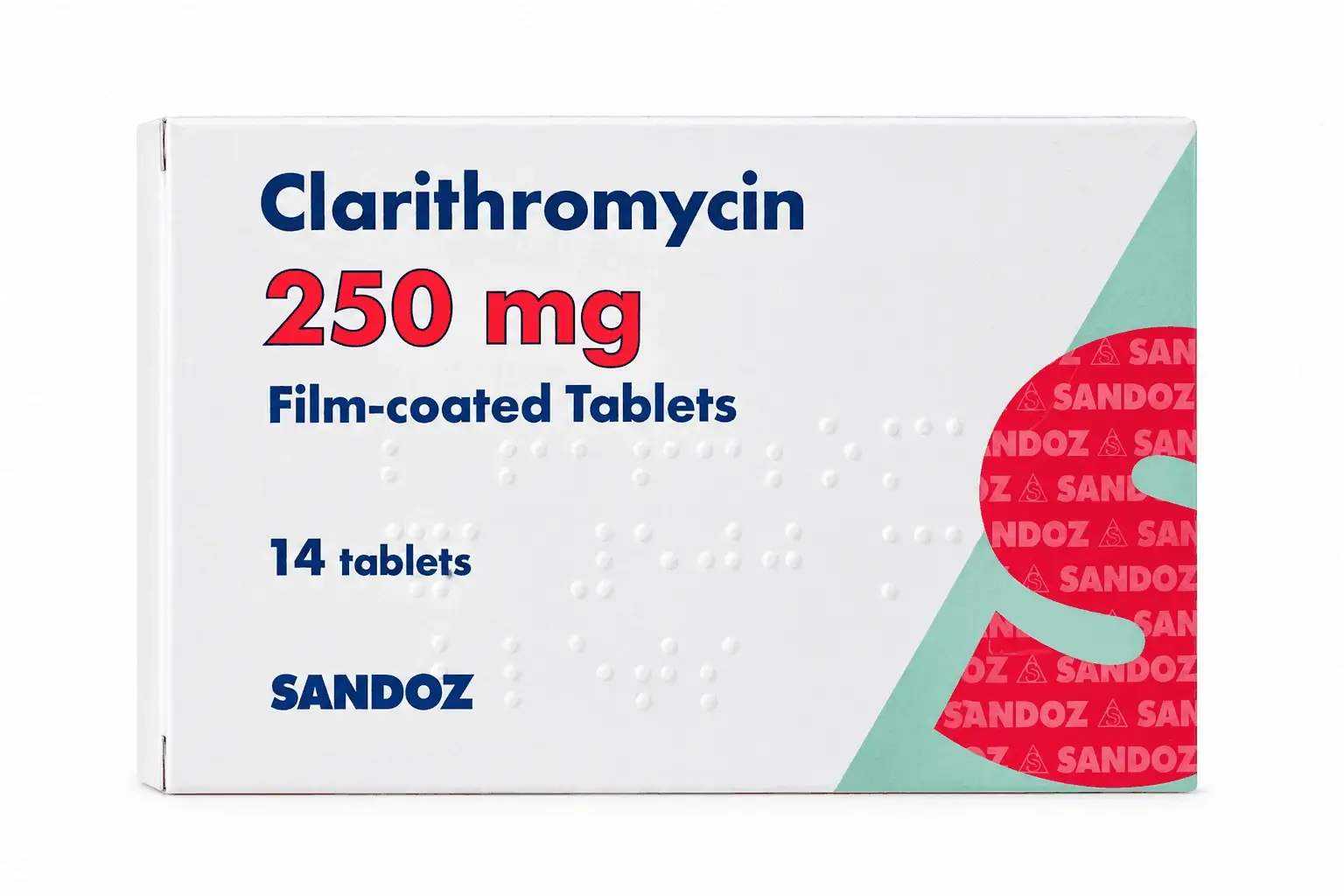
A penicillin-free antibiotic for a bacterial sore throat, strep throat or tonsillitis if you are allergic to penicillin. Prescribed after an online consultation with a UK prescriber, with no GP appointment needed.
Not sure if you need an antibiotic? Most sore throats are viral and get better within a week. A UK prescriber will check your symptoms, and the other medicines you take, before anything is dispensed. You only pay if it is prescribed. For pain relief in the meantime, Difflam sore throat spray can help. Call 999 if you have difficulty breathing or can’t swallow your saliva.
Order before 3pm — same-day dispatch (MON - FRI)
~5 min consultation
Secure & confidential · Reviewed by a UK prescriber
Suitable age
18 years +
Max per order
1 course
Consultation
Yes, online (included in the price)
Clarithromycin is a macrolide antibiotic, licensed in the UK to treat bacterial throat infections. It works by stopping bacteria making the proteins they need to grow, so your immune system can clear the infection and the throat pain, fever and swollen glands can settle.
Most sore throats are caused by viruses and get better within a week, and antibiotics don’t help with them. NICE recommends an antibiotic only when a bacterial infection is likely, for example with fever, pus on the tonsils, swollen tender glands and no cough. Where an antibiotic is needed, phenoxymethylpenicillin is the usual first choice. Clarithromycin is the choice if you are allergic to penicillin or can’t take it. Our guide to the best antibiotic for a throat infection explains why.
Clarithromycin interacts with a number of common medicines, so the prescriber checks everything you take. If it’s right for you, a GPhC-registered pharmacist independent prescriber issues the prescription and our UK pharmacy dispenses it in plain packaging. If it isn’t, they will explain why and tell you where to get the right care.
| Active ingredient | Clarithromycin 250mg film-coated tablets |
| Type | Macrolide antibiotic (oral tablets) |
| Used for | Bacterial sore throat, strep throat and tonsillitis (licensed use), if you are allergic to penicillin |
| Typical dose | 250mg (1 tablet) twice a day, about 12 hours apart |
| Pack size | 5 days, 10 tablets (NICE course length) |
| Prescription | Prescription-only medicine (POM) |
| How supplied | After an online consultation with a UK prescriber |
| Delivery | Approved before 3pm, Mon–Fri: dispatched same day by Tracked 48, Tracked 24 or Special Delivery by 1pm |
Most sore throats are caused by viruses and get better on their own within a week. Paracetamol or ibuprofen, fluids and rest are usually all you need, and an anti-inflammatory spray such as Difflam can ease the pain of swallowing. Our guide on whether you need antibiotics for a sore throat explains when they help.
Prescribers use a short symptom score (FeverPAIN) to judge how likely a bacterial infection is. An antibiotic is more likely to help if you have:
a fever in the last 24 hours;
pus or white patches on your tonsils;
come to see someone within 3 days of the sore throat starting;
very inflamed tonsils;
no cough or runny nose.
Our guides to sore throat vs strep throat and tonsillitis go into the detail.
Clarithromycin in particular is the NICE choice if you are allergic to penicillin. If you can take penicillin, phenoxymethylpenicillin is usually preferred. In pregnancy, erythromycin is usually preferred over clarithromycin.
Clarithromycin is not suitable if you:
are allergic to clarithromycin or another macrolide antibiotic, such as erythromycin or azithromycin;
have had a heart rhythm problem called QT prolongation, or an irregular heartbeat from the lower chambers of the heart;
have low potassium or magnesium levels;
have severe liver failure together with kidney problems;
take certain medicines, including simvastatin, lovastatin, colchicine, ticagrelor, ranolazine, ivabradine, domperidone, ergotamine, pimozide or midazolam taken by mouth. Your prescriber checks your full medicine list.
Get urgent help: - Call 999 if you have difficulty breathing, make a high-pitched sound when breathing, or can’t swallow your saliva. - Contact NHS 111 or a GP the same day for severe pain on one side of the throat with difficulty opening your mouth, a very high temperature, or a weakened immune system.
Clarithromycin is licensed in the UK for bacterial throat infections, and NICE lists it as the antibiotic to use if you are allergic to penicillin. Most sore throats are viral, though, and antibiotics don’t help viral infections, so a prescriber first checks whether a bacterial infection is likely.
Yes. Clarithromycin is a macrolide, a different class of antibiotic from penicillin, which is why it’s used when penicillin can’t be. Tell the prescriber about all your allergies, including any reaction to erythromycin or azithromycin, which are also macrolides.
Many people start to feel better within 2 to 3 days. Finish the full 5-day course even if you feel better sooner. If you’re no better after 3 to 4 days, or get worse at any point, speak to a GP.
The usual adult dose is 250mg twice a day, about 12 hours apart, for 5 days. That’s 10 tablets in total. This is the course NICE recommends for a sore throat, and it’s shorter than the 6 to 14 days in the product licence. Your prescriber can increase the dose to 500mg for a more severe infection. Always follow the dose on your label.
If you can take penicillin, phenoxymethylpenicillin is the UK first choice because it targets the usual bacteria more narrowly. Clarithromycin works well too, and is the choice if you’re allergic to penicillin. Our guide to clarithromycin for sore throat compares them.
Not with simvastatin or lovastatin: clarithromycin must not be taken with them, because it can raise statin levels and cause serious muscle damage. With other statins, your prescriber may ask you to pause the statin during the course. Always list every medicine you take during the consultation.
It isn’t usually prescribed in pregnancy. For a bacterial sore throat in pregnancy, NICE suggests erythromycin if you’re allergic to penicillin. Small amounts of clarithromycin pass into breast milk. Tell the prescriber if you’re pregnant, might be, or are breastfeeding, so they can advise on a suitable option.
The most common are diarrhoea, feeling sick, indigestion, stomach pain, a bitter or metallic taste, headache and difficulty sleeping. Get help straight away for a serious allergic reaction, a fast or irregular heartbeat, yellowing of the skin or eyes, or severe diarrhoea.
Alcohol doesn’t stop clarithromycin working, so a small amount is usually fine. Both can upset your stomach, though, and you’re likely to recover faster if you rest, drink plenty of water and keep alcohol low until you feel better.
Yes, after a consultation. Clarithromycin is a prescription-only medicine, so it can’t be bought over the counter. A GPhC-registered pharmacist independent prescriber checks that a bacterial infection is likely and that it’s safe for you, and our UK pharmacy then dispenses it.
Helpful articles and clinical guides related to this treatment category.
Free consultation
Online review by a UK prescriber
Next-day delivery
Order before 3pm where offered
Discreet packaging
Plain outer packaging