

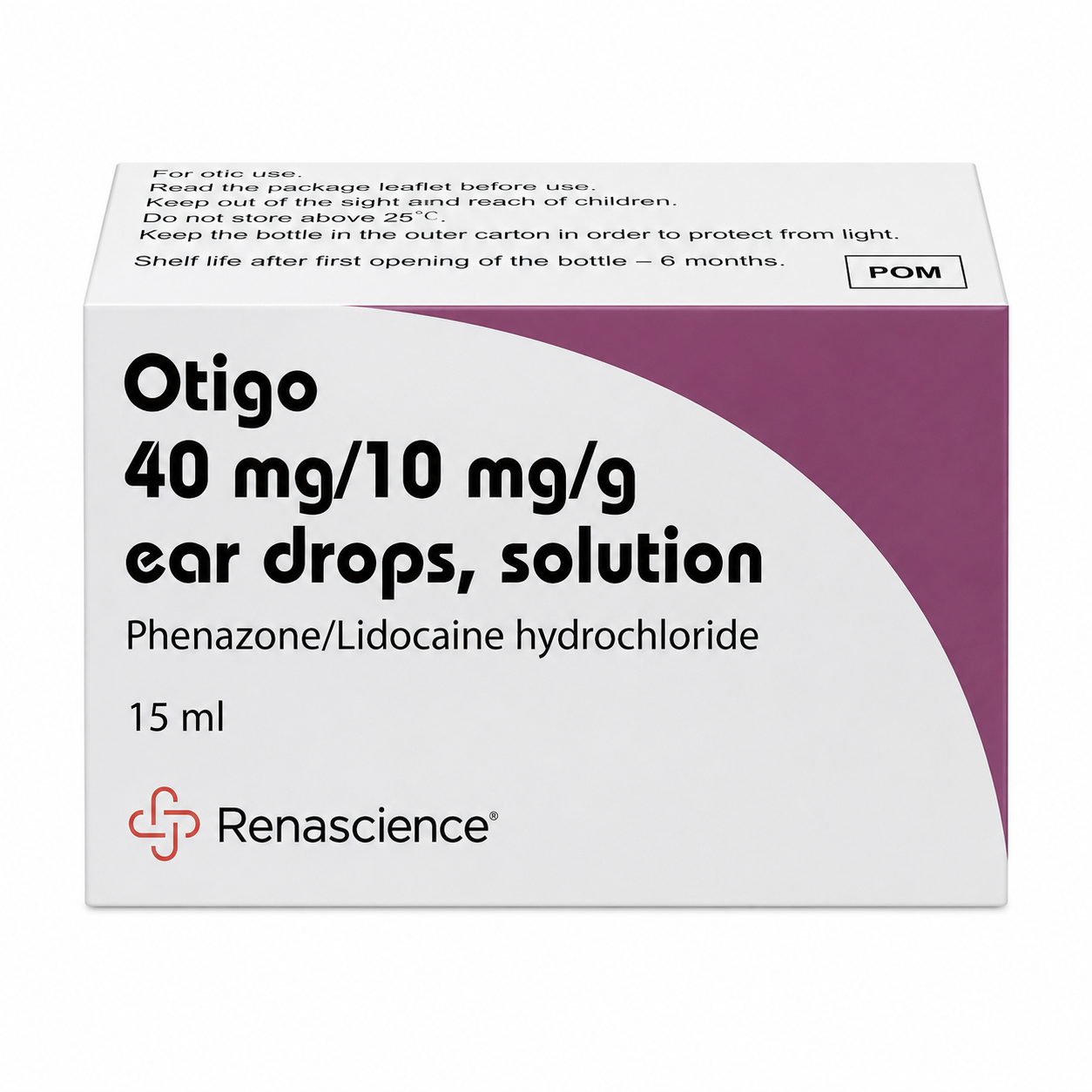
Otigo Ear Drops for Ear Pain | Buy Online UK
From £16.99

Our friendly team is available to help Monday to Friday 9:00am – 5:00pm.
If you need urgent assistance, do not use this service. Call 111, or in an emergency call 999.

Get fast, effective treatment for painful ear infections without waiting weeks for a GP appointment. Complete a short online consultation, get reviewed by a UK-registered clinician, and have your ear infection medication delivered discreetly to your door.
An ear infection is an inflammation or infection of the ear, usually caused by bacteria or viruses. It can affect the outer, middle or inner ear and often causes pain, pressure and reduced hearing.
The most common types are otitis externa (an outer ear infection, sometimes called "swimmer's ear") and otitis media (a middle ear infection). Middle ear infections are especially common in children but can affect adults too.
Typical symptoms include ear pain or earache, a feeling of fullness or pressure, itching, discharge, temporary hearing loss and sometimes a high temperature. Many mild ear infections clear up on their own, but persistent, severe or recurring infections may need treatment with prescription ear drops, antibiotics or pain relief.
Compare the ear infection treatments our clinicians can prescribe. All treatments require a short consultation so a UK-registered clinician can confirm they're right for you. Select a treatment to start your free consultation.
Not sure which treatment is right for you?
A quick side-by-side comparison of common ear infection treatments to help you understand your options. Prices start from our lowest-cost option. Your clinician will confirm the most suitable treatment during your consultation.
Our lowest-cost option. Antibacterial and antifungal ear drops used for mild outer ear infections (otitis externa). Best for: mild swimmer's ear and itchy, inflamed ear canals. Typically 1-2 sprays three times a day.
Start your free consultationAntibiotic tablets or capsules for middle ear infections (otitis media) or infections that haven't responded to ear drops. Best for: confirmed bacterial middle ear infections or spreading infection. Prescription only, following clinician review.
Start your free consultationOnline treatment is not suitable for everyone. Please read the following advice carefully and see a GP or visit A&E in person if any of these apply to you.
Fact: Many ear infections are viral or mild and clear up on their own within a few days. Antibiotics are only helpful for bacterial infections, which is why a clinician assesses your symptoms before prescribing.
Fact: Cotton buds can push wax and debris deeper, damage the ear canal and make an infection worse. Keep the ear dry and avoid inserting anything into it while it heals.
Fact: While middle ear infections are most common in children, adults get ear infections too, especially outer ear infections linked to swimming, humidity or skin conditions.
Paracetamol or ibuprofen can ease earache and reduce fever. Always follow the dosage instructions on the packet.
Avoid getting water in the ear when showering or bathing, and don't go swimming until the infection has cleared.
Holding a warm, dry flannel against the ear can help soothe pain and discomfort.
If you're prescribed ear drops or antibiotics, complete the full course even if you start to feel better, to help prevent the infection returning.
Answers to the questions people most often ask about ear infections and treating them online.
Most mild ear infections improve within 2 to 3 days and clear up fully within a week or two. If symptoms last longer than a few days, get worse, or keep coming back, it's best to have them assessed as you may need prescription treatment.
Yes. You can complete a short online consultation and, if a UK-registered clinician decides antibiotics are appropriate for your symptoms, they can be prescribed and delivered to your door. Not every ear infection needs antibiotics, so the clinician will confirm the most suitable treatment for you.
The fastest approach is to treat the underlying cause. For outer ear infections, prescription ear drops usually work quickly, while middle ear infections may need oral antibiotics. Pain relief, keeping the ear dry and a warm compress can ease symptoms while treatment takes effect.
Many mild ear infections do clear up on their own within a few days without antibiotics. However, if you have severe pain, a high temperature, discharge, or symptoms that don't improve, you should get treatment to prevent complications.
It can be hard to tell the difference yourself. Bacterial infections often cause more severe or persistent pain, discharge and fever, while viral infections may accompany a cold and ease on their own. During your consultation, a clinician reviews your symptoms to help decide whether antibiotics are needed.
For many straightforward ear infections in adults, an online consultation is a safe and convenient option because a UK-registered clinician still reviews your case before any treatment is approved. However, young children, pregnant women and anyone with severe or spreading symptoms should be seen in person.
Helpful reads related to this treatment area.
Start your free online consultation today.