

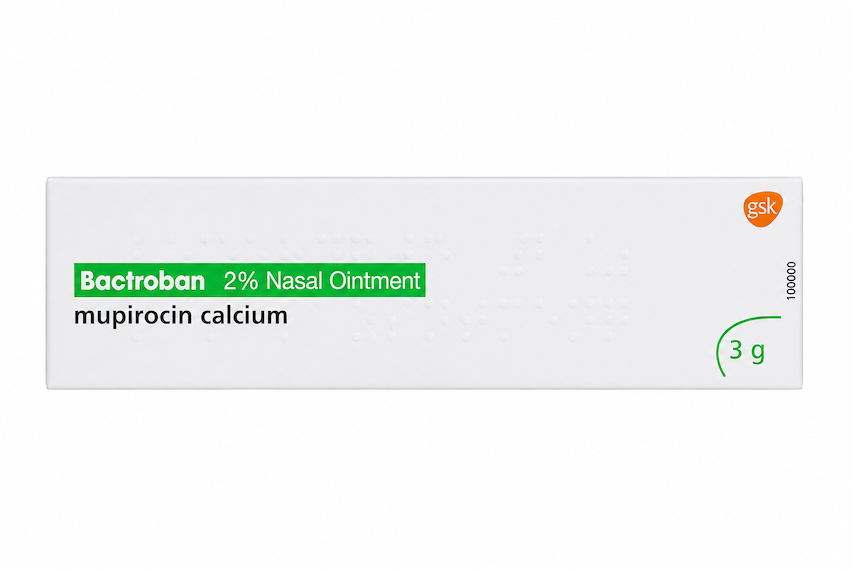
Bactroban Nasal Ointment (Mupirocin)
From £14.99

Our friendly team is available to help Monday to Friday 9:00am – 5:00pm.
If you need urgent assistance, do not use this service. Call 111, or in an emergency call 999.

A nasal infection usually means a painful, red, or crusted spot just inside the nostril, often called nasal vestibulitis or folliculitis.
An overview of nasal infections, their causes, and when nasal decolonisation treatment may be appropriate.
A nasal infection usually means a painful, red, or crusted spot just inside the nostril, often called nasal vestibulitis or folliculitis. It's almost always caused by a common skin bacterium, Staphylococcus aureus, getting into a hair follicle or small break in the skin at the entrance of the nose. It's different from sinusitis, which affects the sinuses further back and causes facial pain, congestion, and discharge; if that sounds more like what you have, our Sinusitis treatment page is the right place to start.
Some people also need treatment to reduce, or decolonise, Staph aureus living in the nose, for example if they keep getting boils or skin infections, if a hospital or surgical team has asked for it before an operation, or if someone in their household has been diagnosed with MRSA. This is a preventive treatment, not a cure for an active infection, and it's only appropriate in specific situations.
All treatment is subject to a full online clinical assessment by a GPhC-registered prescriber, who will confirm the right option for you.
| Treatment | Best for | How it works | Notes |
|---|---|---|---|
| Topical treatment | Infection limited to the nostril (first-line) | A course of fusidic acid or mupirocin ointment applied directly to the affected area. | Usually tried first for localised infections. |
| Oral antibiotics | Spreading infection or feeling generally unwell | Added alongside topical treatment; options include flucloxacillin, or clarithromycin/doxycycline if allergic to penicillin. | Used in addition to, not instead of, topical treatment. |
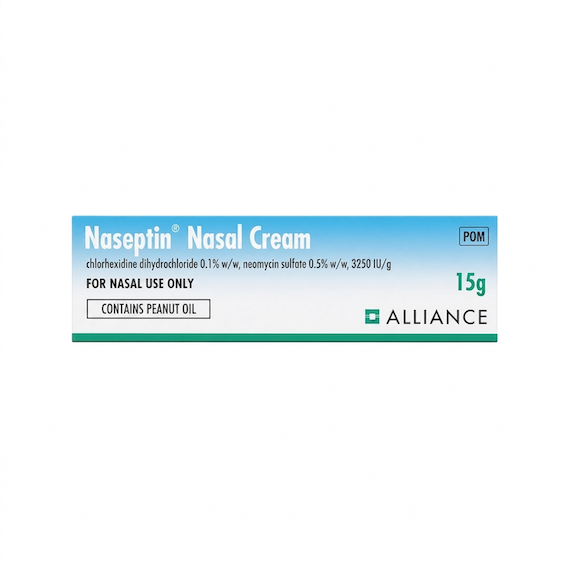
| Staphylococcal nasal decolonisation | Recurrent infections, pre-operative instruction, or household MRSA contact | A short course of mupirocin nasal ointment, or Naseptin as an alternative unless allergic to peanut or soya. | Not used for a first, single episode. |
Not sure which option is right for you?
Seek emergency care (call 999 or go to A&E) if you notice any of the following, as they can be signs of a rare but serious complication where infection spreads from the nose toward the eyes and brain.
Related reading on nasal infections and treatment options.
Answers to common questions about symptoms, treatment options, and Staphylococcal nasal decolonisation.
No. Nasal vestibulitis/folliculitis is a skin infection right at the entrance of the nostril. Sinusitis affects the sinuses further back and causes different symptoms like facial pain and congestion — see our separate Sinusitis treatment page for that.
Not usually. Decolonisation is reserved for people with recurrent infections, a specific pre-operative instruction, or household MRSA contact — a first episode is normally treated with topical antibiotic ointment instead.
No — Naseptin contains peanut (arachis) oil and must not be used if you have a peanut or soya allergy. Mupirocin is used instead in that situation.
Most localised infections respond to topical treatment within 5–7 days. If things aren't improving in that time, or get worse, you'll be advised to seek further review.
If you develop swelling or pain around your eyes, vision changes, a severe headache, or feel very unwell — see the safety information above.
With your consent, yes — Access Doctor can notify your GP surgery of the consultation and any treatment provided.
If you think you may have a nasal infection, or have been advised to arrange Staphylococcal nasal decolonisation treatment, you can complete a short online consultation. A GPhC-registered prescriber will review your answers and confirm the most appropriate option for you.