

Naproxen Tablets
From £14.99

Our friendly team is available to help Monday to Friday 9:00am – 5:00pm.
If you need urgent assistance, do not use this service. Call 111, or in an emergency call 999.

If you have had gout before, you will know how suddenly it comes on. A joint that was fine when you went to bed can be hot, swollen and too painful to touch by the morning. Treatment started early can shorten an attack and ease the pain.
Our service is only for treating a gout attack in adults who have already been diagnosed with gout by a doctor. We don't offer long-term gout management or medicines to lower uric acid. A GPhC-registered pharmacist independent prescriber checks treatment is suitable for you, and we share the consultation with your GP.
We treat gout attacks only, for adults who have previously been diagnosed with gout by a doctor. If this is your first attack, or it has never been checked by a doctor, please see your GP or contact NHS 111. Other conditions, including joint infections, can look very similar to gout and need to be checked in person.
We do not offer long-term gout management. Medicines that lower uric acid, such as allopurinol or febuxostat, are started at a low dose and adjusted using regular blood tests, so they are best managed by your GP. If you already take one, keep taking it during an attack.
We share each consultation with your GP, so your records stay complete; we can't supply treatment without your consent. If you've had 2 or more attacks in the last 12 months, we can treat this one, but please see your GP about long-term treatment to lower your uric acid.
Gout is a type of inflammatory arthritis. It happens when uric acid builds up in the blood and forms tiny, needle-shaped crystals in and around a joint. Your immune system reacts to these crystals, and that reaction causes the sudden pain and swelling of a gout attack.
Gout is the most common type of inflammatory arthritis, affecting around 1 in 40 people in the UK. It is about four times more common in men than in women, and becomes more likely with age. Women rarely develop gout before the menopause, because oestrogen helps the kidneys clear uric acid.
Gout is a long-term condition, but attacks come and go. Between attacks, most people have no symptoms at all. For a full overview, read our complete guide to gout.
The gout medication below treats an attack. They don't lower uric acid. A prescriber will only supply one if it's safe for you, based on your health and the other medicines you take. Naproxen is usually tried first; colchicine suits people who can't take anti-inflammatories; diclofenac isn't suitable for anyone with heart or circulation problems.
Not sure which option is right for you?
This service is for adults aged 18 and over who have been diagnosed with gout by a doctor and are having an attack now. It is not suitable for a first attack, or for long-term gout management.
Answer questions about your gout, your health and the medicines you take. It usually takes about five minutes.
A UK-registered prescriber checks whether treatment is safe and suitable for you, and may contact you if they need more information.
If treatment is approved, it is dispensed by our GPhC-registered pharmacy and sent in plain packaging. If it isn't suitable, the prescriber will explain why and tell you where to go instead.
Gout is not usually an emergency, but some symptoms need to be checked the same day, as they can be signs of a joint infection. Our guide to gout or septic arthritis explains the warning signs.
Do not use this service. Contact NHS 111 or go to A&E if:
Uric acid is a natural waste product. Your body makes it when it breaks down purines, which are found in your own cells and in some foods and drinks. Normally, your kidneys filter uric acid out of the blood and you pass it in your urine.
Gout develops when your body makes too much uric acid, or your kidneys do not clear enough of it. The level in your blood rises, and crystals start to form. Gout most often affects the big toe. Experts are not certain why, but cooler temperatures in the feet, past injury and wear in the joint may all play a part.
You are more likely to develop gout if you:
have a family history of gout
are overweight
drink alcohol
have been through the menopause
take water tablets (diuretics) or some blood pressure medicines, such as ACE inhibitors
have high blood pressure, high cholesterol, kidney problems, osteoarthritis or diabetes
have had surgery or an injury
An attack is often set off by something specific. Common triggers include an illness with a high temperature, drinking too much alcohol, eating a very large meal, becoming dehydrated, injuring a joint, taking certain medicines, or starting medicine to lower uric acid.
A gout attack usually comes on quickly, often overnight or in the early hours of the morning. The main symptoms are:
sudden, severe pain in a joint
swelling in and around the joint
hot, red skin over the joint (redness may be harder to see on black or brown skin)
a joint that is very tender to touch
The joint at the base of the big toe is affected most often. Gout can also affect other joints in the feet, and the ankles, knees, hands, wrists and elbows.
Without treatment, an attack usually lasts one to two weeks. Gout can come back every few months, or not for years, and it tends to come back more often if it is not treated. Over time, repeated attacks can damage joints, form hard lumps under the skin called tophi, or cause kidney stones. Read more in our guide to untreated gout, tophi and the kidneys.
Gout must always be diagnosed by a doctor the first time. Other conditions can look very similar, including a joint infection, which needs urgent treatment. This is why our online service is only for people who have already been diagnosed with gout.
Your GP will usually diagnose gout from your symptoms, by examining the joint, and by asking about your diet and alcohol intake. They may also arrange:
A blood test to measure your uric acid level. The level can be lower during an attack, so if gout is still suspected, the test is repeated at least two weeks after the attack has settled. Read our guide to the uric acid blood test.
A joint fluid test, where a small sample of fluid is taken from the joint with a thin needle and checked for crystals. This is usually done if the diagnosis is uncertain, often by a rheumatologist.
A scan, such as an X-ray, ultrasound or special type of CT scan, if a joint fluid test cannot be done or the diagnosis is still unclear.
Not sure whether a painful big toe is gout? Our guide comparing causes of a painful big toe explains the differences.
The aim of treatment is to calm the inflammation and ease the pain. Take your treatment as soon as possible after an attack starts. It should start to work within two days.
UK guidance from NICE recommends three first-line options for a gout attack: an anti-inflammatory painkiller (an NSAID), colchicine, or a short course of steroid tablets. The right choice depends on your other health conditions, the medicines you already take, and your preferences. Our service offers naproxen, diclofenac and colchicine. A prescriber uses your consultation answers to decide which, if any, is suitable.
Anti-inflammatory painkillers (NSAIDs), such as naproxen. NSAIDs reduce pain and inflammation. Naproxen is usually taken for a short time, until the attack has settled, ideally with or after food. It is not suitable for everyone. It may not be suitable if you have had a stomach ulcer, have a heart, liver or kidney condition, have asthma, have had a stroke, have Crohn's disease or ulcerative colitis, have problems with blood clotting, or are pregnant or trying to get pregnant. Your prescriber may also give you a medicine to protect your stomach, such as omeprazole. Do not take naproxen with other anti-inflammatory painkillers, such as ibuprofen or aspirin. If you're 65 or over, you'll need a stomach-protecting medicine such as omeprazole with an anti-inflammatory, or colchicine may suit you better. Diclofenac carries a higher risk of heart attack and stroke than naproxen, so it isn't suitable if you have heart disease, have had a stroke or mini-stroke, have poor circulation in your legs, or have heart failure. We supply up to 28 tablets for an attack; for naproxen, the gout dose uses the 250mg tablets.
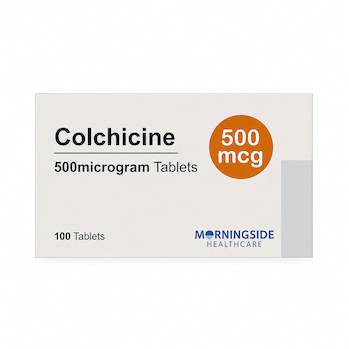
Colchicine. Colchicine reduces pain and joint inflammation in a different way from a painkiller. It is taken for a short time until the attack settles, and there is a strict limit on how much you can take in one course: no more than 6 mg (12 tablets of 500 micrograms). Your prescriber will tell you exactly how to take it. Do not take doses closer together than prescribed, and do not start another course within three days of finishing one. Colchicine may not be suitable if you have kidney, liver or heart problems, a blood condition, or a digestive condition such as a stomach ulcer, Crohn's disease, ulcerative colitis or coeliac disease. It also interacts with several common medicines and with grapefruit juice. Stop taking it and get medical advice straight away if you get diarrhoea or vomiting, as these can be early signs of too much colchicine. We supply one course (12 tablets) at a time. Our colchicine guide explains more.
Steroids. A GP may prescribe a short course of steroid tablets, such as prednisolone, or give a steroid injection into the joint or a muscle if other treatments are not suitable. Steroids are not available through our online service.
Our guide to managing an acute gout attack covers the first 48 hours.
Paracetamol can be taken alongside naproxen or colchicine for a short time if you need extra pain relief, but check with a pharmacist first. If you already take allopurinol or febuxostat to lower your uric acid, keep taking it as normal during an attack.
Alongside your treatment, these steps can help ease the pain:
Take your treatment as soon as possible after an attack starts.
Rest the joint and keep it raised.
Keep the joint cool. Apply an ice pack or a bag of frozen peas, wrapped in a towel, for up to 20 minutes at a time.
Try to keep bedclothes off the joint at night.
Do not put pressure on the joint, as this can make the pain worse.
Drink plenty of water, unless a doctor has told you not to.
Keep taking any medicine you have been prescribed to lower your uric acid.
Access Doctor only treats gout attacks. We do not offer long-term gout management. Preventing future attacks usually means bringing your uric acid level down and keeping it down, and that is best done with your GP.
NICE recommends that your GP discusses urate-lowering treatment, such as allopurinol or febuxostat, with you after a first or later gout attack. It should be offered if you have frequent or troublesome attacks, lumps of crystals under the skin (tophi), ongoing joint pain from gout, chronic kidney disease (stages 3 to 5), or take water tablets. Treatment is started at a low dose and increased gradually, guided by monthly blood tests, until your uric acid level is below 360 micromol/L. It is usually taken for life. This ongoing monitoring is why we do not supply these medicines. Our allopurinol guide explains how it works, and our gout diet guide covers food and drink.
Healthy lifestyle choices may also help reduce further attacks:
Lose weight if you are overweight, but avoid crash diets.
Have some alcohol-free days each week, and try not to drink more than 14 units a week.
Eat a healthy, balanced diet. Your doctor may give you a list of foods to include or limit.
Avoid lots of sugary drinks and snacks.
Drink plenty of fluids to avoid getting dehydrated.
Exercise regularly, but avoid intense exercise or putting lots of pressure on your joints.
Stop smoking if you smoke.
NICE notes there is not enough evidence that any specific diet prevents gout attacks or lowers uric acid, so lifestyle changes on their own are rarely enough if you have frequent attacks.
Our gout service treats gout attacks in adults who have already been diagnosed with gout by a doctor. We do not offer long-term gout management.
Yes, if you have been diagnosed with gout by a doctor before and are having an attack now. You complete a short online consultation, and a UK-registered prescriber checks whether treatment is safe and suitable for you. If it is, your medicine is dispensed by our GPhC-registered pharmacy and sent to you in plain packaging. We only treat gout attacks and do not offer long-term gout management.
Yes, both are prescription-only medicines for gout. At Access Doctor, a GPhC-registered pharmacist independent prescriber reviews your online consultation and prescribes if it's safe. The price of the medicine includes the consultation.
Neither is better for everyone. NICE recommends an anti-inflammatory painkiller such as naproxen, colchicine, or a short course of steroid tablets as first-line options, chosen around your health, other medicines and preferences. Naproxen may not be suitable if you have had a stomach ulcer, or have a heart, liver or kidney condition or asthma. Colchicine interacts with several common medicines and may not be suitable with kidney, liver or heart problems. Your prescriber will decide based on your answers. We also supply diclofenac, but not for anyone with heart or circulation problems.
Treatment for a gout attack should start to work within two days. It works best when you take it as soon as possible after an attack starts. If your symptoms are not improving within two days, or the pain is getting worse, contact your GP or NHS 111.
Without treatment, a gout attack usually lasts one to two weeks. Starting treatment as soon as possible can help the pain and swelling settle sooner. If gout is not treated, future attacks may last even longer.
For a gout attack, we prescribe one or the other, not both together. You can usually take paracetamol alongside either medicine for a short time if you need extra pain relief, but check with a pharmacist first.
It is best to avoid alcohol while you have an attack, as too much alcohol can trigger gout. If you take naproxen, limit alcohol, because it increases the risk of stomach ulcers and bleeding. If you take colchicine, do not drink grapefruit juice.
Some medicines and grapefruit juice can raise the amount of colchicine in your blood, which can cause serious side effects. These include statins, the antibiotics erythromycin and clarithromycin, verapamil, diltiazem and digoxin, HIV medicines such as ritonavir, cimetidine and ciclosporin. Always list every medicine, herbal remedy and supplement you take in your consultation.
No. We only treat gout attacks. Allopurinol, febuxostat and other medicines that lower uric acid are started at a low dose and adjusted with regular blood tests, which your GP is best placed to manage. If you have frequent or troublesome attacks, speak to your GP about long-term treatment.
No. If you already take allopurinol or febuxostat, keep taking it at your usual dose during an attack. Stopping it can cause your uric acid level to rise and make further attacks more likely.
No. A first attack should always be checked by a doctor, because other conditions, including joint infections, can look like gout. Please contact your GP or NHS 111. Once a doctor has diagnosed gout, you can use our service to treat future attacks.
Diet can make attacks more likely, but for most people gout is caused by their genes, other health conditions or medicines. NICE says there is not enough evidence that any specific diet prevents gout attacks. A healthy, balanced diet, keeping to a healthy weight, limiting alcohol and avoiding lots of sugary drinks are still good for your overall health.
Yes. Gout is about four times more common in men, and women rarely get it before the menopause, because oestrogen helps the kidneys clear uric acid. After the menopause, the risk rises.
The prescriber will explain why and advise you on the best next step, such as seeing your GP. We share every consultation with your GP, with your consent; we can't supply treatment without it.
Usually 750mg to start, then 250mg every 8 hours until the attack has passed, taken with or after food. Your prescriber confirms the dose. See naproxen tablets.
If you've had 2 or more attacks in a year, see your GP about long-term treatment to lower your uric acid, such as allopurinol. NICE recommends it for frequent attacks. We can still treat an attack while you arrange that. See our allopurinol guide.
Helpful reads related to this treatment area.
If a doctor has diagnosed gout in the past, start a short online consultation. A pharmacist prescriber will review your answers and let you know whether treatment for your attack is suitable. If this is your first attack, please see your GP.