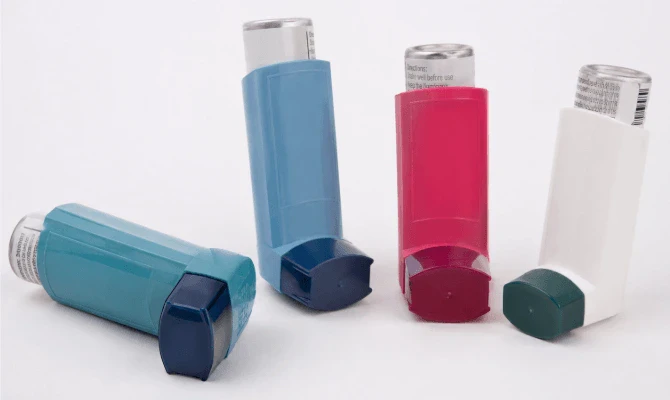


Ventolin Evohaler for Asthma and COPD Relief
From £8.99

Our friendly team is available to help Monday to Friday 9:00am – 5:00pm.
If you need urgent assistance, do not use this service. Call 111, or in an emergency call 999.

Already diagnosed with asthma or COPD? You can order a repeat of the inhaler your GP or asthma nurse prescribes, without waiting for an appointment. Complete a confidential online consultation and a GPhC-registered pharmacist independent prescriber will check it’s safe to supply. We share the outcome with your GP, so your records stay up to date.
Asthma is a long-term condition in which the airways become inflamed and narrow, causing wheezing, breathlessness, a tight chest and coughing. Most people control it well with the right inhalers (sometimes called asthma pumps or puffers), used every day as prescribed.
There are three main types of asthma inhaler. Preventers, also called preventative or steroid inhalers (such as Clenil Modulite), calm the inflammation in your airways, so you get fewer symptoms and attacks. Relievers such as Ventolin open your airways quickly when you have symptoms. Combination inhalers such as Symbicort contain both.
Since 2024, UK guidance (NICE, BTS and SIGN) says everyone with asthma should use an inhaled steroid, not a reliever on its own. Many people now use one combination inhaler both every day and when they have symptoms, called MART, or only when they need it, called AIR.
Our online service is for adults who already have a diagnosis and want a repeat of the inhaler their GP or asthma nurse prescribes. Asthma is diagnosed with tests such as FeNO and spirometry, and changes to your treatment need a review with someone who knows your history. So if you think you might have asthma, or your inhalers aren’t working, please see your GP or asthma nurse. Our guide to asthma inhalers explains each type, and our asthma guide covers symptoms and triggers.
We supply the asthma medication you’ve already been prescribed: the same inhaler, strength and dose. A pharmacist prescriber checks your answers before anything is dispensed.


| Inhaler | Type | What it does | Used for | Price from |
|---|---|---|---|---|
| Ventolin Evohaler (salbutamol) | Reliever | Relaxes the airway muscles within minutes; lasts 4 to 6 hours | Quick relief, alongside a preventer | £8.99 |
| Salamol (salbutamol) | Reliever | Same medicine as Ventolin | Quick relief, alongside a preventer | £13.99 |
| Bricanyl Turbohaler (terbutaline) | Reliever | Dry powder reliever, works within minutes | Quick relief, alongside a preventer | £20.99 |
| Clenil Modulite (beclometasone) | Preventer | Inhaled steroid that reduces airway inflammation | Daily, even when well | £15.99 |
| Qvar Autohaler (beclometasone) | Preventer | Extra-fine inhaled steroid, breath-actuated | Daily, even when well | £19.99 |
| Pulmicort Turbohaler (budesonide) | Preventer | Inhaled steroid, dry powder | Daily, even when well | £23.99 |
| Symbicort Turbohaler (budesonide/formoterol) | Combination | Steroid plus fast-acting, long-lasting bronchodilator | Daily, MART or AIR, as your plan says | £41.99 |
| Seretide Accuhaler (fluticasone/salmeterol) | Combination | Steroid plus long-acting bronchodilator | Twice daily; not a reliever | £48.99 |
| Serevent (salmeterol) | Add-on | Long-acting bronchodilator | Only with a steroid preventer (asthma), or COPD | £42.99 |
| Atrovent (ipratropium) | Antimuscarinic | Relaxes the airways over about 15 minutes | Regular use, mainly in COPD | £19.99 |
Not sure what you’re prescribed? Check the label on your inhaler or your repeat prescription.
It takes a few minutes, and we only supply an inhaler you’re already prescribed.
Tell us who diagnosed you, which inhalers you use and how often, and whether you’ve needed steroid tablets or hospital care recently.
A pharmacist independent prescriber checks it’s safe to supply. If your answers suggest your asthma isn’t well controlled, they’ll tell you and may ask you to see your GP or asthma nurse.
With your consent, we send your GP a summary, so your records stay complete. We can’t supply asthma inhalers without this consent.
If approved before 3pm, Monday to Friday, it’s dispatched the same day in plain packaging. You choose Royal Mail Tracked 48, Tracked 24 or Special Delivery guaranteed by 1pm next working day. Delivery is free on orders over £40.
An asthma attack can be life-threatening. Signs include your reliever not helping, being too breathless to speak, eat or sleep, breathing very fast, or blue or grey lips or fingertips. If you have an asthma action plan, follow it. Otherwise:
A few common beliefs about asthma can put people at risk.
FACT: Many children’s asthma improves, but it can come back, and adults can develop asthma for the first time at any age.
FACT: A blue reliever eases symptoms but does nothing for the inflammation underneath. UK guidance now says everyone with asthma should use an inhaled steroid. If you need your reliever more than twice a week, ask for an asthma review.
FACT: Preventer inhalers use a small dose of steroid that goes straight to your lungs. Side effects are usually minor, such as a sore mouth or hoarse voice; rinsing your mouth after use helps. Not taking a preventer is a far bigger risk.
A few habits make the biggest difference to how well your asthma is controlled.
Take your preventer every day, even when you feel well. Check your inhaler technique, because small changes often make a big difference. Our guide to how to use an inhaler shows each type, and an AeroChamber spacer helps with aerosol inhalers.
Have an asthma review at least once a year with your GP or asthma nurse, and keep a written asthma action plan. A peak flow meter helps you follow it.
Know your triggers. Colds, pollen, smoke, cold air and dust mites are common ones; see our asthma triggers guide. Have your flu vaccine every year, and any other vaccines your GP offers. If you smoke, stopping is one of the best things you can do for your asthma.
Relievers, preventers, combination inhalers, AIR and MART, and what each colour means.
Read guideThe blue inhaler: how it works, how many puffs, and when using it a lot matters.
Read guideHow inhaled steroids work and why you take them every day.
Read guideStep-by-step technique for each type of inhaler, and spacers.
Read guideThe warning signs, what to do and when to call 999.
Read guideOur main guide to asthma.
Read guideWe can supply your usual inhaler if you’re 18 or over, your asthma or COPD was diagnosed by a GP, asthma nurse or hospital team, you’re asking for the same inhaler, strength and dose you’re already prescribed, and you agree to us sharing the consultation with your GP. See your GP or asthma nurse instead if any of these apply:
Asthma and COPD inhalers are prescription-only medicines in the UK. Before anything is supplied, a GPhC-registered pharmacist independent prescriber checks your answers, including your other medicines; some, such as beta-blockers, can make asthma worse.
We supply up to 2 reliever inhalers at a time. If you’re not using a preventer, we can supply a reliever once and will ask you to see your GP or asthma nurse; the MHRA advises that relievers shouldn’t be used without an inhaled steroid. Read the leaflet in the pack, and check your technique. You can report side effects to a pharmacist or doctor, or to the MHRA through the Yellow Card scheme (yellowcard.mhra.gov.uk).
Your consultation is confidential. We share it with your GP because asthma needs ongoing care, and your GP needs to know what you’re using. Access Doctor is a private service, and there are free NHS options. Your GP practice handles asthma reviews and repeat prescriptions, and many let you order repeats through the NHS App. In England, if you start a new inhaler, many pharmacies offer the free New Medicine Service.
NHS prescriptions are free in Scotland, Wales and Northern Ireland. In England a prescription charge applies unless you’re exempt, and a prepayment certificate can save money if you need several items. For urgent advice, call NHS 111, or 999 in an emergency.
Answers about ordering your inhaler online, and using it safely.
Yes, if you’re 18 or over, already diagnosed with asthma or COPD, and want the same inhaler you’re prescribed now. A GPhC-registered pharmacist independent prescriber reviews your consultation and, if it’s safe, we supply it and let your GP know. If you’ve not been diagnosed, or your inhalers aren’t controlling your symptoms, please see your GP or asthma nurse. See our guide to getting an inhaler without seeing a doctor.
No. Ventolin and other asthma inhalers are prescription-only medicines in the UK, so no pharmacy can sell them without a prescriber checking they’re right for you. You can get a prescription from your GP, or through a regulated online consultation like ours. Our guide to ordering an asthma inhaler online explains how it works. Be wary of any website that offers Ventolin or other inhalers with no questions asked.
Asthma needs ongoing care, and your GP needs a full record of the inhalers you use, especially if you’re using more reliever than usual. UK regulators expect online pharmacies to take extra care with medicines for long-term conditions, so we can’t supply asthma inhalers without your consent to share.
Up to 2 at a time. If you’ve needed 3 or more reliever inhalers in the last 12 months, we’ll ask you to have an asthma review with your GP or asthma nurse first, because needing that many is linked to a higher risk of serious asthma attacks.
We can supply a reliever once so you’re not left without, but we’ll ask you to see your GP or asthma nurse. Since 2024, UK guidance says everyone with asthma should use an inhaled steroid, not a reliever on its own. Your GP may suggest a preventer, or a combination inhaler that does both jobs.
A reliever, usually blue, opens your airways quickly when you have symptoms. A preventer contains a low-dose steroid that calms the inflammation in your airways when taken every day, so you get fewer symptoms and attacks. Combination inhalers such as Symbicort contain both kinds of medicine. Our asthma inhalers guide explains each type.
Both use one combination inhaler containing budesonide and formoterol, such as Symbicort. With AIR (anti-inflammatory reliever), you use it only when you have symptoms. With MART (maintenance and reliever therapy), you take it every day and use extra puffs when you need them. Your GP or asthma nurse decides which suits you. We supply them as repeats.
Yes. Keeping your asthma controlled in pregnancy is important for you and your baby, and the commonly used inhalers are considered safe. We can supply the inhaler you already use, and we’ll let your GP know. Don’t stop or change your inhalers without advice, and tell your midwife you have asthma.
Yes, if your COPD has been diagnosed and you need a repeat of the inhaler your GP or respiratory team prescribes. We don’t start or change COPD treatment online. If your breathing is getting worse, you’re coughing up more or discoloured phlegm, or you have a flare-up, contact your GP or NHS 111.
If you need your reliever more than twice a week, wake at night with asthma, or are getting through more inhalers than usual, your asthma isn’t well controlled. Book an asthma review with your GP or asthma nurse soon. If your reliever isn’t helping or you’re struggling to breathe, follow the asthma attack steps on this page and call 999 if needed.
Yes. Preventers deliver a small dose of steroid straight to your lungs, so far less reaches the rest of your body than with steroid tablets. The commonest side effects are a sore mouth, oral thrush and a hoarse voice; rinsing your mouth and using a spacer help. See our preventer inhaler guide.
Through our private service, prices start from £8.99 for a Ventolin inhaler, and the consultation is included. NHS prescriptions are free in Scotland, Wales and Northern Ireland. In England a prescription charge applies unless you’re exempt, and a prepayment certificate can save money if you use several inhalers.
There isn’t one best inhaler. UK guidance now starts most adults on a combination inhaler containing a steroid and formoterol, such as Symbicort, used as needed (AIR) or every day plus as needed (MART). The right one also depends on your symptoms and which device you can use well. Your GP or asthma nurse chooses it with you; we supply the inhaler you’ve already been prescribed. Our asthma inhalers guide compares the types.
If your consultation is approved before 3pm, Monday to Friday, your inhaler is dispatched the same day in plain packaging. You choose Royal Mail Tracked 48, Tracked 24 or Special Delivery guaranteed by 1pm next working day. Orders approved at the weekend or on a bank holiday are dispatched the next working day.
We supply relievers (Ventolin, Salamol, Bricanyl), preventers (Clenil Modulite, Qvar, Pulmicort), combination inhalers (Symbicort, Seretide), Serevent and Atrovent, plus a spacer and a peak flow meter. We supply the inhaler, strength and dose you’re already prescribed.
Yes. If you use both, you can order them in the same consultation, up to 2 of each. The prescriber checks that the combination matches what your GP or asthma nurse has prescribed.
It is if you use a registered pharmacy that checks your answers before supplying anything. Check the pharmacy is on the General Pharmaceutical Council (GPhC) register at pharmacyregulation.org. Access Doctor’s registration number is 9011198. Avoid websites that sell inhalers with no consultation, and keep your GP informed so your asthma reviews carry on.
If you’re struggling to breathe, or your reliever isn’t helping, call 999. If you’ve run out of your usual inhaler and need one today, a high street pharmacist may be able to give you an emergency supply of a medicine you’ve been prescribed before, or call NHS 111. Ordering online takes longer, because the inhaler has to be posted.
Helpful reads related to this treatment area.
Start a short online consultation and our clinical team will review whether treatment is suitable for you.