


Omeprazole 10mg & 20mg Capsules
From £14.99

Our friendly team is available to help Monday to Friday 9:00am – 5:00pm.
If you need urgent assistance, do not use this service. Call 111, or in an emergency call 999.

Omeprazole, lansoprazole, esomeprazole and famotidine to reduce stomach acid and treat heartburn, acid reflux and GORD. Prescribed online by our GPhC-registered pharmacist prescribers if suitable for you.
Acid reflux happens when stomach acid flows back up into the food pipe (oesophagus), causing heartburn – a burning feeling in the chest – and an acid taste in the mouth. When it happens often, it is called gastro-oesophageal reflux disease (GORD). The right treatment depends on how often you get symptoms and how severe they are.
Proton pump inhibitors (PPIs)
PPIs such as omeprazole, lansoprazole and esomeprazole are the main treatment for frequent acid reflux and GORD. They reduce the amount of acid your stomach makes, which relieves symptoms and gives the oesophagus time to heal. Most people start to feel better within 2 to 3 days, but they can take up to 4 weeks to work fully.
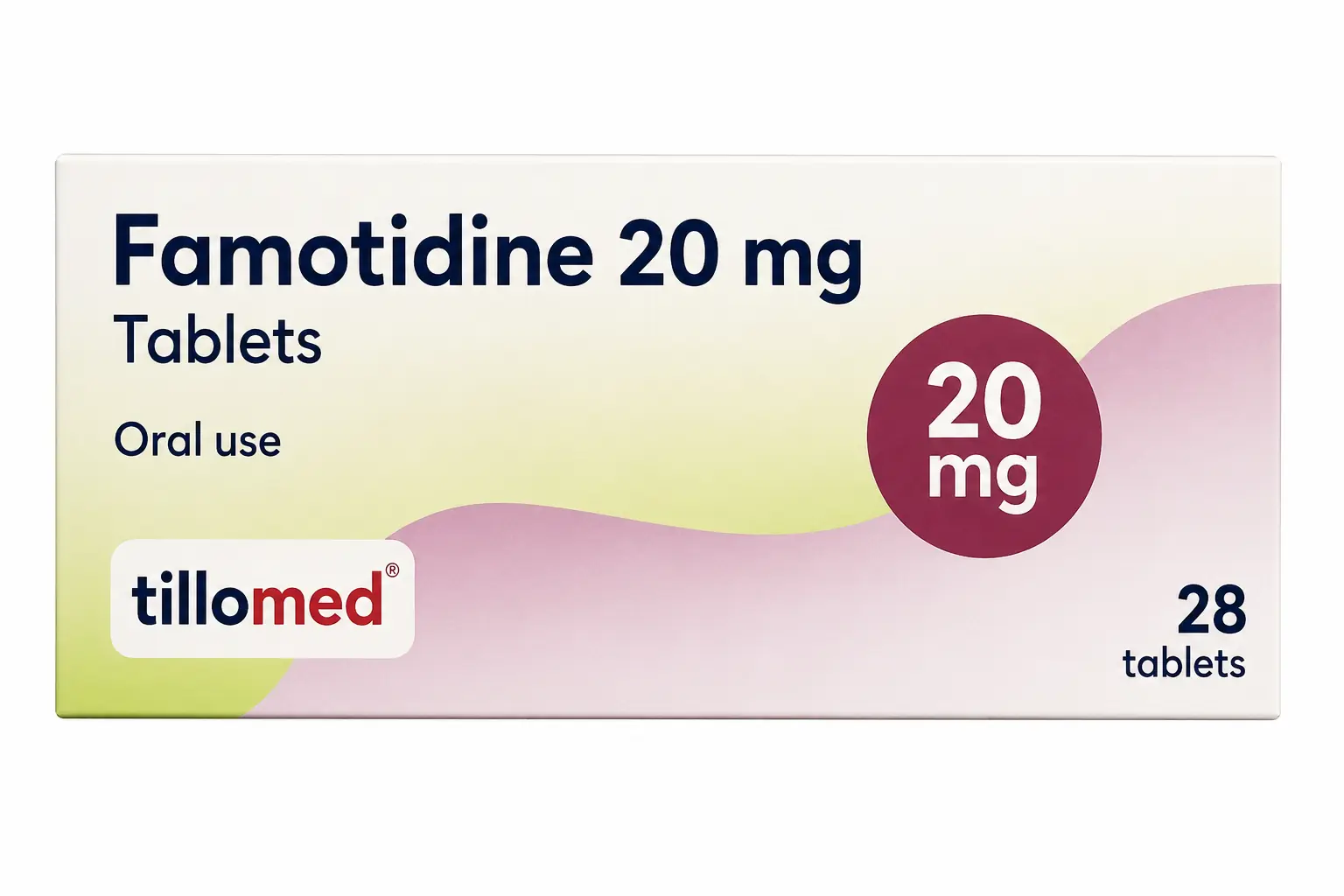
H2 blockers such as famotidine reduce acid in a different way and can be used if a PPI does not suit you. Alginates and antacids, such as Gaviscon, work within minutes for occasional heartburn and can be bought from any pharmacy or supermarket.
For more on symptoms and causes, see our complete guide to acid reflux.
Our clinicians may recommend one of the treatment options below, depending on your symptoms, medical history, and whether the treatment is appropriate for you.



| Treatment | How it works | Usually used for | Starts working | How you take it |
|---|---|---|---|---|
| Omeprazole (PPI) | Lansoprazole (PPI) | Esomeprazole (PPI) | Famotidine (H2 blocker) | Alginates and antacids (e.g. Gaviscon) |
| Reduces acid production | Reduces acid production | Reduces acid production | Reduces acid by blocking histamine | Neutralise acid or form a protective layer |
| Frequent reflux and GORD, ulcers | Frequent reflux and GORD, ulcers | Frequent reflux and GORD, reflux oesophagitis | Reflux and ulcers when a PPI does not suit you | Occasional heartburn |
| Within 2–3 days; up to 4 weeks to work fully | Within 2–3 days; up to 4 weeks to work fully | Within 2–3 days; up to 4 weeks to work fully | Within about an hour | Within minutes |
| Once a day (10mg or 20mg capsules) | Once a day, 30 minutes before food (15mg or 30mg capsules) | Once a day (20mg or 40mg tablets) | Usually twice a day (20mg tablets) | After meals and at bedtime, as needed |
Not sure which option is right for you?
Complete a short consultation so our clinicians can understand your symptoms and recommend the right treatment.
One of our GPhC-registered pharmacist prescribers checks whether treatment is clinically safe and appropriate for you.
If approved, your treatment is dispensed and delivered in plain packaging.
To improve results from your acid reflux treatment:
Large meals or eating late
Certain foods and drinks, such as fatty or spicy foods, alcohol, chocolate and caffeine
Being overweight
Pregnancy
Stress and anxiety
Hormone changes, for example from HRT or the contraceptive pill
A stomach ulcer or H. pylori infection
Some medicines, such as anti-inflammatory painkillers like ibuprofen
Managing these alongside treatment improves symptom control.
Occasional heartburn, for example after a large meal, can usually be treated with an alginate or antacid from a pharmacy, plus lifestyle changes.
How to get rid of heartburnFrequent symptoms or GORD are usually treated with a daily PPI for 4 to 8 weeks. At usual doses, PPIs work about as well as each other.
Omeprazole vs lansoprazole vs esomeprazoleThe MHRA advises that omeprazole and esomeprazole should be avoided with clopidogrel unless essential. Your prescriber may suggest a different PPI or an H2 blocker such as famotidine instead.
PPI questions answeredIf you get side effects from a PPI, or would rather not take one daily, an H2 blocker such as famotidine may be an option.
Famotidine and H2 blockersLifestyle changes and alginates or antacids are usually tried first. If you need more, speak to your GP, midwife or pharmacist; omeprazole is the PPI usually used.
Heartburn in pregnancyBest starting option: Omeprazole Guide
Alternative PPI option: Lansoprazole Guide
Stronger treatment: Esomeprazole Guide
Still unsure?
Complete a short online consultation and a UK prescriber will recommend the most suitable acid reflux treatment based on your symptoms and medical history.
There are three ways to get acid reflux medicine in the UK.
Alginates and antacids can be bought anywhere. Some PPIs, such as omeprazole and esomeprazole, can be bought by adults aged 18 and over to treat heartburn for up to 14 days. If you need a PPI for longer than this, at a higher strength, or for another condition, you need a prescription. Lansoprazole and famotidine are prescription-only.
Complete a short online consultation. One of our GPhC-registered pharmacist prescribers reviews your answers and, if treatment is suitable, issues a prescription that our pharmacy dispenses and sends to you in plain packaging. You do not need a GP appointment.
Your GP can prescribe acid reflux medicines and arrange tests if needed. NHS prescription charges apply in England unless you are exempt; prescriptions are free in Scotland, Wales and Northern Ireland. In England, acid reflux is not one of the conditions covered by the NHS Pharmacy First scheme, but any pharmacist can give advice. In Scotland and Wales, pharmacists can give free advice and treatment for indigestion through Pharmacy First Scotland and the Common Ailments Service.
For most people with GORD, a PPI is taken once a day for 4 to 8 weeks. After that, your prescriber will usually aim for the lowest dose that keeps symptoms under control, or taking it only when you need it.
Some people need a PPI for longer, for example to protect the stomach while taking anti-inflammatory painkillers, or with severe oesophagitis or Barrett's oesophagus. Long-term treatment should be reviewed at least once a year.
If you have taken a PPI for more than a few weeks, stopping suddenly can cause rebound acid, where symptoms come back worse for a short time. Reducing the dose gradually usually helps.
Most people take acid reflux medicines without problems. The most common side effects of PPIs are headache, diarrhoea, constipation, stomach pain, wind and feeling sick. Famotidine can cause headache, dizziness, constipation or diarrhoea.
Taking a PPI for 3 months or more can lower magnesium levels, and taking one for more than a year is linked to a higher risk of low vitamin B12, bone fractures and gut infections. This is why the lowest effective dose is used and treatment is reviewed regularly.
Stop taking the medicine and get urgent help if you have signs of a serious allergic reaction, such as swelling of the lips, face or tongue, or difficulty breathing. Tell your prescriber about severe or persistent diarrhoea, or a rash on sun-exposed skin with joint pain.
Access Doctor supplies MHRA-licensed UK medicines, dispensed by our GPhC-registered pharmacy (#9011198) after a prescriber's assessment. The omeprazole, lansoprazole, esomeprazole, famotidine and Losec MUPS packs we supply are prescription-only medicines, and we supply them to adults aged 18 and over. It is illegal to sell a prescription-only medicine without a prescription in the UK.
The MHRA advises that omeprazole and esomeprazole should be avoided with the blood thinner clopidogrel unless essential, because they may reduce how well it works. PPIs must not be taken with the HIV medicine rilpivirine (tablets), and some also interact with other HIV medicines, warfarin, methotrexate, some antifungals and St John's wort. Always tell your prescriber about every medicine you take.
Lifestyle changes and alginates or antacids are usually tried first in pregnancy. If you need a PPI, omeprazole is usually recommended. Famotidine is not usually recommended in pregnancy. If you are breastfeeding, your prescriber will check which medicine is suitable; omeprazole is usually the first choice. Speak to your GP, midwife or pharmacist before taking any acid reflux medicine.
PPIs can affect some tests: stop taking them 2 weeks before a test for Helicobacter pylori, unless your doctor tells you otherwise. If you take a PPI long term, your doctor may check your magnesium or vitamin B12 levels, and you should have your treatment reviewed at least once a year.
PPIs and famotidine occasionally cause dizziness, headache or blurred vision. Do not drive or use machinery if this affects you.
You can report suspected side effects to the MHRA through the Yellow Card scheme.
Answers to common questions about treating acid reflux and heartburn online.
It depends on how often you get symptoms. Occasional heartburn can usually be treated with an alginate or antacid such as Gaviscon and lifestyle changes. Frequent acid reflux or GORD is usually treated with a proton pump inhibitor (PPI) such as omeprazole, lansoprazole or esomeprazole, taken once a day. At usual doses PPIs work about as well as each other, so the right one depends on your health and other medicines.
Alginates and antacids work within minutes. Famotidine starts working within about an hour. PPIs such as omeprazole usually start to help within 2 to 3 days, but can take up to 4 weeks to work fully, so keep taking them every day as prescribed. See your prescriber or GP if your symptoms have not improved after 4 weeks. If you bought a PPI from a pharmacy or shop, see a GP if you are not better after 2 weeks.
Yes, some. Alginates and antacids can be bought from any pharmacy or supermarket. Some PPIs, such as omeprazole and esomeprazole, can be bought by adults aged 18 and over to treat heartburn for up to 14 days. You need a prescription to take a PPI for longer, at a higher strength or for another condition, and for lansoprazole and famotidine.
Yes. Your GP can prescribe acid reflux medicines and arrange tests if needed. NHS prescription charges apply in England unless you are exempt, while prescriptions are free in Scotland, Wales and Northern Ireland. Acid reflux is not covered by the Pharmacy First scheme in England, but any pharmacist can advise you; in Scotland and Wales, pharmacists can give free advice and treatment for indigestion.
Prices start from £14.99 for omeprazole, £16.99 for lansoprazole, £18.99 for esomeprazole, £23.99 for famotidine and £29.99 for Losec MUPS. Every price includes your online consultation and prescription, with no separate consultation fee.
You complete a short online consultation about your symptoms, health and medicines. One of our GPhC-registered pharmacist prescribers reviews your answers and, if treatment is suitable, issues a prescription. Our pharmacy then dispenses your medicine and sends it to you in plain packaging. Completing a consultation does not guarantee a prescription.
At usual doses, they work about as well as each other for most people. Omeprazole is usually preferred in pregnancy. If you take clopidogrel, omeprazole and esomeprazole should be avoided unless essential, so your prescriber may choose a different PPI or another type of medicine. Your prescriber will recommend the one that suits you.
Omeprazole and esomeprazole are usually taken once a day in the morning, with or without food. Lansoprazole should be taken at least 30 minutes before food. Swallow capsules and tablets whole, unless your leaflet says otherwise. Alginates such as Gaviscon are best taken after meals and at bedtime. Always follow the instructions on your label and patient leaflet.
A PPI can take up to 4 weeks to work fully, and it needs to be taken every day. It may not work as well if it is taken at the wrong time, if trigger foods, alcohol or smoking are making symptoms worse, or if the dose is too low. Speak to your prescriber or GP if you are no better after 4 weeks, as you may need a different treatment or tests.
Many people take a PPI safely for years when it is needed, but it should be at the lowest dose that controls symptoms and reviewed at least once a year. Long-term use is linked to low magnesium (after 3 months or more) and, mainly after a year or more, to low vitamin B12, bone fractures and gut infections.
Heartburn is common in pregnancy. Lifestyle changes and alginates or antacids are usually tried first. If you need more, omeprazole is the PPI usually recommended in pregnancy and while breastfeeding. Famotidine is not usually recommended in pregnancy. Speak to your GP, midwife or pharmacist before taking any acid reflux medicine.
Yes, they are often used together, particularly in the first few days of taking a PPI. Use Gaviscon after meals and at bedtime for breakthrough symptoms. If you take lansoprazole, take it at least 1 hour after an antacid. Check the patient leaflet that comes with your medicine.
If you have taken a PPI for more than a few weeks, stopping suddenly can cause rebound acid, where heartburn comes back worse for a few weeks. Reducing the dose gradually, or taking it only when needed, usually helps. Do not stop a PPI you take for Barrett's oesophagus, severe oesophagitis or to protect your stomach without speaking to your doctor.
Heartburn is usually a burning feeling behind the breastbone after eating or when lying down, often with an acid taste. Call 999 if you have sudden chest pain or pressure that does not go away, even if it feels like indigestion, or chest pain that spreads to your arm, neck, jaw or back, or comes with sweating, feeling sick or breathlessness.
See a GP if you have heartburn most days, or lifestyle changes and pharmacy medicines are not helping. See a GP urgently if food gets stuck when you swallow, you are losing weight without trying, are being sick a lot, or are 55 or over with weight loss and indigestion. Call 999 or go to A&E if you are vomiting blood or have black, tarry poo.
Helpful reads related to this treatment area.
Start a short online consultation and our clinical team will review whether treatment is suitable for you.