
Doxycycline for chlamydia
From £14.99

Our friendly team is available to help Monday to Friday 9:00am – 5:00pm.
If you need urgent assistance, do not use this service. Call 111, or in an emergency call 999.

If you have tested positive for chlamydia, or a sexual partner has, treatment is a short course of antibiotics and it’s worth starting promptly. Complete a confidential online consultation and a GPhC-registered pharmacist independent prescriber will check that treatment is safe and suitable for you. We’ll also talk to you about telling recent partners, because treating them is what stops the infection coming straight back.
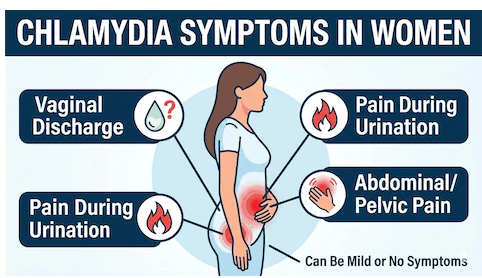
Chlamydia is the most commonly diagnosed sexually transmitted infection in England, and most people who have it don’t notice any symptoms.
Chlamydia is a bacterial infection passed on through vaginal, anal or oral sex, genital contact or sharing sex toys. Because it so often causes no symptoms, many people only find out from a routine test or because a partner has tested positive. It’s easily treated with antibiotics. Left untreated, it can spread and cause pelvic inflammatory disease in women, which can affect fertility, and painful swelling of the testicles in men. Our guide to chlamydia complications explains the risks.
You can use this service if you’re 18 or over and you have tested positive, or a sexual partner has tested positive. If you haven’t been tested, NHS sexual health services offer free tests, and our chlamydia testing guide explains your options.
Our clinicians may recommend one of the treatment options below, depending on your symptoms, medical history, and whether the treatment is appropriate for you.
UK guidance recommends one first-choice antibiotic, with an alternative for people who can’t take it.
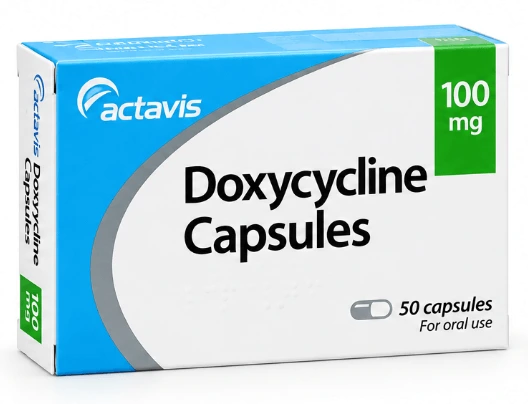
Doxycycline is the usual first choice. It’s a 7-day course: one 100mg capsule twice a day. It treats genital, rectal and throat infection, and it cures slightly more infections than azithromycin. Our doxycycline for chlamydia guide covers how to take it.
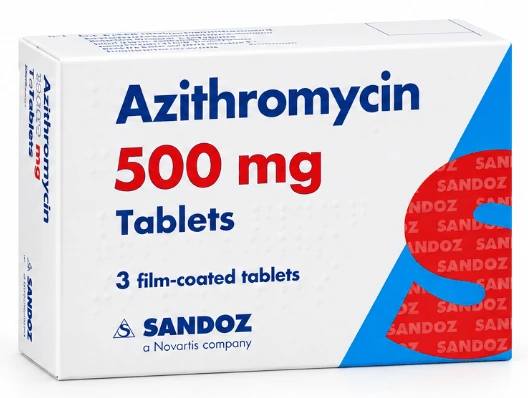
Azithromycin is used if you’re allergic to doxycycline or other tetracycline antibiotics, or can’t take them. It’s a 3-day course: two 500mg tablets on day 1, then one tablet on days 2 and 3. Read more in our azithromycin for chlamydia guide.
The prescriber decides which is right for you after reviewing your consultation. Whichever you’re given: - take all of it; - avoid sex until you and your partner have finished treatment (and for 7 days after the last azithromycin tablet); - make sure recent partners are tested and treated.
Tell us about your test result or your partner’s, your health and any medicines you take. It takes a few minutes.
A GPhC-registered pharmacist independent prescriber checks that treatment is safe and suitable, and may message you with questions.
If approved, it’s dispensed by our UK pharmacy and sent in plain packaging.
See a GP or sexual health clinic instead of using this service if any of these apply. They may need an examination, other tests or a different treatment.
Chlamydia is common and easily treated, but a few misunderstandings keep it spreading.
FACT: Most people with chlamydia don’t notice any symptoms. Testing is the only way to know, so get tested after a new partner or unprotected sex.
FACT: Anyone who is sexually active can get chlamydia. One partner is enough. Condoms reduce the risk a lot, but nothing removes it completely.
FACT: Treatment doesn’t give immunity. You can catch it again straight away from an untreated partner, which is why partners need treating too.
A positive result can feel worrying, but chlamydia is easy to treat. These steps stop it coming back.
Start treatment promptly and take every dose, even if you feel fine. Don’t have sex, including oral sex and sex with a condom, until you and your partner have both finished treatment and any symptoms have gone. If you take azithromycin, wait until 7 days after your last tablet.
Tell anyone you’ve had sex with in the last 6 months so they can be tested and treated. Each person needs their own assessment, so don’t share your antibiotics. If you’d rather not do it yourself, or if telling a partner doesn’t feel safe, for example because of a risk of abuse, a sexual health clinic can contact partners for you without giving your name. Our partner notification guide explains how.
You don’t usually need a test to prove the infection has gone. If you’re under 25, have another test 2 to 6 months after treatment, because catching it again is common. Test sooner if you have a new partner. If you’re pregnant, a test after treatment is needed, which is one reason pregnancy is managed by your GP, midwife or a sexual health clinic. See our chlamydia in pregnancy guide.
How it spreads, why most people have no symptoms, and how it’s treated.
Read guideNHS home kits and clinics, when to test, and what results mean.
Read guideThe first-choice 7-day course: dose, side effects and tips.
Read guideWhen it’s used instead, and how to take the 3-day course.
Read guideWho to tell, how far back to go, and anonymous options.
Read guideThe risks, which antibiotics are safe, and testing after treatment.
Read guideAnswers about treatment, partners, testing and staying clear of reinfection.
Yes, if you’re 18 or over and you’ve tested positive for chlamydia, or a sexual partner has. You complete a confidential online consultation, and a GPhC-registered pharmacist independent prescriber checks whether treatment is safe and suitable for you. The service isn’t suitable if you’re pregnant, might be pregnant or are breastfeeding, or if you have symptoms such as pelvic pain, testicular pain or a fever, which need an examination.
UK guidance recommends doxycycline 100mg twice a day for 7 days as the first choice. If you can’t take doxycycline, for example because you’re allergic to tetracycline antibiotics, the alternative is a 3-day course of azithromycin. Both clear most infections. The prescriber decides which is right for you after reviewing your consultation.
You need a positive test, or a sexual partner who has tested positive. We don’t treat on symptoms alone, because gonorrhoea, Mycoplasma genitalium and other infections can cause the same symptoms and need different treatment. If you haven’t been tested, NHS sexual health clinics and many councils offer free tests, including home test kits.
Yes. If a sexual partner has tested positive, a prescriber can treat you as a contact without waiting for your own result. It’s still worth getting tested, because a positive result means you also need to tell your other partners. Tests are reliable from about 2 weeks after the last sex you had.
Avoid all sex, including oral sex and sex with a condom, until you and your partner have both finished treatment and any symptoms have gone. With doxycycline, that means finishing the full 7-day course. With azithromycin, wait until 7 days after your last tablet. Having sex sooner risks passing the infection back and forth.
Yes. Anyone you’ve had sex with in the last 6 months should be tested and treated, even if they feel well, because most people with chlamydia have no symptoms. An untreated partner is the most common reason the infection comes straight back. Each person needs their own consultation. If you’d rather not tell a partner yourself, or it doesn’t feel safe, a sexual health clinic can contact them for you without naming you.
Not usually to check the treatment worked, because cure rates are high. A test after treatment is recommended if you’re pregnant, if you missed doses, or if your symptoms haven’t gone. It should be at least 3 weeks after you finish treatment, or it may pick up leftover traces of the bacteria. Separately, if you’re under 25, have another test 2 to 6 months later, because catching it again is common.
Not through our online service. Doxycycline isn’t usually used in pregnancy or while breastfeeding, and treatment in pregnancy needs a test afterwards to confirm the infection has cleared. Chlamydia in pregnancy still needs treating, so please contact your GP, midwife or a sexual health clinic, who can prescribe an antibiotic that’s safe for you.
Symptoms such as unusual discharge or pain when passing urine usually begin to settle within a few days and have often gone within one to two weeks. The infection isn’t cleared the moment symptoms stop, so finish the whole course and avoid sex until treatment is complete, including seven days after the last azithromycin tablet. See a clinician if symptoms are no better two weeks after finishing treatment, or if you develop pain low in your abdomen, pain or swelling in a testicle, a fever, or bleeding between periods.
Yes. Treatment clears the infection you have now, but it doesn’t protect you from catching it again, and reinfection is common. It usually happens when a partner hasn’t been treated, or with a new partner. That’s why partners need testing and treatment, why you should avoid sex until you and your partner have finished treatment, and why retesting is advised. If symptoms come back, or you have a new partner, get tested again.
Oral sex can pass chlamydia on, and it can infect the throat. Anal sex can infect the rectum, and the infection can also be passed by genital contact without penetration or by sharing sex toys. Kissing doesn’t spread chlamydia. Throat and rectal infections usually cause no symptoms at all, so tell whoever arranges your test if you’ve had oral or anal sex, because it changes where the swab needs to be taken from.
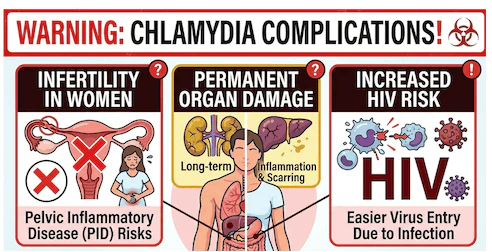
Untreated infection can spread beyond where it started. In women it can cause pelvic inflammatory disease, which can lead to long-term pelvic pain, ectopic pregnancy and reduced fertility. In men it can cause epididymo-orchitis, a painful swelling of the testicle. Either sex can develop reactive arthritis, and infection during pregnancy carries risks for the baby. Many people have no symptoms the whole time they’re infected, which is why a positive test should be treated even when you feel completely well.
Helpful reads related to this treatment area.
Start a confidential online consultation. A pharmacist independent prescriber will check whether treatment is safe and suitable for you.