


We’re here to help.
Our friendly team is available to help Monday to Friday 9:00am – 5:00pm.
If you need urgent assistance, do not use this service. Call 111, or in an emergency call 999.
Our friendly team is available to help Monday to Friday 9:00am – 5:00pm.
If you need urgent assistance, do not use this service. Call 111, or in an emergency call 999.
Fast, discreet delivery
Free delivery over £40
100% UK-based pharmacy
All doctors & pharmacists UK-based
Free advice & support
Clinical support free · Mon–Fri 9am–5pm
Why Patients Choose Access Doctor
10+
Years serving UK patients
—
Verified patient reviews
1,000+
Licensed treatments
24/7
Consultation available
Diclofenac tablets belong to a group of medicines called nonsteroidal anti-inflammatory drugs (NSAIDs), which are used to reduce pain and inflammation. Please note: Non steroidal anti-inflammatory drugs (NSAIDs) such as Diclofenac should be co-administered with proton-pump inhibitors (PPIs) to reduce NSAID-induced gastrointestinal (GI) adverse events.
Diclofenac is usually taken at the lowest effective dose for the shortest time needed to control symptoms, and is often prescribed alongside a PPI to help protect your stomach. If you have a history of heart disease, stroke, or stomach ulcers, please mention this during your consultation so the prescriber can confirm it's the right option for you.
Order before 3pm — same-day dispatch (MON - FRI)
~5 min consultation
Secure & confidential · Reviewed by a UK prescriber
Suitable age
18 years +
Max per order
2 packs
Consultation
Yes — free online consultation
Diclofenac tablets belong to a group of medicines called nonsteroidal anti-inflammatory drugs (NSAIDs), which are used to reduce pain and inflammation. Please note: Non steroidal anti-inflammatory drugs (NSAIDs) such as Diclofenac should be co-administered with proton-pump inhibitors (PPIs) to reduce NSAID-induced gastrointestinal (GI) adverse events.
Diclofenac sodium is used to relieve pain, swelling and inflammation in a range of conditions, including osteoarthritis, rheumatoid arthritis, ankylosing spondylitis, gout, and soft tissue injuries.
Separately from the gastrointestinal risk addressed above, oral diclofenac has been available on prescription only in the UK since 2015, when it was reclassified from a pharmacy medicine following a cardiovascular safety review. That review identified a small but real increased risk of heart attack and stroke, particularly at higher doses (150mg a day) and with long-term use, so diclofenac is generally used at the lowest effective dose for the shortest time needed to control symptoms.
| Active ingredient | Diclofenac sodium |
| Drug class | NSAID (non-steroidal anti-inflammatory drug) |
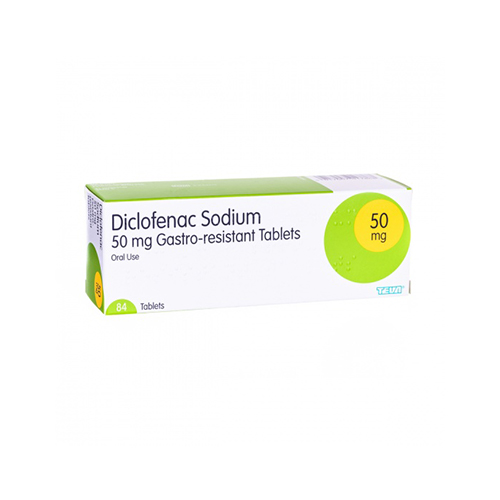
| Form | Gastro-resistant oral tablets |
| Prescription status | Prescription Only Medicine (POM) |
| Common uses | Osteoarthritis, rheumatoid arthritis, ankylosing spondylitis, gout, soft tissue injuries |
Diclofenac tablets are usually taken up to three times a day, ideally with or after food to help protect the stomach. Tablets should be swallowed whole and should not be crushed, broken, or chewed, since doing so can damage the coating designed to protect the stomach lining and may increase the risk of side effects. Many people find diclofenac works best when taken as needed, at the first sign of pain, rather than waiting until discomfort has become severe.
Diclofenac is a non-steroidal anti-inflammatory drug (NSAID), the same family as naproxen and ibuprofen, and it's used during acute gout flares to bring down the pain, swelling, and inflammation. To understand what it's doing, picture a gout flare at the cellular level. Tiny needle-like crystals of monosodium urate, formed when uric acid in the blood reaches saturation point, settle into a joint — most famously the big toe. The body's immune system reacts as though those crystals were hostile invaders and unleashes a flood of inflammatory chemicals, producing the classic flare: sudden severe pain, redness, swelling, warmth, and skin so tender that even a bedsheet feels intolerable. Diclofenac blocks enzymes called cyclo-oxygenases (COX-1 and COX-2), which the body uses to make prostaglandins — key chemical messengers in that inflammatory cascade. By dampening prostaglandin production, diclofenac turns down the fire, and within a day or two the pain and swelling start to settle.
All three medicines work in broadly the same way, but they balance their effects on the two COX enzymes differently — and that small difference matters. COX-1 is the version of the enzyme that helps protect the stomach lining, regulate kidney blood flow, and keep platelets working normally. COX-2 is the version that ramps up during inflammation. Different NSAIDs lean differently on these two: ibuprofen and naproxen are relatively balanced inhibitors of both, while diclofenac leans noticeably more towards COX-2. That makes diclofenac somewhat similar in profile to the COX-2-selective coxibs, and it's the leading reason its cardiovascular risk profile is meaningfully higher than naproxen's. In head-to-head studies, naproxen has consistently had the safest cardiovascular profile of the common NSAIDs, while diclofenac has had one of the higher risks. The picture for stomach risk is broadly similar across the three, although diclofenac is more often associated with liver enzyme rises than the others. None of this means diclofenac is "bad" — it remains an effective and widely used gout treatment — but it does mean the choice between NSAIDs isn't arbitrary, and prescribers will often pick naproxen first unless there's a specific reason to favour diclofenac.
This is a question patients often arrive with, and the answer makes more sense once you understand the cardiovascular point above. For many years, low-dose diclofenac tablets (Voltarol Pain-eze and similar) were available in UK pharmacies without a prescription. In 2013, the UK Medicines and Healthcare products Regulatory Agency (MHRA) issued a Drug Safety Update following several large international studies, contraindicating diclofenac in patients with established cardiovascular disease. In 2015, diclofenac was reclassified from a pharmacy medicine to a prescription-only medicine across the UK, precisely so that prescribers could screen for cardiovascular risk before issuing it. So the change wasn't arbitrary — it was a deliberate response to a clearer understanding of the risk-benefit balance. The same regulatory caution doesn't apply to topical diclofenac (the gels), because so little is absorbed through the skin.
Most people notice some improvement in pain and swelling within 12 to 24 hours of starting diclofenac, with substantial relief by 48 hours and full resolution typically over the course of three to seven days. As with any anti-inflammatory in gout, the earlier in the flare you start, the better. Many people who have recurrent gout are given a "rescue" supply of an NSAID to keep at home, so they can start treatment within hours of the first warning twinges rather than waiting for an appointment.
The standard adult dose for an acute gout attack is 50 mg three times a day, taken with food. Some prescribers use a modified-release preparation at 75 mg twice daily, which can be easier to remember and produces steadier blood levels. The maximum daily dose is 150 mg. Treatment usually runs for five to seven days — long enough for the inflammation to settle completely, plus a couple of days of safety margin. Stopping too early is one of the most common reasons gout flares come back; the medicine relieves pain quickly, but the inflammation in the joint takes longer to fully resolve and the underlying crystals haven't gone anywhere. A reasonable rule of thumb is to keep going until the pain, swelling, and tenderness have gone, and then continue for another 24 to 48 hours.
Just the attack — and this is the single most important point to take away from any conversation about NSAIDs and gout. To use the same comparison as elsewhere in this series, diclofenac is firefighting: it puts out the immediate flame of inflammation, but it doesn't change the temperature of the room. The room — meaning the elevated uric acid level driving the whole problem — stays exactly the same. As soon as the diclofenac is stopped, you're as vulnerable to the next flare as you were before. Long-term prevention of gout requires a different category of medicine altogether — urate-lowering therapy, most commonly with allopurinol — which slowly brings uric acid levels down over months to a target below the saturation point, allowing existing crystals to dissolve and preventing new ones from forming. Diclofenac and allopurinol do completely different jobs, and they are often used together at different points in someone's gout journey rather than instead of one another.
The most commonly reported are gastrointestinal: stomach pain, indigestion, nausea, and, with longer use or higher doses, peptic ulcers and gastrointestinal bleeding. Older patients, those with previous ulcers, and those on aspirin, anticoagulants, or SSRI antidepressants are at particular risk and are often co-prescribed a stomach-protecting medicine such as omeprazole or lansoprazole. Diclofenac can also cause fluid retention, modest rises in blood pressure, headache, dizziness, occasional skin rash, and — slightly more often than other common NSAIDs — rises in liver enzymes that may need monitoring on longer courses. Rare but serious effects include heart attack, stroke, severe skin reactions (Stevens-Johnson syndrome, very rarely), and acute kidney injury. Taken at the right dose for a short course in someone without significant cardiovascular, kidney, stomach, or liver disease, diclofenac is generally well tolerated.
This deserves a fuller explanation than a simple "because it's risky", because understanding why helps make sense of why prescribers ask about heart history before prescribing. Prostaglandins — the inflammatory messengers diclofenac suppresses — also play subtle roles in keeping blood vessels relaxed and platelets working normally. Drugs that lean more towards blocking COX-2 can shift the balance slightly in favour of clot formation and constricted blood vessels. In someone with healthy arteries, this small shift rarely causes problems. In someone whose arteries are already narrowed by atherosclerosis, who has had a previous heart attack or stroke, or who has significant heart failure, even a small additional push in that direction can tip the balance into another cardiovascular event. That's why the MHRA contraindicates diclofenac in established ischaemic heart disease, previous stroke, peripheral arterial disease, and moderate-to-severe heart failure. If any of these apply to you, naproxen, colchicine, or a short course of oral steroids will usually be the safer choice.
Diclofenac, like any non-selective NSAID, increases the risk of stomach ulcers and gastrointestinal bleeding, and the risk is multiplied if you're also taking a medicine that affects blood clotting or stomach lining health. People on warfarin, direct oral anticoagulants (DOACs) such as apixaban or rivaroxaban, low-dose aspirin, SSRIs, or oral steroids should always have a clear conversation with a prescriber before starting an NSAID for gout. In many of these situations, a stomach-protecting medicine such as omeprazole or lansoprazole will be added to reduce the risk, the NSAID will be used for the shortest possible course, or — sometimes — a different gout treatment will be chosen altogether. A history of peptic ulceration or previous GI bleed is generally a reason to avoid diclofenac and use colchicine or oral steroids instead.
A few interactions are worth knowing about. Anticoagulants substantially increase the bleeding risk when combined with diclofenac. SSRIs increase the GI bleeding risk. Other NSAIDs should never be combined — the risks are additive without extra benefit. ACE inhibitors and ARBs (commonly used for blood pressure) lose some of their effect, and combining all three of an ACE/ARB plus a diuretic plus an NSAID — the so-called triple whammy — is a well-recognised cause of acute kidney injury and is something prescribers actively try to avoid. Diclofenac can raise levels of lithium and methotrexate. It also interacts with some antifungals (particularly voriconazole) and certain epilepsy medicines. Always tell prescribers about everything you're taking, including herbal remedies and over-the-counter painkillers, so the safest treatment can be chosen.
A few drinks are unlikely to cause a dramatic problem in someone who is otherwise well, but alcohol amplifies several of diclofenac's risks — particularly stomach irritation and bleeding, and the small effect on the liver — and it's also a recognised gout trigger in its own right. Beer is the worst offender for gout, because of its high purine load, while spirits sit in the middle and wine in moderation appears less impactful. During an active flare, the most useful approach is usually to step back from alcohol entirely until the flare has settled and you've finished the course of diclofenac. Drinking plenty of water through the flare is far more helpful than the body would suggest at first glance, because hydration helps the kidneys clear uric acid more effectively.
Diclofenac is generally avoided in pregnancy, particularly in the third trimester, where it can prematurely close a critical fetal blood vessel called the ductus arteriosus and affect the unborn baby's kidney function. NSAIDs in early pregnancy are also generally avoided unless clearly needed, because of a small possible association with miscarriage. Gout in pregnancy is uncommon but does occur, and in those situations management is led by a specialist using safer alternatives such as paracetamol, low-dose oral steroids, or sometimes intra-articular steroid injections. Diclofenac passes into breast milk in small amounts; ibuprofen is generally preferred when an NSAID is needed during breastfeeding, simply because it has the lowest milk transfer of the common options.
This is a question that comes up a lot, because Voltarol is one of the brand names of diclofenac and the gel sits in plenty of bathroom cabinets for everyday musculoskeletal aches. The honest answer is: not really, for most gout flares. Topical diclofenac has very limited absorption into deep tissues — it's effective for surface-level joint pain like knee osteoarthritis or a sprained wrist, but the inflamed gouty joint typically sits too deep and is too acutely inflamed for a gel to make a meaningful difference. The level of medicine reaching the joint is simply too low to switch off the inflammatory cascade in time. Oral or systemic treatment is what's needed during a flare. Voltarol gel may offer a small comfort effect on the surrounding skin, but it shouldn't be relied on as the main treatment.
No — and this is one of the most counterintuitive but genuinely important points in gout management. Stopping allopurinol mid-flare causes uric acid levels to swing again, which can prolong or worsen the attack rather than help it. Modern UK guidance is unambiguous: if you're already on allopurinol when a flare begins, keep taking it at your usual dose and treat the flare separately with diclofenac, naproxen, colchicine, or oral steroids depending on which suits you best. The opposite case is also worth knowing: you should not start allopurinol for the first time during an acute attack, because the rapid drop in uric acid can shake more crystals loose and trigger further flares. New allopurinol is usually started two to four weeks after a flare has fully settled, with low-dose colchicine or NSAID cover for the first few months to cushion the body through the transition.
Long-term prevention rests on two pillars — lifestyle and, in most people with recurrent gout, urate-lowering medication. Lifestyle measures include reducing intake of high-purine foods (red meat, offal, certain seafood including anchovies, sardines, and shellfish), reducing alcohol — particularly beer — losing weight if appropriate, staying well hydrated, and reviewing any medicines that raise uric acid (some diuretics, low-dose aspirin) with your clinician. These measures help, but they typically lower uric acid by only a modest amount on their own, so most people with two or more flares a year, visible tophi (urate deposits under the skin), kidney stones, or significant joint damage will benefit from urate-lowering therapy. The most commonly used is allopurinol, started at a low dose and gradually titrated upwards every few weeks until uric acid is below target (usually under 360 micromol/L, or under 300 in more severe cases). For those who can't tolerate allopurinol, febuxostat is an alternative. The modern aim of gout care is not to keep firefighting flares with diclofenac but to prevent them happening in the first place.
Two well-established alternatives exist for acute gout. The first is colchicine, an old anti-inflammatory that targets the immune cells responsible for the gout flare without the cardiovascular, renal, and gastric risks of NSAIDs. It's effective but has a narrow therapeutic window — too much causes diarrhoea — so doses need careful measurement (usually 500 micrograms two to four times a day, reduced if diarrhoea develops). The second is a short course of oral steroids, typically prednisolone 30 to 35 mg daily for five days, which is highly effective and is often the preferred option in patients with significant kidney disease, heart failure, stomach problems, or contraindications to NSAIDs. In some cases, a single corticosteroid injection directly into the affected joint resolves a flare elegantly. The right choice depends on your other medical conditions and is best made with a clinician.
A few situations call for prompt medical review rather than self-management. A first-ever attack of joint pain warrants a proper diagnosis, because conditions that can mimic gout — particularly septic arthritis (a joint infection) and pseudogout (caused by a different crystal, calcium pyrophosphate) — need very different treatment, and missing septic arthritis can be devastating. Any attack accompanied by fever, feeling generally unwell, redness spreading well beyond the joint, or affecting multiple joints simultaneously needs urgent assessment. Recurrent flares, attacks that don't respond to diclofenac within two or three days, attacks during pregnancy, attacks in someone with significant kidney, heart, or stomach disease, and any visible lumps under the skin all warrant a clinical review and a discussion about long-term management. The single most useful conversation many people with recurrent gout never have is the one about urate-lowering therapy — modern gout care aims to put gout into the past tense, not to manage it as an ongoing series of attacks.
Diclofenac is a non-steroidal anti-inflammatory drug (NSAID) used to relieve pain, swelling, and inflammation in conditions such as osteoarthritis, rheumatoid arthritis, ankylosing spondylitis, gout, and soft tissue injuries.
Diclofenac, like other oral NSAIDs, can irritate the lining of the stomach and increase the risk of gastrointestinal bleeding. Taking a proton-pump inhibitor (PPI) alongside diclofenac reduces stomach acid and helps protect the stomach lining, lowering the risk of NSAID-induced gastrointestinal side effects.
Oral diclofenac carries a small but real increased risk of heart attack and stroke, particularly at higher doses (150mg a day) and with long-term use. This cardiovascular safety concern is why diclofenac was reclassified from a pharmacy medicine to prescription-only in the UK in 2015, and why it's generally avoided in people with severe heart failure, ischaemic heart disease, peripheral arterial disease, or cerebrovascular disease.
Diclofenac, ibuprofen, and naproxen are all oral NSAIDs that work in a similar way, but they differ in dosing frequency, onset of action, and side-effect profile. See our NSAIDs Compared: Ibuprofen vs Naproxen vs Diclofenac guide in the Health Guide for a full side-by-side comparison of these three medicines.
Topical diclofenac, such as our Voltarol 12 hour Emugel, can be a suitable option for localised joint or muscle pain where a lower systemic risk profile is preferred, since very little of the medicine is absorbed into the bloodstream compared with tablets. It's not usually suitable for more widespread or systemic conditions such as rheumatoid arthritis or gout, where oral treatment is generally needed.
Yes - Diclofenac tablets are a prescription-only medicine (POM), so they cannot be bought over the counter. They are available from Access Doctor following a short online consultation that is reviewed by a GPhC-registered prescriber. The process is straightforward: you complete the online consultation, a prescriber reviews your answers to confirm the treatment is safe and suitable for you, and once approved our UK pharmacy dispenses and dispatches your order in plain, discreet packaging. To begin, start your free online consultation here: https://accessdoctor.co.uk/consultation/gout-treatment/ - pack sizes, strengths and current pricing are all shown as part of the ordering process.
Helpful articles and clinical guides related to this treatment category.
Free consultation
Online review by a UK prescriber
Next-day delivery
Order before 3pm where offered
Discreet packaging
Plain outer packaging