

We’re here to help.
Our friendly team is available to help Monday to Friday 9:00am – 5:00pm.
If you need urgent assistance, do not use this service. Call 111, or in an emergency call 999.
Our friendly team is available to help Monday to Friday 9:00am – 5:00pm.
If you need urgent assistance, do not use this service. Call 111, or in an emergency call 999.

Fast, discreet delivery
Free delivery over £40
100% UK-based pharmacy
All doctors & pharmacists UK-based
Free advice & support
Clinical support free · Mon–Fri 9am–5pm
Why Patients Choose Access Doctor
10+
Years serving UK patients
—
Verified patient reviews
1,000+
Licensed treatments
24/7
Consultation available
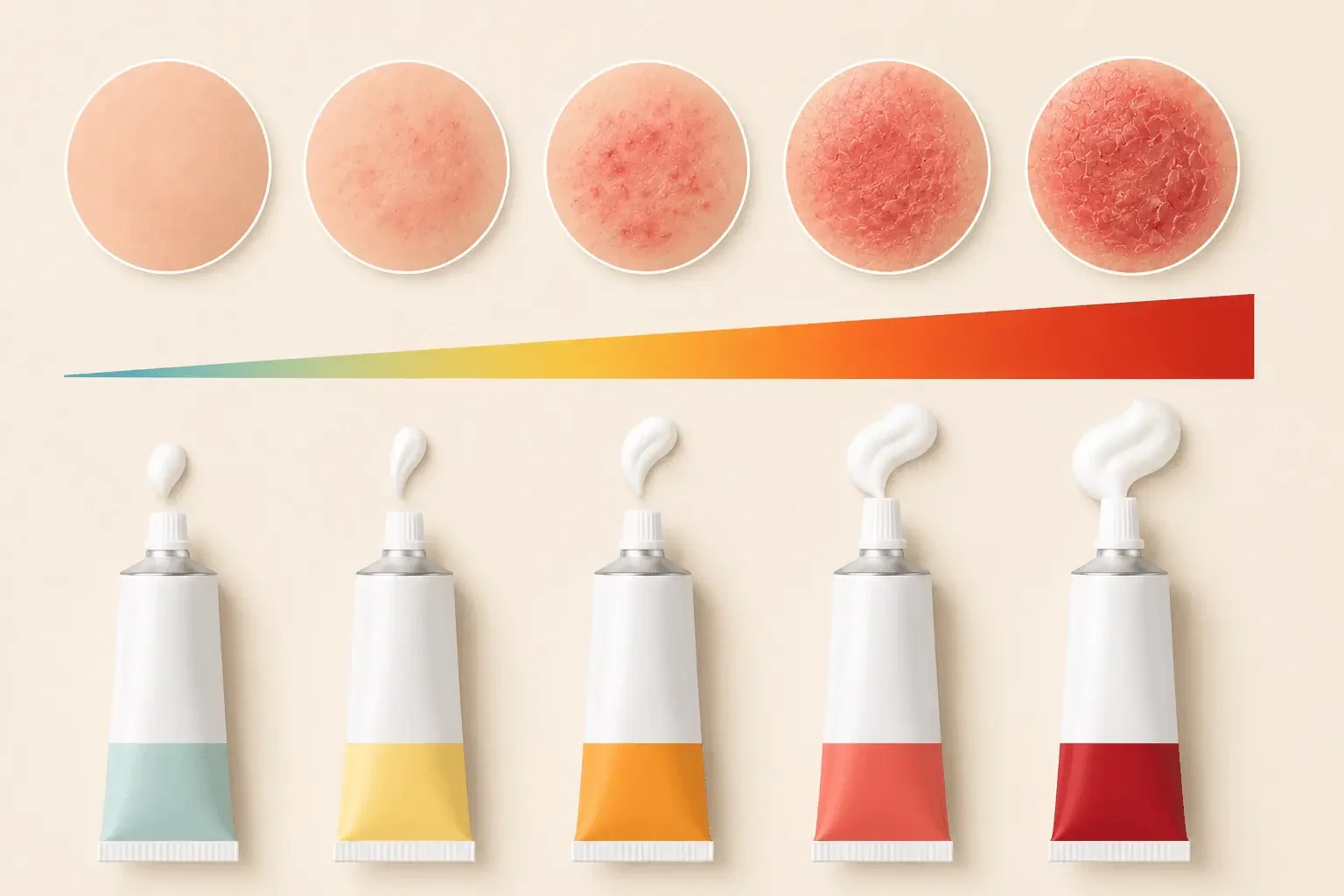
Betamethasone with Clioquinol Cream is specially formulated to provide relief from a variety of inflammatory skin conditions while also combating bacterial and fungal infections. Betamethasone, a powerful corticosteroid, reduces inflammation, itching, and redness, whereas Clioquinol, an antifungal and antibacterial agent, targets the root cause of infections. Eczema, dermatitis, and psoriasis can be effectively managed with their combined use.
Order before 3pm — same-day dispatch (MON - FRI)
~5 min consultation
Secure & confidential · Reviewed by a UK prescriber
Betamethasone with Clioquinol Cream is specially formulated to provide relief from a variety of inflammatory skin conditions while also combating bacterial and fungal infections. Betamethasone, a powerful corticosteroid, reduces inflammation, itching, and redness, whereas Clioquinol, an antifungal and antibacterial agent, targets the root cause of infections. Eczema, dermatitis, and psoriasis can be effectively managed with their combined use.
Betamethasone with Clioquinol Cream is a prescription‑only combination of two active ingredients: a potent topical corticosteroid (betamethasone valerate 0.1%) and a broad‑spectrum anti‑infective agent (clioquinol 3%). It was originally marketed in the UK under the brand name Betnovate‑C, but that branded product has now been discontinued – what is available today is a generic version.
The cream is indicated for inflammatory skin conditions – eczema (including atopic and discoid eczema), dermatitis, psoriasis (excluding widespread plaque psoriasis), prurigo nodularis, neurodermatoses, seborrhoeic dermatitis, contact sensitivity reactions and discoid lupus erythematosus – where a secondary bacterial or fungal infection is present, suspected or likely to occur. In plain English: you have an inflamed, itchy, red patch of eczema or psoriasis, and on top of that there are signs that microbes have moved in – perhaps weeping, golden crusting (suggests bacteria) or satellite spots/soreness that points to yeast.
The cream can also be used for infected insect bites and for anal and genital intertrigo (the raw, sore rash that develops in skin folds from friction, sweat and secondary infection)
Betamethasone is a strong steroid. It reduces inflammation – the redness, swelling and itching that make your skin feel sore and irritated. It works by calming down your skin's overactive immune response. Think of it as putting out the fire.
Clioquinol is an antimicrobial – it kills certain types of bacteria and also Candida (the yeast that causes thrush). It stops the infection from getting worse while the steroid does its job. Together, they treat both the inflammation and the infection in one cream.
How often: Apply a thin layer to the affected area two or three times a day.
How much: A 30g tube – used thinly twice a day on an area about the size of two hands – should last around two to three weeks. Do not spread it over large areas of your body (more than 20% of your skin). If your rash covers a lot of your body, see a doctor – you need a different treatment.
How long: Use it for up to 7 to 14 days maximum. If you see no improvement after 7 days, stop and see your doctor. Do not use it for longer than two weeks without a check‑up. For children, try to limit to 5 days if possible.
Important: Do not cover the treated area with a plaster, bandage or plastic wrap unless your doctor tells you to. That makes the steroid absorb too much and increases side effects. Also, do not use it under a nappy on a baby – nappies act like a cover and are not safe with this cream.
Do not use this cream for:
Rosacea – the red flushing rash on the face (steroids make it worse).
Acne (steroids can make spots worse).
Perioral dermatitis – red bumps around the mouth (steroids are a common cause, not a treatment).
Cold sores, chickenpox or shingles (steroids can make viral infections spread).
Impetigo – the honey‑coloured crusts on the face or hands. That needs an antibiotic cream, not a steroid.
Ringworm, athlete's foot or jock itch – those are caused by a different type of fungus that clioquinol does not kill. You need a dedicated antifungal cream.
Any skin problem in a child under 2 years – unless a specialist says otherwise.
If you are allergic to iodine (clioquinol contains iodine) or to any of the other cream ingredients.
Also, do not use it on your face, eyelids, genitals or armpits/groin unless a doctor has specifically told you to. Those areas absorb steroids much more easily and are prone to side effects like thinning skin.
Most side effects are mild and affect only the area where you put the cream.
Common (affect less than 1 in 10 people):
Mild burning, stinging or itching when you first apply it – this usually settles after a few days.
Yellow‑brown staining of the skin – this is from the clioquinol and is harmless. It fades when you stop the cream. The cream can also stain clothes and bedding, so be careful.
Less common but more serious (usually from using it too long or on large areas):
Skin thinning – the skin becomes shiny, fragile and tears easily. This can be permanent.
Stretch marks – these can also be permanent.
Fine red lines (spider veins) on the skin.
Allergic reaction – if the treated area becomes more red, itchy or swollen, stop and see your doctor. You may be allergic to one of the ingredients.
Very rare (only if you use a lot on large areas for months):
Steroid getting into your bloodstream, which can affect your body's own hormone system. Signs include unusual tiredness, dizziness when you stand up, weight loss or weight gain in the face and body, easy bruising, and high blood pressure. If you have used this cream for much longer than prescribed and notice these symptoms, see a doctor.
Eye problems – if you accidentally get the cream in your eye, it can cause raised pressure inside the eye (glaucoma) or cataracts. Do not put this cream near your eyes.
When to stop and call a doctor immediately:
Swelling of your face, lips or tongue, or trouble breathing (severe allergic reaction – very rare)
The rash gets much worse, becomes very painful, or starts spreading with pus or fever (signs of a worsening infection)
Blurred vision or eye pain
In a child: poor weight gain, extreme tiredness, or not recovering from a minor illness.
Generally, no – unless a doctor has specially prescribed it for those areas. The skin on your face, eyelids, armpits, groin and genitals is much thinner than elsewhere. A strong steroid like betamethasone can cause permanent thinning, redness, spots around the mouth (perioral dermatitis) or even eye damage if it gets in your eyes. For most facial rashes, doctors will prescribe a much milder steroid. If a dermatologist does prescribe this cream for a specific condition on your face or genitals (for example, certain types of lupus or intertrigo), use it for the shortest possible time – usually 5 days – and stop as soon as the rash improves.
Pregnancy: Doctors prefer to avoid strong steroids during pregnancy if possible. They will usually try a milder steroid first (like hydrocortisone). However, if you have a badly infected rash that is not getting better with milder treatments, a short course (7‑10 days) on a small area is generally considered safe. Do not use it on large areas or under coverings. Tell your doctor you are pregnant before using this cream.
Breastfeeding: It is safe to use on areas away from the breast – for example, on your arm or leg. Do not apply it to your breasts or nipples before feeding, because the baby could swallow it. If you need to treat a rash under your breasts, put the cream on after feeding and wipe the area clean before the next feed.
You should notice less redness, swelling and itching within 2 to 4 days. The signs of infection – weeping, crusting, soreness – should start to improve within 3 to 5 days. If there is no improvement after 7 days, stop the cream and see your doctor. Something else is going on, and you need a different treatment.
Do not keep using the cream for weeks just because the rash hasn't completely gone. If it is better but not fully clear after 10‑14 days, see your doctor for a review.
If you have only used it for 7‑14 days as prescribed, you can stop without any problem – just stop.
If you have used it every day for months (for example, you bought it online without a prescription and kept using it), then stopping suddenly can cause a severe rebound flare. The rash can come back much worse – red, burning, oozing and spreading. This is called topical steroid withdrawal. If you have been using it for months, do not stop suddenly. See a doctor. They will help you reduce the dose slowly (taper off) to avoid the rebound.
Yes, but only for small patches (not widespread psoriasis). Betamethasone works well on many psoriasis plaques. However, if you have psoriasis covering large areas of your body, this cream is not suitable – you need different treatment from a specialist. Also, when you stop using a strong steroid on psoriasis, the psoriasis can flare up badly – sometimes turning into a more serious form called pustular psoriasis (small pus‑filled blisters). If you see new blisters on your skin after using this cream, stop immediately and see a doctor.
Only if:
The new rash looks exactly the same as the rash the cream was prescribed for last time (same location, same appearance).
The cream has not expired (check the date on the tube).
The rash is not on your face, genitals or a child.
You are sure it is not a different type of rash (e.g., ringworm, cold sore, impetigo).
Do not use leftover cream for:
A rash you have never had diagnosed – you could be treating the wrong thing and making it worse.
A rash on a different body part (e.g., last time on your leg, this time on your face).
A dry, scaly, ring‑shaped rash – that is probably fungal and needs a different cream.
A blistering, painful rash – could be a virus (herpes) and steroids make it much worse.
A child under 2 years.
If in doubt, ask a pharmacist or see a doctor. Do not guess.
Apply TWICE a day, Spread thinly on affected skin area only.
Warning: FOR EXTERNAL USE ONLY. Contains a moderate potency topical corticosteroid.
No reviews yet. Be the first to write one.
Helpful articles and clinical guides related to this treatment category.
Free consultation
Online review by a UK prescriber
Next-day delivery
Order before 3pm where offered
Discreet packaging
Plain outer packaging