


We’re here to help.
Our friendly team is available to help Monday to Friday 9:00am – 5:00pm.
If you need urgent assistance, do not use this service. Call 111, or in an emergency call 999.
Our friendly team is available to help Monday to Friday 9:00am – 5:00pm.
If you need urgent assistance, do not use this service. Call 111, or in an emergency call 999.
Fast, discreet delivery
Free delivery over £40
100% UK-based pharmacy
All doctors & pharmacists UK-based
Free advice & support
Clinical support free · Mon–Fri 9am–5pm
Why Patients Choose Access Doctor
10+
Years serving UK patients
—
Verified patient reviews
1,000+
Licensed treatments
24/7
Consultation available
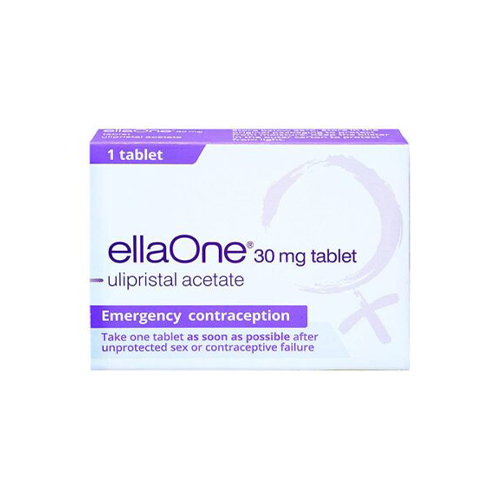
ellaOne is a contraceptive intended to prevent pregnancy after unprotected sex or if your contraceptive method has failed if it is used within 5-days of intercourse.
Order before 3pm — same-day dispatch (MON - FRI)
~5 min consultation
Secure & confidential · Reviewed by a UK prescriber
ellaOne is a contraceptive intended to prevent pregnancy after unprotected sex or if your contraceptive method has failed if it is used within 5-days of intercourse.
ellaOne is an emergency contraceptive pill containing 30 mg of ulipristal acetate, which belongs to a class of medicines called selective progesterone receptor modulators. Like Levonelle, it works mainly by delaying ovulation — but it does so even when the body has begun the hormonal surge that triggers egg release, which is the point at which Levonelle becomes ineffective. In practice, this means ellaOne extends the window in which emergency contraception can still work, particularly in the days closest to ovulation, when the risk of pregnancy is highest.
ellaOne is licensed for use up to 120 hours (five days) after unprotected sex. As with Levonelle, the earlier you take it, the better it works, but the five-day window is genuinely usable rather than nominal — efficacy is reasonably maintained across that period. After 120 hours, the only remaining option for emergency contraception is a copper coil, which can be fitted up to five days after the earliest expected ovulation.
There are three practical differences. First, the time window: ellaOne works up to five days after sex, Levonelle up to three. Second, the mechanism: ellaOne can delay ovulation closer to the point of egg release, so it tends to be more effective in the riskiest part of the cycle. Third, the way it interacts with regular hormonal contraception: ellaOne and progestogen-based contraception interfere with each other, so there's a waiting period before restarting your normal pill, patch, or ring. Levonelle doesn't have that issue.
In direct head-to-head studies, ellaOne is generally more effective than levonorgestrel, particularly when taken in the second half of the five-day window or close to ovulation. It still isn't a guarantee — no oral emergency contraceptive is — and the copper coil remains far more effective than either pill, preventing more than 99% of pregnancies when used in this way.
Some research suggests ellaOne's effectiveness may be reduced at higher body weights, but the evidence is less clear than for Levonelle, and ellaOne appears to remain effective at higher BMIs than levonorgestrel does. For women with a BMI above 26 or weight above 70 kg, current UK guidance generally favours ellaOne over Levonelle, with the copper coil considered the most reliable option overall.
The side effect profile is broadly similar to Levonelle. Most commonly reported are headache, nausea, abdominal pain, period pain, breast tenderness, mood changes, and tiredness. Period timing can shift — your next period may arrive earlier or up to a week later than expected — and breakthrough spotting between periods is fairly common. Sudden severe one-sided lower abdominal pain in the weeks after taking ellaOne should always be assessed, as ectopic pregnancy, while rare, needs to be ruled out.
This is the main practical caveat with ellaOne. Hormonal contraception containing progestogen can reduce ellaOne's effectiveness, and ellaOne in turn can briefly interfere with how well your regular contraception starts working. You'll usually be advised to wait five days after taking ellaOne before starting or restarting hormonal contraception, and to use condoms during that gap and for a further period (typically seven days for combined pills, nine days for some others, two days for the progestogen-only pill) until your regular method is reliable again.
Taking ellaOne while progestogen is already active in your system reduces how well ellaOne works. If you've recently missed pills and need emergency contraception, this is something to discuss with the pharmacist or clinician, because in some cases Levonelle or a copper coil becomes a more sensible choice.
You can take it, but ulipristal passes into breast milk in small amounts. Current guidance is to avoid breastfeeding for one week after the dose. Most women express and discard breast milk during that period to maintain supply, then resume normal feeding afterwards. A pharmacist or midwife can talk you through the practicalities.
The principle is the same as Levonelle: if you're sick within three hours, the tablet may not have been absorbed and a repeat dose is generally needed. After three hours, no repeat is required. As with any emergency contraceptive, persistent vomiting alongside abdominal pain in the weeks following should be assessed clinically.
Yes, and the list overlaps with Levonelle. Enzyme-inducing drugs — rifampicin, several epilepsy medicines, some HIV treatments, and St John's Wort — speed up how the liver breaks down ulipristal and can make ellaOne less effective. Strong antacids and proton pump inhibitors (such as omeprazole or lansoprazole) reduce how much ellaOne is absorbed, because the medicine relies on stomach acid to work properly. ellaOne is also generally avoided in women with severe uncontrolled asthma being treated with oral steroids.
Yes, ellaOne can be taken more than once in a cycle if needed, but the same point applies as with Levonelle: repeated need for emergency contraception is a strong cue to look at a more reliable ongoing method. It's also worth noting that taking ellaOne twice in close succession, or alongside levonorgestrel, isn't recommended — the two work against each other, and using both can leave you less protected, not more.
Most women find that their period arrives within a week of when it was due, but it can come up to a week early or a week late after ellaOne. If your period is more than seven days late, lighter than usual, or you have any other reason to suspect pregnancy — including unusual bleeding, breast changes, or persistent nausea — take a pregnancy test. Testing too soon can give a false negative; the most reliable result comes at least three weeks after the unprotected sex.
No, in the same way Levonelle does not. If there's any concern about STI exposure, a sexual health check is worth booking, and time-sensitive treatments such as HIV post-exposure prophylaxis can be discussed where appropriate.
Helpful articles and clinical guides related to this treatment category.
Free consultation
Online review by a UK prescriber
Next-day delivery
Order before 3pm where offered
Discreet packaging
Plain outer packaging