

We’re here to help.
Our friendly team is available to help Monday to Friday 9:00am – 5:00pm.
If you need urgent assistance, do not use this service. Call 111, or in an emergency call 999.
Our friendly team is available to help Monday to Friday 9:00am – 5:00pm.
If you need urgent assistance, do not use this service. Call 111, or in an emergency call 999.
Fast, discreet delivery
Free delivery over £40
100% UK-based pharmacy
All doctors & pharmacists UK-based
Free advice & support
Clinical support free · Mon–Fri 9am–5pm
Why Patients Choose Access Doctor
10+
Years serving UK patients
—
Verified patient reviews
1,000+
Licensed treatments
24/7
Consultation available
Fucibet cream contains 2 different ingredients. Fusidic acid, a type of antibiotic, and betamethasone, a type of corticosteroid. The antibiotic helps treat the skin infection and the corticosteroid reduces any swelling, redness or itchiness of your skin.
Order before 3pm — same-day dispatch (MON - FRI)
~5 min consultation
Secure & confidential · Reviewed by a UK prescriber
Fucibet cream contains 2 different ingredients. Fusidic acid, a type of antibiotic, and betamethasone, a type of corticosteroid. The antibiotic helps treat the skin infection and the corticosteroid reduces any swelling, redness or itchiness of your skin.
Fucibet Cream is a prescription‑only medicine. Your online consultation with Access Doctor will determine whether this specific combination is appropriate for your skin condition – typically infected eczema, infected dermatitis, or other inflamed skin conditions with a bacterial infection.
Do not use Fucibet for more than 14 days without medical review.
If you see no improvement after 7 days, stop using it and contact your doctor.
Do not use it on your face, eyelids, genitals, or children under 6 years unless a doctor has explicitly prescribed it for those areas.
Do not share your prescription with anyone else.
This information is for educational purposes and does not replace professional medical advice from your doctor or pharmacist. Always read the patient information leaflet inside the pack.
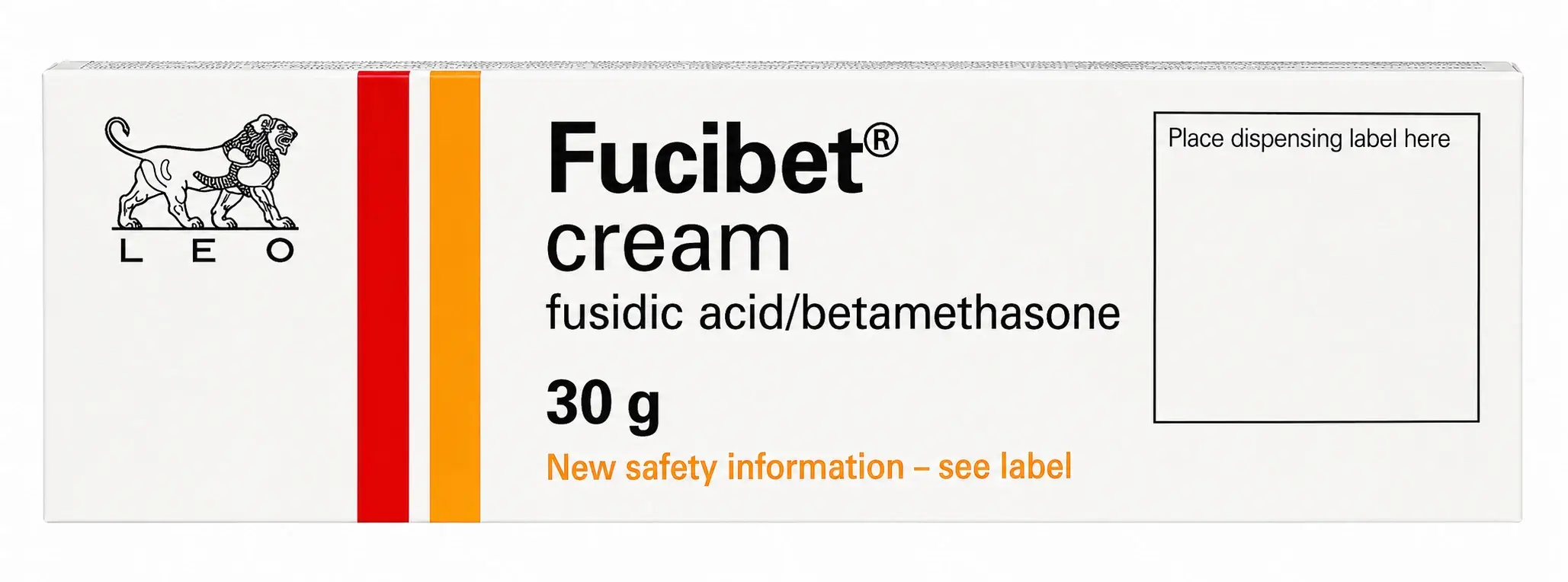
Fucibet Cream is a prescription‑only cream that contains two active ingredients: a strong steroid (betamethasone valerate 0.1%) and an antibiotic (fusidic acid 2%). It is made by LEO Pharma.
It is used for inflamed skin conditions (like eczema and dermatitis) that have become infected with bacteria – or where there is a high chance of infection. The kinds of eczema it treats include:
Atopic eczema (the most common type, often starting in childhood)
Infantile eczema (eczema in babies and young children)
Discoid eczema (coin‑shaped patches of eczema)
Stasis eczema (eczema related to poor blood flow in the legs)
Contact eczema (eczema caused by touching something irritating or allergenic)
Seborrhoeic eczema (the scaly rash that appears on the scalp, face and chest).
The two ingredients work together: the betamethasone calms down the redness, swelling and itching (these are signs of inflammation), while the fusidic acid kills the bacteria that are causing or making the infection worse
Betamethasone valerate is a strong steroid (in the UK, it is classed as "potent"). It works by dampening down your skin's overactive immune response. When you apply it, it enters the skin cells and changes how those cells behave – they stop producing so many inflammatory chemicals, the blood vessels narrow (which reduces redness and swelling), and the itching stops. It is roughly 50‑100 times stronger than an over‑the‑counter mild steroid like hydrocortisone 1%.
Fusidic acid is an antibiotic that is particularly good at killing Staphylococcus aureus – a type of bacteria that very commonly infects eczema and other inflamed skin. It works by stopping the bacteria from making the proteins they need to grow and multiply. This gives your body's own immune system time to clear the infection.
The two ingredients work as a pair. The steroid reduces the inflammation and itch, which stops you scratching and breaking the skin further. The antibiotic clears the infection. Together, they treat the whole problem in one cream.
No, they are not the same. Fucidin cream contains only the antibiotic fusidic acid – no steroid. Fucibet cream contains the antibiotic plus the strong steroid betamethasone.
The difference matters for your skin:
Fucidin is used for a plain bacterial skin infection with little or no inflammation – for example, a small patch of impetigo (honey‑coloured crusts) or an infected cut that is not very red or swollen.
Fucibet is used when there is significant inflammation – redness, swelling, itching – and a bacterial infection. The steroid part treats the inflammation, which Fucidin alone cannot do.
Your doctor will choose between them based on how inflamed your skin looks. If the rash is very angry, red and itchy, Fucibet is usually the better choice. If it is just an infection with mild redness, Fucidin may be enough.
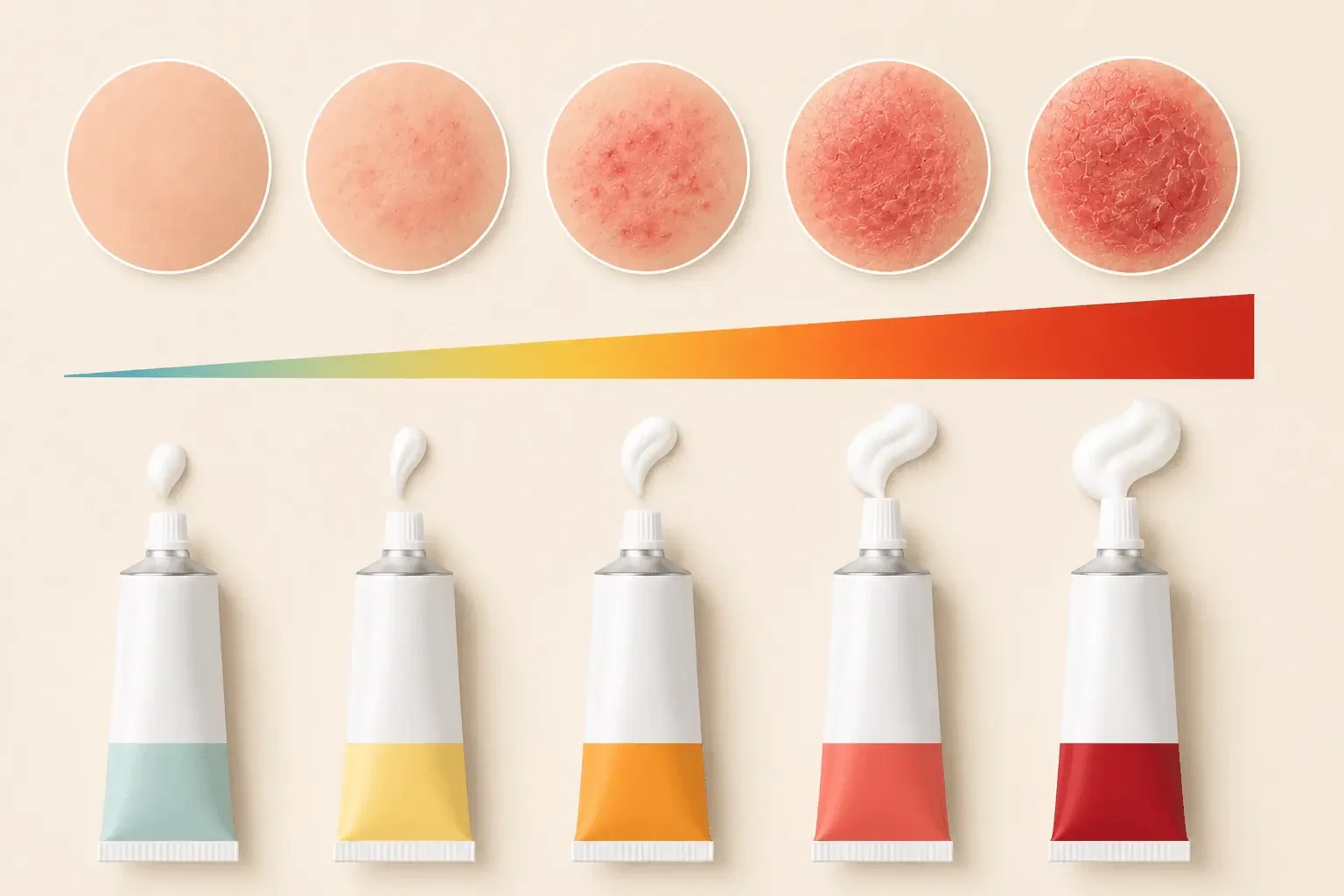
To give you an idea of where it sits:
Mild steroids: hydrocortisone 1% (available over‑the‑counter)
Moderately potent steroids: clobetasone butyrate (Eumovate), the steroid in Trimovate
Potent steroids: betamethasone valerate (Fucibet, Betnovate) and mometasone (Elocon)
Very potent steroids: clobetasol propionate (Dermovate)
So Fucibet is two steps up from a mild over‑the‑counter hydrocortisone cream. It is significantly stronger, which is why it is prescription‑only and why you must use it with care and for no longer than recommended.
How often: Apply a thin layer to the affected area twice a day (morning and evening).
How much: Use the "fingertip unit" rule. One fingertip unit is the amount of cream squeezed from the tube to the first crease on your index finger – about 0.5g. That covers two adult palm prints (roughly 2% of your body surface). For a patch of infected eczema the size of your hand, one fingertip unit is plenty. Do not smear it on thickly – it does not work better, it just increases the risk of side effects and wastes the cream.
How long – very important:
A single course of treatment should normally not exceed 2 weeks (14 days).
If you see no improvement after 7 days, stop using it and speak to your doctor. Something else is going on – the diagnosis may be wrong, or the bacteria may be resistant.
Do not use it for longer than 14 days without a medical review.
There are two very good reasons for the 14‑day limit:
Antibiotic resistance. Fusidic acid is a valuable antibiotic, and bacteria can learn to resist it if you use it for too long or repeat courses too often. Keeping courses short (14 days) and avoiding repeat prescriptions helps preserve its effectiveness.
Steroid side effects. The steroid in Fucibet is strong. Using it for weeks or months can thin your skin, cause stretch marks, or lead to other side effects. The 14‑day limit keeps you safe.
Occlusion: In some cases (for very stubborn patches), a doctor may tell you to cover the cream overnight with a thin plastic film to help it absorb better. Do not do this unless a doctor has specifically told you to. Covering (occluding) the cream dramatically increases steroid absorption and the risk of side effects.
Stop using Fucibet and contact your doctor.
There are several possible reasons for no improvement:
The bacteria causing the infection may be resistant to fusidic acid (this is becoming more common in the UK – see the section on antibiotic resistance below)
The rash may not be bacterial at all – it could be fungal (ringworm, athlete's foot) or viral (cold sores, shingles), and Fucibet will not work on those
The inflammation may be so severe that you need a different treatment – perhaps a very potent steroid, or steroid tablets
Your doctor will assess you and decide what to do next. Do not keep using Fucibet for weeks just hoping it will eventually work – that will only make any resistance problem worse and increase your risk of side effects.
Most people use Fucibet without any problems, especially when used for short courses (up to 14 days). However, side effects can happen.
Common side effects (affect less than 1 in 10 people):
Mild burning, stinging or itching where you apply the cream – this usually settles after the first few uses
Dryness of the skin at the application site
Less common but more significant side effects (usually from using the cream for too long, on large areas, or under coverings):
Skin thinning (atrophy) – the skin becomes shiny, fragile and tears easily. This can be permanent.
Stretch marks (striae) – reddish or purple lines on the skin, particularly on the inner thighs, armpits and lower abdomen.
Telangiectasia – fine red lines (spider veins) appearing on the skin.
Acne or folliculitis – spots or red bumps around hair follicles.
Change in skin colour – the skin may become lighter or darker in the treated area.
Allergic contact dermatitis – a reaction to any of the ingredients (fusidic acid, betamethasone, or the preservatives). Signs include spreading redness, itching, swelling or blisters outside the original rash area. If this happens, stop the cream and see your doctor.
Rare side effects (mainly if the cream gets into your eyes or is used for very long periods on large areas):
Eye problems – If Fucibet gets into your eyes (or is used on the eyelids for a long time), it can cause raised pressure inside the eye (glaucoma) or cataracts. Symptoms include blurred vision, eye pain, seeing halos around lights, or redness of the eye. Avoid getting the cream in your eyes. If you accidentally get cream in your eyes, rinse thoroughly with clean water. If you develop any of these symptoms, see a doctor.
HPA axis suppression – This is when enough steroid is absorbed into your bloodstream to affect your body's own cortisol production. It is extremely rare with Fucibet used as prescribed (small area, short course). Signs include unusual tiredness, dizziness when standing up, nausea, weight loss, and poor recovery from minor illnesses.
Cushing's syndrome – A collection of symptoms from too much steroid: moon face (round, puffy face), weight gain around the trunk, easy bruising, thin fragile skin and high blood pressure. This has been reported with strong steroids but only in people who used large amounts over large areas for months – not with a standard 14‑day course on a small patch.
Topical steroid withdrawal (TSW) – A rebound reaction where stopping a strong steroid after very long‑term use (months to years) causes severe red, burning, oozing skin. TSW is not a risk for a single 14‑day course. It is a risk for people who have used potent steroids daily for months or years without a break, often on the face or genitals.
When to stop immediately and see a doctor:
Signs of a severe allergic reaction – swelling of the face, lips, tongue or throat, or difficulty breathing (extremely rare)
The rash becomes much worse – more red, more painful, or starts spreading with pus or fever
Eye symptoms – blurred vision, eye pain, halos around lights
Any sign of skin thinning or stretch marks developing
Generally, no – unless a doctor has specifically prescribed it for those areas.
The skin on your face, eyelids, armpits, groin and genitals is much thinner than on your arms or legs. It absorbs steroids far more easily, and the risk of side effects (skin thinning, telangiectasia, perioral dermatitis, steroid rosacea) is much higher.
Specific restrictions from the official information:
Perioral dermatitis – the spotty red rash around the mouth – is a condition where Fucibet is contraindicated (meaning you should not use it at all). Steroids make perioral dermatitis worse, not better.
Rosacea – the chronic flushing redness on the face – is also a contraindication.
Eyelids and eyes – Use with extreme care near the eyes, and avoid getting Fucibet into the eyes. Prolonged use on the eyelids can cause glaucoma or cataracts.
The only time a doctor might prescribe Fucibet for the face is for a very specific condition, such as severe infected eczema on the scalp (not the face skin itself), or for a localised patch of infected dermatitis on the cheek where the benefits outweigh the risks. Even then, the course will be very short – usually 5‑7 days maximum.
If you have a red, inflamed rash on your face or private parts, do not self‑treat with Fucibet. See a doctor for an accurate diagnosis.
Pregnancy: The official advice is that Fucibet should not be used during pregnancy unless your doctor decides it is clearly necessary. There are limited studies in human pregnancy, and animal studies have shown some risks to the developing baby. The steroid in Fucibet is a potent steroid, and as a general rule, doctors prefer to use the mildest effective steroid during pregnancy. If you have severely infected eczema that is not responding to milder treatments, your doctor may decide that a short course of Fucibet on a very small area is acceptable – but this will be a clinical decision made with you. Do not start using Fucibet if you are pregnant or think you might be pregnant without first talking to your doctor.
Breastfeeding: Fucibet can be used while breastfeeding provided you do not apply it to the breasts or nipple area. The active ingredients are minimally absorbed through the skin, so using it on your arm, leg or trunk is generally considered safe. However:
Do not apply Fucibet to your breasts immediately before nursing – the baby could swallow it.
If you are treating a rash under your breasts (intertrigo), apply the cream after feeding and wipe the area clean before the next feed.
Always tell your doctor or midwife if you are pregnant, planning to become pregnant, or breastfeeding before using Fucibet.
Antibiotic resistance is when bacteria change and become able to survive treatment with an antibiotic that used to kill them. Fusidic acid resistance has been increasing in the UK, particularly in the common skin bacteria Staphylococcus aureus.
Why this matters for you:
If the bacteria on your skin are resistant to fusidic acid, Fucibet will not work – you will see no improvement after 7 days.
Overusing fusidic acid (using it for too long, or using it repeatedly for different rashes) speeds up the development of resistant bacteria. These resistant bacteria can then spread to other people and cause infections that are harder to treat.
Fusidic acid is also used as a systemic antibiotic (tablets or injections) for serious, life‑threatening infections such as certain types of pneumonia or bone infections. If resistance to fusidic acid becomes widespread, those life‑saving treatments may stop working.
What you can do to help:
Only use Fucibet when a doctor has prescribed it for you.
Complete the course as directed, but do not use it for longer than 14 days.
If you see no improvement after 7 days, stop and speak to your doctor. Continuing to use an antibiotic that is not working just encourages more resistance.
Do not ask for Fucibet as a "repeat prescription" to keep in your medicine cabinet for future rashes. Each course should be prescribed for a specific episode of infected eczema.
Do not share your Fucibet with anyone else, even if they have a rash that looks similar to yours.
Do not use Fucibet for:
Fungal infections – ringworm, athlete's foot, jock itch, thrush (Candida). Fucibet contains an antibiotic that kills bacteria, not an antifungal. If you use it on a fungal infection, the steroid part may temporarily reduce the redness and itch, making you think it is working, but the fungus will keep growing and the rash will come back – often worse than before.
Viral infections – cold sores (herpes simplex), chickenpox, shingles. Steroids can reactivate the virus and cause a severe, widespread infection.
Impetigo without significant inflammation – impetigo is a highly contagious bacterial infection causing honey‑coloured crusts. If the impetigo is not very inflamed, a plain antibiotic cream (Fucidin alone) is usually enough. Fucibet would be a stronger option that is not necessary.
Acne – steroids can worsen acne.
Perioral dermatitis – the red bumps around the mouth. Steroids are a common cause of this condition and will not treat it.
Rosacea – the chronic facial flushing. Steroids make rosacea worse.
Skin problems related to tuberculosis or syphilis.
If you are unsure what your rash is, do not guess. See a doctor or ask a pharmacist.
Only with caution.
You can consider using a leftover tube only if:
The new rash looks exactly the same as the rash the cream was prescribed for last time (same appearance, same location on your body)
The cream is within its expiry date (check the tube)
You are certain it is not a different type of rash (e.g., ringworm, cold sore, impetigo)
The rash is not on your face, eyelids, genitals or a child
You have not used the cream for longer than 14 days in the past year for other rashes (to avoid over‑exposing yourself to fusidic acid and contributing to resistance)
Do NOT use leftover Fucibet for:
A rash you have never had diagnosed – you could be treating the wrong condition and making it worse
A rash on your face or private parts
A rash in a child without a current prescription
A dry, scaly, ring‑shaped rash (likely fungal – you need an antifungal)
A blistering, painful rash (could be a virus – steroids make it much worse)
A rash that is not improving, or is getting worse, after 3‑4 days of use
If you are in any doubt, ask a pharmacist or see a doctor. It is always safer to get a fresh diagnosis for a new rash.
Helpful articles and clinical guides related to this treatment category.
Free consultation
Online review by a UK prescriber
Next-day delivery
Order before 3pm where offered
Discreet packaging
Plain outer packaging