Great steriod ointment that relieved my intensely itchy skin. Very impressed that it worked so well.
Cindy C · 2 years ago

Our friendly team is available to help Monday to Friday 9:00am – 5:00pm.
If you need urgent assistance, do not use this service. Call 111, or in an emergency call 999.

Fast, discreet delivery
Free delivery over £40
100% UK-based pharmacy
All doctors & pharmacists UK-based
Free advice & support
Clinical support free · Mon–Fri 9am–5pm
Why Patients Choose Access Doctor
10+
Years serving UK patients
—
Verified patient reviews
1,000+
Licensed treatments
24/7
Consultation available
Mometasone Ointment is an effective, targeted solution for individuals seeking relief from various skin conditions such as eczema, psoriasis, and certain types of dermatitis. This topical ointment contains the active ingredient mometasone furoate, a corticosteroid that works to reduce inflammation, itching, and redness by suppressing immune responses and limiting the release of inflammatory chemicals.
Order before 3pm — same-day dispatch (MON - FRI)
~5 min consultation
Secure & confidential · Reviewed by a UK prescriber
Mometasone Ointment is an effective, targeted solution for individuals seeking relief from various skin conditions such as eczema, psoriasis, and certain types of dermatitis. This topical ointment contains the active ingredient mometasone furoate, a corticosteroid that works to reduce inflammation, itching, and redness by suppressing immune responses and limiting the release of inflammatory chemicals.
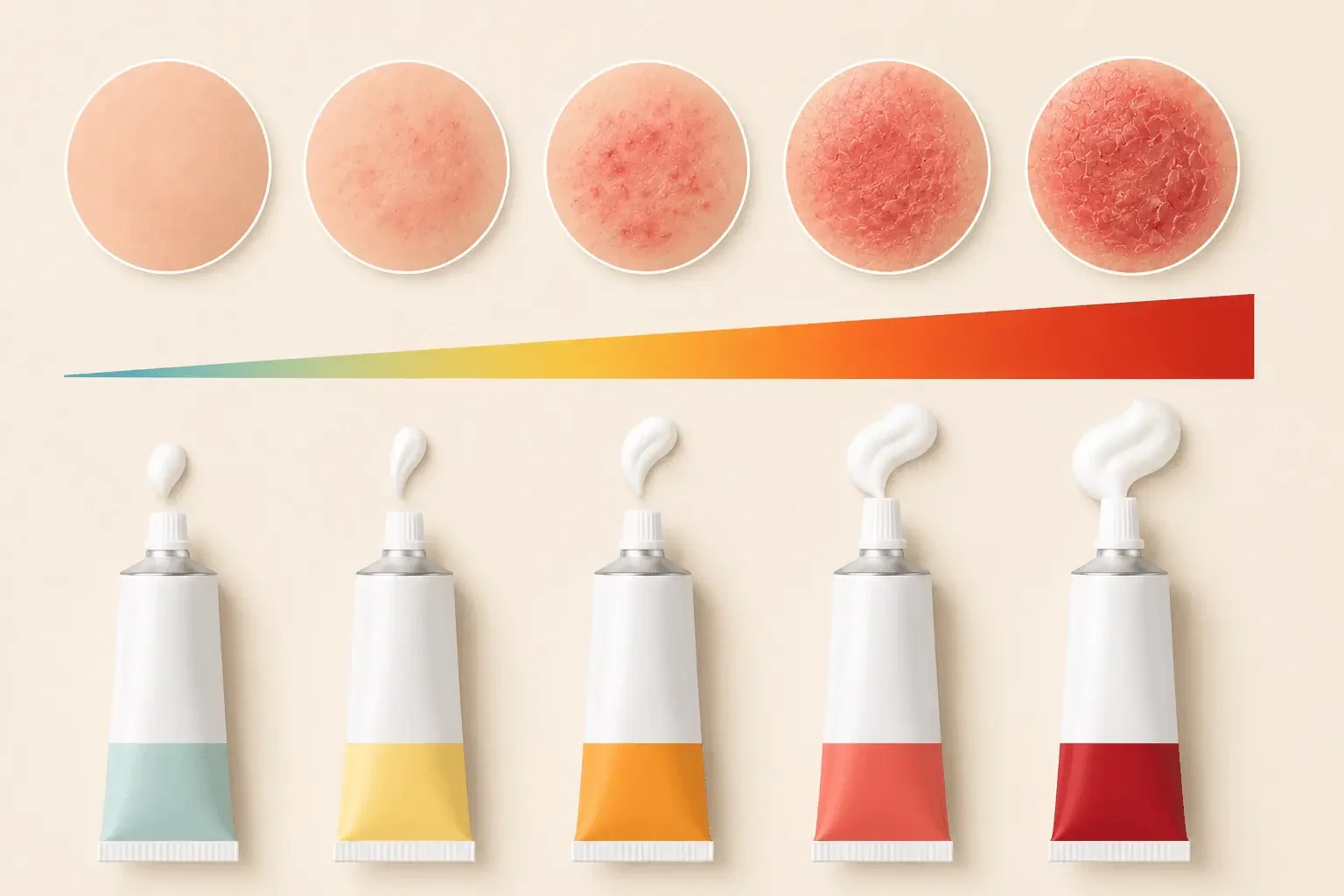
Mometasone furoate 0.1% is a prescription‑only topical corticosteroid cream and ointment, commonly sold under the brand name Elocon (manufactured by Organon, formerly MSD). In the UK topical steroid grading system, mometasone sits on the third rung of the four‑rung ladder – it's classified as a potent steroid. That puts it one step above moderately potent steroids like clobetasone butyrate (Eumovate) and two steps above mild hydrocortisone, but one step below very potent steroids like clobetasol propionate (Dermovate). It's indicated for inflammatory skin conditions that haven't responded adequately to a moderately potent steroid or that present with enough severity to need a potent steroid from the start – things like atopic eczema (including moderate‑to‑severe flares), discoid eczema, contact dermatitis, psoriasis (except very thick palmoplantar or plaque psoriasis, which often needs a very potent steroid), and certain other steroid‑responsive dermatoses. Unlike Dermovate, mometasone can be initiated by a GP without specialist referral, provided the prescriber follows the quantity and duration limits.
The UK uses a four‑tier system. Mild (hydrocortisone 1%, 0.5%, 0.1%) is the bottom rung – available over‑the‑counter for short periods. Moderately potent (clobetasone butyrate 0.05%, Eumovate) is the second rung – prescription only, used for mild‑to‑moderate eczema in children and sensitive areas. Potent (betamethasone valerate 0.1%, Betnovate; mometasone furoate 0.1%, Elocon; fluocinonide 0.05%, Metosyn) is the third rung – these are the workhorses for most active flares of eczema and localised psoriasis in adults. Very potent (clobetasol propionate 0.05%, Dermovate) is the top rung – reserved for resistant or severe conditions. Within the potent class, mometasone and betamethasone are broadly comparable in clinical potency, though some dermatologists consider mometasone slightly less atrophogenic (meaning less prone to cause skin thinning at equivalent anti‑inflammatory effect) based on some older studies, but the difference is not large enough to change prescribing guidelines. Mometasone is approximately 60 times more potent than hydrocortisone 1% in terms of vasoconstriction, which is the standard lab proxy for clinical potency. The 0.1% concentration on the tube looks low, but that's because steroid potency is driven by molecular structure, not percentage alone – clobetasol 0.05% is far stronger than mometasone 0.1% because of the fluorine substitution and receptor affinity.
The active ingredient is exactly the same (mometasone furoate 0.1%). The base changes how it behaves on your skin. The cream is a water‑in‑oil emulsion that absorbs quickly, feels lighter, and leaves less residue. It's better for:
Moist or weepy eczema (where an ointment would trap moisture and potentially macerate the skin)
Acute, red, inflamed patches where you want rapid cooling and absorption
Daytime use, especially if you're going out or need to apply moisturiser on top (creams layer more cleanly)
Areas where you don't want a greasy feel, like the hands or scalp (though mometasone scalp application is a separate lotion formulation)
The ointment is a greasy, oil‑based (typically petrolatum) base that doesn't absorb fully. It sits on the skin longer, providing an occlusive layer that drives steroid absorption more deeply and locks in moisture. It's better for:
Dry, scaly, lichenified (thickened from repeated scratching) eczema or psoriasis
Chronic, stubborn patches that have failed cream formulations
Night‑time use, when occlusion under pyjamas increases absorption further
Palms and soles, where thick stratum corneum resists cream penetration
Because the ointment base is occlusive, a given amount of mometasone ointment delivers slightly more drug into the skin than the same amount of cream. For most routine eczema, that difference doesn't matter – use the formulation that feels better on your skin. For very thick, stubborn psoriasis on elbows or knees, the ointment is objectively more effective. You can switch between cream and ointment depending on the patch's stage – many people use cream during a flare's early wet phase, then ointment once the skin dries out and thickens.
Mometasone is a synthetic corticosteroid that works at the genetic level. When you apply it to inflamed skin, the mometasone molecule diffuses through the stratum corneum (the outer dead layer) and penetrates into the cytoplasm of living skin cells – keratinocytes, fibroblasts, and immune cells like Langerhans cells and T‑lymphocytes that are driving the inflammation. Once inside, mometasone binds to the glucocorticoid receptor with moderately high affinity (lower than clobetasol's affinity, but higher than hydrocortisone's). The receptor‑steroid complex translocates to the cell nucleus and changes the transcription of hundreds of genes. Some genes are turned up (like lipocortin, which inhibits phospholipase A2 and cuts off the production of inflammatory mediators). Many more are turned down – the genes for cytokines (IL‑1, IL‑2, IL‑6, TNF‑alpha), chemokines, adhesion molecules, prostaglandins, and leukotrienes. The net effect is a broad suppression of the inflammatory cascade: fewer inflammatory cells migrate into the skin, blood vessels constrict (reducing redness and swelling), itch signalling drops, and the skin's abnormal immune response settles. Because mometasone works by altering gene expression, it's not instant – you need at least a few hours for the protein changes to happen, and full effect takes a couple of days. That's also why it doesn't wear off immediately after washing: the genetic changes persist for a while even after the steroid molecule is gone.
Apply a thin layer – not a thick smear – to the affected areas once daily. Twice daily does not improve efficacy for mometasone in most studies and only increases side effect risk. The standard quantity limit for mometasone in an adult is 50 g of cream or ointment per week – the same raw number as for Dermovate, but with a critical difference. Because mometasone is less potent than clobetasol, you can treat a larger body area per week before hitting the same systemic absorption risk. In practice, a 30 g tube of mometasone, used once daily on areas totalling roughly 5‑10% of body surface area (say, both forearms and lower legs, or the whole back), should last 2‑4 weeks. Use the fingertip unit method: one FTU (squeezed from the tube's nozzle to the first crease of an adult index finger) is about 0.5 g and covers two adult palm prints (about 2% of body surface area). For a patch of eczema the size of a hand, one FTU is plenty. For both hands, two FTUs. You don't need to cover every square millimetre of normal skin around the patch – apply only to the inflamed area plus a tiny margin.
The 50 g per week limit isn't a target to hit; it's the ceiling above which the risk of HPA axis suppression becomes clinically measurable. Most people use far less. If you find yourself using more than 50 g of mometasone per week, either your eczema is covering an unusually large area (over 30‑40% body surface) – in which case you need systemic treatment, not more topical steroid – or you're applying it too thickly or too frequently.
Moderately potent steroids (Eumovate) are fine for mild‑to‑moderate eczema on thin skin (face, flexures, children). But once eczema is thick, lichenified (from chronic scratching), or failing to clear after 1‑2 weeks of a moderately potent steroid, stepping up to a potent steroid like mometasone is appropriate. The specific situations where mometasone is the right first‑line or second‑line include:
Moderate‑to‑severe atopic eczema in adults (not on the face) – the BAD guideline suggests potent steroids for active flares on trunk and limbs
Discoid (nummular) eczema – those coin‑shaped, intensely itchy plaques that tend to be stubborn
Chronic hand eczema – the thick skin on palms and fingers resists weaker steroids
Localised plaque psoriasis (not involving >10% body surface) – mometasone alone or in combination with calcipotriol (but here we're talking mometasone mono)
Eczema unresponsive to Eumovate after 2 weeks of proper use
Psoriasis on the scalp (using mometasone furoate lotion, a separate formulation)
Lichen simplex chronicus – those localised thickened patches from repeated rubbing
What doesn't need mometasone? Mild, recent‑onset eczema on a child's inner elbows – start with Eumovate. Facial eczema of any severity – use a moderately potent or even mild steroid (hydrocortisone) to avoid atrophy and perioral dermatitis. Very thick palmoplantar psoriasis or severe hypertrophic lichen planus – those need a very potent steroid like Dermovate, not mometasone.
Yes, and they're tighter than many people realise. For potent steroids including mometasone, the standard safety guidance is:
Maximum continuous use on one body area: 4‑6 weeks, then review. If the area isn't clear by 6 weeks, the diagnosis may be wrong, or you need stepping up to Dermovate or stepping across to an add‑on treatment like a topical calcineurin inhibitor.
Maximum per year (for chronic relapsing conditions like eczema): No more than 12‑16 weeks of potent steroid use per year, ideally less. If you need more than that, you should be on a maintenance regimen using milder steroids (hydrocortisone) or steroid‑free anti‑inflammatories (tacrolimus, pimecrolimus), plus optimised emollients.
On the face, neck, armpits, groin: In general, avoid mometasone entirely. If a dermatologist prescribes it for a resistant patch on the face (e.g., discoid lupus or a very localised plaque), the course should be no longer than 5‑7 days.
In children under 12: Duration limited to 5‑7 days on any area, and total body area treated at any one time should be under 10‑20%. Many paediatric dermatologists prefer betamethasone valerate (Betnovate) over mometasone in children simply because there's more long‑term safety data, but mometasone is approved for children over 2 years for short courses.
If you have a condition like lichen sclerosus – you won't use mometasone for that anyway (it's Dermovate territory). Mometasone is not the drug for chronic long‑term daily maintenance; it's for flares.
The skin on your face, eyelids, neck, armpits, and groin is fundamentally different from the skin on your arms or back. It's thinner (fewer cell layers in the stratum corneum), has more blood vessels close to the surface, and absorbs topical steroids at 5‑10 times the rate per square centimetre compared to forearm skin. When you apply a potent steroid like mometasone to your face, you get rapid local side effects that can be permanent:
Skin thinning (atrophy) – the steroid suppresses collagen production. Within a few weeks, the skin becomes translucent, veins become visible (telangiectasia), and it tears easily. On the face, that doesn't always reverse.
Perioral dermatitis – a rebound rash of red bumps around the mouth and nose, famously triggered by potent steroids on the face. It can take months to clear and needs long‑term antibiotic or topical calcineurin treatment.
Steroid rosacea – worsening redness, flushing, and pustules that mimic rosacea. The steroid causes vasodilation when stopped, leaving a chronic red face.
Glaucoma and cataracts – mometasone used near the eyes (eyelids, periorbital skin) can raise intraocular pressure with repeated application. The risk is lower than with Dermovate but still real.
The exceptions are rare. A dermatologist might use mometasone on a single, very localised plaque of psoriasis on the cheek for 5 days, or on a patch of lichen simplex on the side of the neck. But as a general rule for eczema or dermatitis on the face, you should be using hydrocortisone 1% (mild) or Eumovate (moderately potent) – not mometasone.
Potent steroids like mometasone are second‑line in pregnancy. The first choice is always a mild or moderately potent steroid (hydrocortisone or Eumovate) because they have the longest safety record and lowest systemic absorption. However, if eczema is severe and not responding to Eumovate, mometasone can be used on limited areas for short periods (under 2 weeks). The risk of fetal growth restriction from topical steroids is mainly associated with very potent steroids (Dermovate) used on large areas for weeks, not with short, small‑area potent steroid use. A 2022 British Journal of Dermatology meta‑analysis found no significant increase in major congenital malformations with potent steroid use in the first trimester, but a small increase in low birth weight when more than 300 g of potent steroid was used over the entire pregnancy. For context, 300 g of mometasone is ten 30 g tubes – far more than any sensible prescribing would allow. So the guidance is pragmatic: if you need mometasone for a bad eczema flare on your legs or arms during pregnancy, use it for 1‑2 weeks, stop when the flare settles, and switch back to Eumovate or hydrocortisone. Avoid applying to the breasts in the third trimester if planning to breastfeed, and definitely don't apply to the nipple area while breastfeeding. For lichen sclerosus (uncommon in pregnancy), mometasone is not the drug of choice anyway – that's Dermovate under specialist guidance.
Side effects divide into local (at the application site) and systemic (from absorption into the bloodstream). Local effects are more common. Burning, stinging, or itching at the application site occurs in about 1‑5% of users, usually in the first few days, and often settles without stopping. Folliculitis (red bumps around hair follicles) can happen if you use mometasone on hairy areas like the chest or back for more than a week – it's usually mild and resolves when you stop. Acneiform eruptions (steroid acne) – small red pustules – can appear on the face or upper back if mometasone migrates there from treated areas. More concerning local effects that should make you stop and see a doctor:
Skin thinning – visible as shiny, translucent skin, easy bruising from minor bumps, or stretch marks (striae). These can be permanent. If you see new striae, stop immediately.
Telangiectasia – fine red lines from dilated blood vessels. Reversible if caught early, but can persist.
Secondary infection – if the treated area becomes painful, oozes golden crust (bacterial), or develops itchy ring‑like edges (fungal), the steroid may be masking or worsening an infection. Stop and get a swab.
Perioral dermatitis – clusters of red papules around the mouth, nose, or eyes after using mometasone on the face. Discontinue and see your GP; you'll likely need a topical calcineurin inhibitor (tacrolimus) or oral antibiotics to settle it.
Systemic effects are rare with proper use (under 50 g/week, not on broken skin over huge areas). But they include HPA axis suppression – you might notice unusual fatigue, dizziness when standing up, nausea, or poor recovery from minor illnesses. True Cushing's syndrome (moon face, central weight gain, high blood sugar) from topical mometasone has been documented in case reports but almost always involved patients using 100+ g per week for months, often under occlusion. If you're using mometasone as prescribed, you don't need to worry about Cushing's. But if you find yourself using more than a tube a week, or using it continuously for months, stop and have a conversation with a doctor about why your skin isn't under control.
Topical steroid withdrawal (TSW), also called red skin syndrome, is a recognised but poorly understood phenomenon where after prolonged use of a topical steroid (usually a potent or very potent one), stopping triggers a severe, widespread inflammatory reaction that can last months to years. The skin becomes fiery red, burns, oozes, swells, and itches intensely – often far worse than the original condition. TSW has become a high‑profile topic on social media, and there's genuine debate about its prevalence. What's clear is that TSW is strongly associated with prolonged continuous use (months to years) of potent or very potent steroids on large body areas, often without a break, and sometimes on the face or genitals. Mometasone, as a potent steroid, can cause TSW if used that way – but the risk is lower than with Dermovate (very potent). In the UK, most dermatologists have seen a handful of genuine TSW cases, and almost all involved patients who either:
Used potent or very potent steroids daily for >12 months without medical supervision
Obtained steroids from unregulated online sources and escalated their own dose
Had an underlying diagnosis (often perioral dermatitis or rosacea) that was never properly treated, and the steroid was masking a rebound cycle
The way to avoid TSW is to use mometasone as intended: short courses (1‑4 weeks) for flares, then stop or step down to a milder steroid. If you've been using mometasone daily for more than 3‑4 months on large areas, don't stop abruptly – that can provoke the rebound. Instead, see a doctor for a tapering plan (e.g., switch to betamethasone valerate for 2 weeks, then Eumovate for 2 weeks, then hydrocortisone). For the vast majority of people using mometasone for occasional eczema flares, TSW is not a realistic concern.
Stop self‑treating and book an appointment if any of these happen:
No improvement after 2 weeks of once‑daily use. That suggests the diagnosis is wrong (fungal infection, scabies, contact dermatitis from something else) or the potency is insufficient (needs Dermovate or systemic treatment).
The area worsens despite using mometasone. Steroids shouldn't make eczema worse – if it's getting redder, more painful, or spreading, think infection (bacterial or viral – herpes simplex can flare on steroid‑treated eczema, producing eczema herpeticum, which is an emergency).
You need to use mometasone more than 2‑3 times per year for the same patch. That's a sign of chronically active disease that needs a maintenance strategy (e.g., weekend application of a milder steroid, or a topical calcineurin inhibitor like tacrolimus).
You find yourself using more than 50 g in a week – either your treated area is too large (over 30% body surface) or you're applying it too thickly.
Any sign of skin thinning, striae, or telangiectasia – stop and get reviewed; you may need to switch to a less atrophogenic steroid like hydrocortisone butyrate (Locoid) or a calcineurin inhibitor.
In a child: any growth concerns, excessive weight gain, or unusual fatigue – get a cortisol check.
On the face: if a doctor didn't prescribe it for the face, don't start. If a doctor did, but you need more than 5‑7 days, get a second opinion.
For lichen sclerosus (again, not a mometasone condition), for eczema herpeticum (painful, punched‑out erosions, fever), or for any suspicion of TSW – see a doctor urgently.
Great steriod ointment that relieved my intensely itchy skin. Very impressed that it worked so well.
Helpful articles and clinical guides related to this treatment category.
Free consultation
Online review by a UK prescriber
Next-day delivery
Order before 3pm where offered
Discreet packaging
Plain outer packaging