


We’re here to help.
Our friendly team is available to help Monday to Friday 9:00am – 5:00pm.
If you need urgent assistance, do not use this service. Call 111, or in an emergency call 999.
Our friendly team is available to help Monday to Friday 9:00am – 5:00pm.
If you need urgent assistance, do not use this service. Call 111, or in an emergency call 999.
Fast, discreet delivery
Free delivery over £40
100% UK-based pharmacy
All doctors & pharmacists UK-based
Free advice & support
Clinical support free · Mon–Fri 9am–5pm
Why Patients Choose Access Doctor
10+
Years serving UK patients
—
Verified patient reviews
1,000+
Licensed treatments
24/7
Consultation available
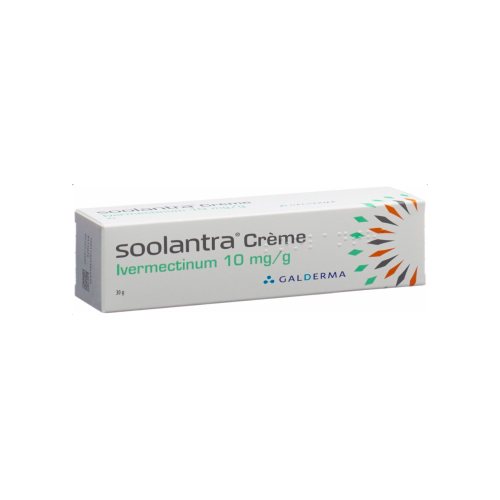
Rosacea is a chronic skin condition characterised by facial redness, bumps, and blemishes, as well as thickened skin Soolantra cream is a prescription-only topical treatment for rosacea, designed to treat pimples, spots and blemishes. It's active ingredient, Ivermectin , is both anti-inflammatory and kills parasites like demodex mites - a factor which has been linked to inflammation and rosacea.
Order before 3pm — same-day dispatch (MON - FRI)
~5 min consultation
Secure & confidential · Reviewed by a UK prescriber
Soolantra Cream is a prescription‑only medicine. Your online consultation with Access Doctor will help determine if this treatment is right for your type of rosacea.
Do not use Soolantra if you are pregnant or breastfeeding.
If you have seen no improvement after 3 months of consistent use, stop the cream and contact your doctor.
A temporary worsening of rosacea bumps during the first week of treatment is normal for some people and usually resolves within 7 days.
This information is for educational purposes and does not replace the advice of your doctor or pharmacist. Always read the patient information leaflet inside the pack.
Soolantra Cream is a prescription‑only treatment that contains ivermectin as its active ingredient. It is used specifically for adults who have papulopustular rosacea – a common form of rosacea that causes small, red, pus‑filled bumps (papules and pustules) on the face, usually on the cheeks, nose, chin and forehead. These bumps are often referred to as “spots” or “acne‑like” lesions. Soolantra is not a general‑purpose acne cream. It is formulated and licensed for this particular type of rosacea in adults aged 18 years and over.
Soolantra works through what experts call a dual mechanism of action.
First, ivermectin has powerful anti‑inflammatory properties. It works by reducing the production of inflammatory chemicals in your skin, which in turn calms the redness and swelling associated with your rosacea spots.
Second, ivermectin is an antiparasitic agent. This is where Soolantra is quite different from other rosacea creams. It is effective against microscopic mites called Demodex. These tiny mites live naturally in the hair follicles of most adults, but people with rosacea tend to have far more of them than people with clear skin. It is thought that this overpopulation can trigger the skin's immune system, leading to the inflamed bumps of rosacea. By killing these mites, Soolantra removes a potential trigger for your symptoms.
In summary, Soolantra calms inflammation directly and also addresses the Demodex mite overgrowth that can be a major factor in rosacea for many people.
Using Soolantra correctly is very straightforward, and consistency is the key to success.
When to apply: You should apply Soolantra once a day. The most convenient time is often in the evening, after you have cleansed your face.
Here is the correct, step‑by‑step method:
Cleanse your face: Start by gently washing your face with a very mild, non‑irritating cleanser and lukewarm water. Pat your skin dry with a clean, soft towel. Do not rub.
Apply one pea‑sized amount to each of the five areas of your face: One pea‑sized amount of cream for each of the following five areas – your forehead, your chin, the tip of your nose, and each cheek.
Spread it as a thin layer: Use your fingertips to spread the cream smoothly and evenly as a thin layer across your entire face, not just on the bumps. The official advice is to spread it as a thin layer across your whole face, from your hairline down to your jaw.
Avoid sensitive areas: Take great care not to get any cream in your eyes, on the inside of your nose, or on your lips. If you accidentally get cream in your eye, rinse it immediately with a large amount of cool water.
Wash your hands: After you have finished applying the cream, wash your hands thoroughly with soap and water to remove any residue.
Apply other products after it dries: If you use other skincare products, such as a moisturiser or sunscreen, you can apply them after the Soolantra cream has fully dried on your face. You may also apply your usual cosmetics over the dried cream.
Rosacea does not clear up overnight, so patience is required. The full recommended treatment course is up to 4 months.
When you might see an improvement: Many people begin to see a noticeable reduction in the number of red bumps and pustules on their face within 2 to 4 weeks of starting treatment.
When you should see a clear result: You should see a distinct improvement after 3 months of consistent, once‑daily use.
What to do if there is no improvement: If you have been using Soolantra every day for 3 months and there has been no improvement at all in your rosacea bumps, you should stop using the cream and speak to your doctor. This suggests that Soolantra is not the right treatment for your particular case.
Yes, you can. The official UK patient information states that the treatment course may be repeated. If your rosacea flares up again after a period of being well controlled, you can discuss with your doctor whether another 4‑month course of Soolantra is appropriate. It is not a “one‑course‑only” medicine.
Soolantra is generally very well tolerated, especially when compared to some older rosacea treatments. However, like any medicine applied to the skin, side effects can occur.
The most common side effect (reported in 1% or less of patients in clinical trials) is a burning or stinging sensation on the skin immediately after you apply the cream. This is usually mild and tends to lessen or disappear completely after the first few applications as your skin gets used to the treatment.
Other side effects that can occur in a small number of users include:
Skin irritation, redness or itching
Dry skin
A temporary aggravation of your rosacea symptoms. This is an important point. In a small number of people, the rosacea bumps may seem to get slightly worse for the first week or so of treatment. This is thought to be the result of the dying Demodex mites releasing substances that briefly trigger the skin. This initial worsening should resolve within 1 week of continuing treatment. Do not stop using the cream because of this.
You should stop using the cream and speak to your doctor immediately if:
You experience a severe allergic reaction. Signs include swelling of your face, lips, tongue or throat, a widespread itchy rash, or difficulty breathing. Serious allergic reactions are very rare.
The skin irritation or worsening of your rosacea becomes severe and does not settle down within the first week. Your doctor will advise whether to continue or to try a different treatment.
You have used Soolantra consistently for 3 months with no improvement in your condition.
There are only a few absolute reasons not to use this medicine.
Do NOT use Soolantra if:
You are allergic (hypersensitive) to ivermectin or to any of the other ingredients in the cream. It contains known potential irritants such as cetyl alcohol, stearyl alcohol, propylene glycol, and the parabens (methyl and propyl parahydroxybenzoate). If you have known allergies to any of these, you should avoid Soolantra.
You are pregnant or breastfeeding. The official recommendation is that Soolantra is not recommended during pregnancy or while breastfeeding, because there is limited safety data for these situations.
Pregnancy: There are very few studies on the use of topical ivermectin in pregnant women. While the amount absorbed through your skin is low, there is not enough evidence to guarantee safety. Therefore, Soolantra is not recommended during pregnancy. If you become pregnant while using Soolantra, you should stop using it and speak to your doctor.
Breastfeeding: It is not known if ivermectin passes into breast milk after you apply it to your skin. As a precaution, Soolantra is not recommended while breastfeeding.
If you are planning a pregnancy, think you might be pregnant, or are breastfeeding, you should discuss this with your doctor or pharmacist before using Soolantra.
Soolantra is for external use on the face only. You must avoid applying it:
To your eyes, eyelids or lips.
Inside your nose or mouth.
To any other part of your body unless your doctor has told you otherwise.
You should also be aware of the cream's ingredients. It contains cetyl alcohol, stearyl alcohol, propylene glycol and parabens. All of these can cause local skin reactions or allergic contact dermatitis in susceptible individuals. If you have a known sensitivity to these common skincare ingredients, you should discuss this with your prescriber before starting Soolantra.
No, Soolantra is not a steroid.
It is an antiparasitic/anti‑inflammatory agent, which is a completely different class of medicine. This is an important advantage for many people.
Rozex Gel contains metronidazole, a topical antibiotic. It is an older, well‑established treatment for rosacea bumps.
Finacea Gel contains azelaic acid, which works by normalising skin cell turnover and reducing inflammation.
Soolantra (ivermectin) is a newer treatment that specifically targets the Demodex mite.
Soolantra is generally recommended for people whose rosacea has not responded well to standard topical treatments like metronidazole or azelaic acid, or who have particularly stubborn or widespread bumps. Unlike Rozex, Soolantra does not carry a precaution about avoiding alcohol during treatment.
Yes, you can. Soolantra may be used alone (called monotherapy) or as part of a combination treatment with another rosacea medicine. For example, a doctor might prescribe Soolantra to be used in the evening alongside a treatment like Rozex Gel (metronidazole) or Finacea Gel (azelaic acid) to be used at a different time of day. You should always follow your own doctor's specific instructions. Do not combine treatments without their advice.
You can continue to use your usual skincare products alongside Soolantra.
Moisturiser: If your skin feels dry while using Soolantra, you can apply a gentle, fragrance‑free moisturiser. Apply it after the Soolantra cream has completely dried on your skin.
Makeup: You may apply your usual makeup after the Soolantra cream has dried.
Sunscreen: Sun exposure can trigger rosacea flare‑ups, so wearing a high‑SPF sunscreen (SPF 30 or higher) every day is strongly recommended. Apply the sunscreen as the last step in your routine, after Soolantra and any moisturiser have dried.
Yes, a prescription is required. Soolantra Cream is a prescription-only medicine (POM), so it cannot be bought over the counter. You can get it through Access Doctor by completing a short online consultation, which is then reviewed by a GPhC-registered prescriber. If the treatment is suitable and approved, a prescription is issued and your order is dispensed and dispatched discreetly from our UK pharmacy. You can start the consultation here: https://accessdoctor.co.uk/consultation/rosacea-treatments/ - current pricing is shown as part of the ordering process.
Apply daily for up to 4 months, the treatment course may be repeated; discontinue if no improvement after 3 months.
FOR EXTERNAL USE ONLY.
Helpful articles and clinical guides related to this treatment category.
Free consultation
Online review by a UK prescriber
Next-day delivery
Order before 3pm where offered
Discreet packaging
Plain outer packaging