

We’re here to help.
Our friendly team is available to help Monday to Friday 9:00am – 5:00pm.
If you need urgent assistance, do not use this service. Call 111, or in an emergency call 999.
Our friendly team is available to help Monday to Friday 9:00am – 5:00pm.
If you need urgent assistance, do not use this service. Call 111, or in an emergency call 999.
Fast, discreet delivery
Free delivery over £40
100% UK-based pharmacy
All doctors & pharmacists UK-based
Free advice & support
Clinical support free · Mon–Fri 9am–5pm
Why Patients Choose Access Doctor
10+
Years serving UK patients
—
Verified patient reviews
1,000+
Licensed treatments
24/7
Consultation available
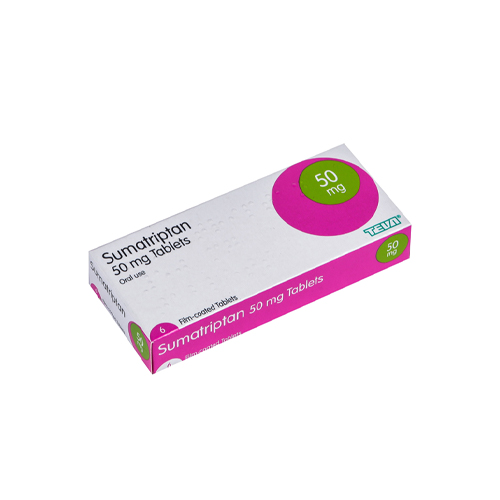
As a generic, low-cost version of the branded medicine Imigran, sumatriptan tablets are among the most widely prescribed migraine treatments in the UK. Taking sumatriptan does not prevent future migraines or reduce the frequency of migraine attacks, however it does provide relief from headaches, pains, and other headache symptoms (such as nausea and vomiting).
Order before 3pm — same-day dispatch (MON - FRI)
~5 min consultation
Secure & confidential · Reviewed by a UK prescriber
As a generic, low-cost version of the branded medicine Imigran, sumatriptan tablets are among the most widely prescribed migraine treatments in the UK. Taking sumatriptan does not prevent future migraines or reduce the frequency of migraine attacks, however it does provide relief from headaches, pains, and other headache symptoms (such as nausea and vomiting).
Sumatriptan is a prescription medicine used to treat migraine attacks once they've started. It belongs to a family of medicines called triptans, and it was the first triptan developed (introduced in the UK in 1991), which makes it the most established and widely used member of the group. In the UK it's available under the original brand name Imigran, as the over-the-counter pharmacy version Imigran Recovery, and as generic sumatriptan. It comes in several forms: tablets (50 mg and 100 mg), a nasal spray, and an auto-injector for subcutaneous injection, which gives prescribers options for different attack patterns. Sumatriptan also has a smaller role in treating cluster headache, particularly in its injectable form.
Migraine isn't a regular headache. During an attack, blood vessels in the head dilate, and a set of nerves around those vessels (the trigeminal nerves) release inflammatory chemicals that cause throbbing pain, nausea, sensitivity to light and sound, and the other classic migraine symptoms. Sumatriptan works on receptors called 5-HT1B and 5-HT1D, which sit on those dilated vessels and on the nerve endings around them. Activating 5-HT1B receptors causes the dilated vessels to constrict back to their normal size. Activating 5-HT1D receptors stops the trigeminal nerves releasing the inflammatory chemicals that drive the pain. The result is that the migraine attack is interrupted at its source rather than just having the pain dulled. That's why sumatriptan can stop an attack outright in many people, where ordinary painkillers can only take the edge off.
The difference matters because it explains why so many migraine sufferers find painkillers frustrating. Paracetamol works mainly in the brain, dampening pain perception. Ibuprofen works on inflammatory chemicals throughout the body. Neither addresses the specific blood vessel dilation and trigeminal nerve activity that drive migraine attacks. Sumatriptan does. For someone with a full migraine, taking a triptan early in the attack often stops the whole event, while paracetamol or ibuprofen only mute it. Painkillers still have a role though, in milder attacks, in people who can't take triptans, and sometimes alongside a triptan for added relief. NICE guidance suggests trying an over-the-counter painkiller first for new or mild migraines and stepping up to a triptan if that doesn't work.
As early as possible after the headache phase begins, and the earlier the better. This is one of the most consistent findings in migraine research: triptans work much better when taken at the first sign of head pain than once a migraine is fully established. Many people with regular migraines learn to recognise the earliest signals: a slight visual disturbance, a dull ache behind one eye, a strange stiffness in the neck, or a sense that "something's coming". Acting at that point can often abort the attack entirely. Waiting until you're vomiting and lying down in a dark room reduces the chance of a good response significantly. If you have an aura before your headache, the usual advice is to wait until the headache itself starts before taking sumatriptan, because the aura phase doesn't respond to triptans and you don't want to use up a dose too early.
The standard starting dose for tablets is 50 mg as soon as the headache begins. If that dose doesn't work well enough, the next attack can be treated with 100 mg from the start. If the first dose works but the migraine comes back within 24 hours, a second dose can be taken at least two hours after the first, up to a maximum of 300 mg in 24 hours. The nasal spray (10 mg or 20 mg) acts faster than tablets, taking around 15 minutes to start working, and can be useful when nausea or vomiting make tablets unreliable. The auto-injector (6 mg subcutaneous) is the fastest option, starting to work in 10 to 15 minutes, and is generally reserved for severe attacks, attacks that don't respond to oral or nasal forms, and cluster headaches.
The speed depends on which form you're using and on how early in the attack you take it. Oral tablets typically start to work within 30 minutes, with peak effect at around 2 hours. The nasal spray begins working in 15 minutes or so. The auto-injector is the fastest, with onset in 10 to 15 minutes. About 60 to 70 per cent of people get meaningful pain relief within 2 hours of taking a sumatriptan tablet at standard dose, and around half of those who respond get complete pain relief. Earlier dosing pushes those numbers up, while waiting until the attack is fully established pushes them down.
The general rule is to avoid taking a second dose of sumatriptan for the same attack if the first dose has had no effect at all. If it partially worked or worked and then wore off, a second dose can help, but if it did nothing at the first attempt, more of the same is unlikely to help. Options at that point include adding a painkiller such as ibuprofen or naproxen, an anti-sickness medicine like metoclopramide (which also helps the gut absorb other medicines better), or simply waiting the attack out in a dark, quiet room with hydration. For future attacks, it's worth a conversation with your prescriber about whether another triptan might work better. Triptans are not interchangeable; many people who don't respond to sumatriptan will respond well to rizatriptan, zolmitriptan, or eletriptan, and it's reasonable to try two or three before concluding that triptans don't work for you.
Most people tolerate sumatriptan well, but it has a fairly distinctive set of side effects sometimes called "triptan sensations". These include tingling, a feeling of warmth or coolness, mild flushing, and a sense of pressure or tightness that can be felt in the chest, throat, neck, jaw, or limbs. The chest tightness in particular tends to alarm people the first time they experience it, because the natural assumption is that it's something cardiac. In healthy people without heart disease this sensation is not dangerous and reflects the medicine's action on blood vessels and smooth muscle in those areas. It usually settles within 30 minutes to an hour. That said, real cardiac chest pain can also occur in someone with undiagnosed heart disease who takes a triptan, so the distinction matters. If the chest sensation is severe, prolonged, crushing, associated with breathlessness, or radiating down the arm, that needs urgent assessment rather than being assumed to be a "triptan sensation". Other common side effects include drowsiness, dizziness, fatigue, and nausea (although migraine itself causes nausea, so this can be hard to attribute).
Most combinations are fine, but a few interactions matter. Sumatriptan should not be taken with monoamine oxidase inhibitor antidepressants (MAOIs) or within two weeks of stopping one, because the combination can cause dangerous rises in blood pressure and serotonin syndrome. It should also not be taken with another triptan or with ergotamine-type migraine medicines on the same day, because the vasoconstriction effects can add up. Selective serotonin reuptake inhibitors (SSRIs) and serotonin-noradrenaline reuptake inhibitors (SNRIs), such as sertraline, citalopram, or venlafaxine, carry a small theoretical risk of serotonin syndrome when combined with triptans. In practice this is rare, and many people take both safely under prescriber guidance. Lithium also carries a small theoretical risk. Always tell your prescriber what else you're taking, including over-the-counter medicines and herbal remedies (St John's Wort is particularly relevant here).
Yes, in most cases. Sumatriptan causes blood vessel constriction, including in the coronary arteries that supply the heart muscle. In someone with healthy arteries this is harmless and transient, but in someone whose coronary arteries are already narrowed by atherosclerosis, even a small additional constriction can reduce blood flow to the heart enough to cause angina or, in rare cases, a heart attack. Sumatriptan is therefore contraindicated in established ischaemic heart disease, previous heart attack, coronary artery vasospasm (Prinzmetal's angina), uncontrolled high blood pressure, previous stroke, and peripheral vascular disease. It's also used with caution in people who don't have known heart disease but who carry significant cardiovascular risk factors: men over 40, postmenopausal women, smokers, people with diabetes, raised cholesterol, or strong family history of premature heart disease. In those situations, a cardiovascular assessment before starting a triptan is often recommended.
The safety data in pregnancy is limited but reasonably reassuring at current sample sizes. Sumatriptan has been used during pregnancy for many years, and the largest registries don't show a clear increase in birth defects compared with the general population. Despite that, most clinicians prefer to avoid sumatriptan in pregnancy where possible, particularly in the first trimester, and try non-drug measures (rest, hydration, cold compress, sleep) and simple analgesics like paracetamol first. If migraines remain severe and disabling, sumatriptan can be considered with appropriate counselling, often as the triptan with the most safety data in pregnancy. In breastfeeding, sumatriptan passes into breast milk in small amounts, and the traditional advice has been to avoid breastfeeding for 12 hours after a dose, although more recent guidance considers continued breastfeeding compatible with sumatriptan use in many cases. A direct conversation with your GP or midwife is the right way to handle these decisions rather than self-managing.
This is one of the most important things to understand about triptans, because the danger isn't using them, it's using them too often. Medication overuse headache (MOH) is a surprisingly common problem in which the body's response to frequent triptan or painkiller use becomes paradoxical: the medicines that were helping start producing rebound headaches, which then prompt more medicine use, in a cycle that can become entrenched. The current threshold is taking a triptan on more than 10 days a month, on average, for three or more months. Above that level, the risk of MOH rises significantly. If you find yourself reaching for sumatriptan 10 or more days a month, that's a strong signal that the conversation needs to shift from acute treatment to preventive treatment, which is a different category of medicine designed to reduce how often migraines happen in the first place. The treatment for medication overuse headache, somewhat counter-intuitively, involves stopping the overused medicine for a period to allow the headache pattern to reset, often with specialist guidance.
No, and this is a useful distinction to be clear about. Sumatriptan is an acute treatment: it interrupts a migraine once it's started. It doesn't change how often migraines happen, how severe they are when they do happen, or any of the underlying drivers of the condition. Prevention is a separate category of treatment, well worth discussing with a clinician if your migraines are frequent (more than four a month is a common threshold), severely disabling, or not well controlled with acute treatment. Options for prevention include beta-blockers (propranolol), topiramate, amitriptyline, candesartan, and a newer class of injected medicines called CGRP monoclonal antibodies (erenumab, fremanezumab, galcanezumab) that block the calcitonin gene-related peptide pathway involved in migraine. Botulinum toxin injections (Botox) are also licensed for chronic migraine prevention. Preventive treatments don't work overnight; they typically take six to twelve weeks of regular use before their effect can be properly assessed.
Several features call for prompt medical review. A first-ever severe headache, particularly one that comes on suddenly or feels different from anything you've had before, can be a warning of a more serious condition like meningitis or subarachnoid haemorrhage and should be treated as an emergency. Migraine that lasts more than 72 hours without responding to treatment ("status migrainosus") needs medical assessment. New neurological symptoms during a migraine, such as one-sided weakness, slurred speech, or confusion that doesn't fit your usual aura pattern, also need urgent review. Headaches that wake you from sleep, headaches that consistently get worse over weeks, or headaches associated with weight loss, fever, or other systemic symptoms warrant assessment. Beyond the red flags, a clinical review is worth having if your migraines are happening often, if they're significantly affecting your work or quality of life, if you're using triptans or painkillers on more than 10 days a month, or if you've never had a formal migraine diagnosis. Modern migraine care has changed considerably in the last decade with the arrival of CGRP-targeting treatments, and many people who pushed through quietly for years have done much better once they got into a proper plan.
Helpful articles and clinical guides related to this treatment category.
Free consultation
Online review by a UK prescriber
Next-day delivery
Order before 3pm where offered
Discreet packaging
Plain outer packaging