


We’re here to help.
Our friendly team is available to help Monday to Friday 9:00am – 5:00pm.
If you need urgent assistance, do not use this service. Call 111, or in an emergency call 999.
Our friendly team is available to help Monday to Friday 9:00am – 5:00pm.
If you need urgent assistance, do not use this service. Call 111, or in an emergency call 999.
Fast, discreet delivery
Free delivery over £40
100% UK-based pharmacy
All doctors & pharmacists UK-based
Free advice & support
Clinical support free · Mon–Fri 9am–5pm
Why Patients Choose Access Doctor
10+
Years serving UK patients
—
Verified patient reviews
1,000+
Licensed treatments
24/7
Consultation available
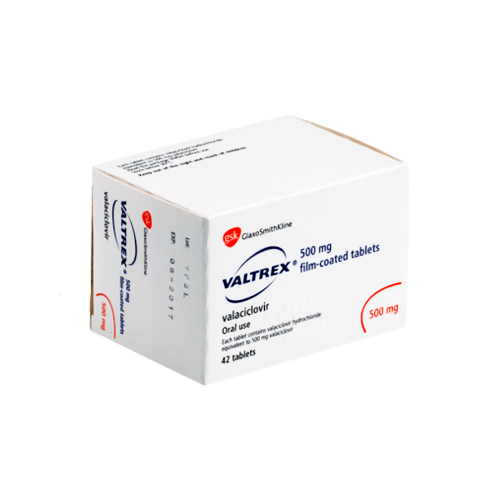
Valtrex tablets contain the active ingredient Valaciclovir, it works by killing or stopping the growth of viruses. Valtrex can be used to treat infections including genital herpes.
Order before 3pm — same-day dispatch (MON - FRI)
~5 min consultation
Secure & confidential · Reviewed by a UK prescriber
Valtrex tablets contain the active ingredient Valaciclovir, it works by killing or stopping the growth of viruses. Valtrex can be used to treat infections including genital herpes.
Valtrex is the brand name for valaciclovir, an antiviral tablet used to treat infections caused by the herpes simplex virus (HSV) — the same virus family responsible for cold sores around the mouth and lesions in the genital area. Once swallowed, valaciclovir is absorbed and then converted by the body into aciclovir, which is the medicine that actually does the antiviral work. Aciclovir blocks the herpes virus from copying its own DNA, but only inside cells that are already infected — it relies on a viral enzyme to switch on, which is why it leaves healthy cells largely alone. That selectivity is one of the reasons it is so well tolerated. Once activated, it slots into the viral DNA chain, halts replication, and lets the body's immune system catch up and bring the outbreak to an end.
The key difference is in how the medicine reaches the bloodstream. Plain aciclovir is poorly absorbed when taken by mouth — only around 15 to 30 per cent of each dose makes it into the circulation. Valtrex was designed to fix this. It's what pharmacologists call a prodrug: a molecule that has been pre-packaged so the body can absorb it efficiently and then convert it back into the active drug. As a result, the same amount of aciclovir reaches the bloodstream from a much smaller, less frequent dose of Valtrex. In practical terms, that means twice-daily tablets instead of three to five times a day, and once-daily dosing for some suppressive regimens. For many patients this is the difference between sticking to treatment and quietly drifting off it.
No — and it's important to be honest about that. Once the herpes simplex virus has entered the body, it travels along nerve fibres to a cluster of nerve cells (a ganglion) near the base of the spine, where it sits in a dormant state. From there it occasionally reactivates, travels back down the nerve, and produces an outbreak. Valtrex is highly effective at controlling those active phases — it shortens outbreaks, reduces their severity, and in daily use cuts down how often they happen — but it doesn't reach the dormant virus inside nerve cells, and no currently available medicine does. The reassuring news is that, for most people, outbreaks become less frequent and less severe over the years even without treatment, and the virus poses no long-term threat to general health.
There are two main ways Valtrex is used in genital herpes. Episodic treatment means taking a short course of tablets at the very first sign of an outbreak — usually for three days at a higher dose — to cut the outbreak short. It works best for people who have only occasional recurrences. Suppressive treatment means taking Valtrex every day at a lower dose to stop outbreaks from happening in the first place. It's typically considered for people who have frequent recurrences (often defined as six or more a year), or fewer recurrences that are severe, painful, or significantly affecting mood, relationships, or daily life. Suppressive therapy reduces recurrences by around 70 to 80 per cent, and the prescription is usually reviewed after a year to see whether continuing makes sense.
As early as you possibly can. The earlier you start, the more dramatically Valtrex shortens the outbreak, because the medicine works by blocking new viral copies — and most of those copies are made in the first 24 to 48 hours. Many people learn to recognise the very early warning signs, often called the prodrome: tingling, itching, burning, or a dull aching feeling in the area where outbreaks usually appear, sometimes a day or two before any visible blisters. Starting Valtrex at that prodromal stage can occasionally stop the outbreak from fully developing. If lesions are already established, treatment is still worthwhile but the benefit is more modest. This is why people on episodic regimens are often given a "standby" prescription to keep at home, so they can start treatment immediately rather than waiting for an appointment.
The doses depend on whether the outbreak is your first ever or a recurrence, and on whether you're using Valtrex episodically or as suppression. A first episode is typically treated with 500 mg twice daily for five to ten days. Recurrent episodes are usually treated with a much shorter, sharper course — 500 mg twice daily for three days is a common regimen and works just as well as longer courses for most people. Suppressive therapy is usually 500 mg once a day for people with fewer than ten outbreaks a year, sometimes adjusted up to 250 mg twice daily or 1 g once daily for those with more frequent recurrences. Always follow the exact dose your prescriber gives you, because the right regimen depends on your kidney function, your weight, and whether you have any condition affecting your immune system.
Many people feel an improvement within 24 to 48 hours of starting Valtrex, particularly if they began at the prodromal stage. Pain and tingling tend to ease first; the visible blisters and ulcers may take a few days longer to crust over and heal. A typical recurrent outbreak might last around 7 to 10 days untreated, and Valtrex usually shortens that by roughly two to three days, sometimes more if treatment is started very early.
Valtrex is generally very well tolerated, which is one of the reasons it's used so widely. The most commonly reported effects are headache, nausea, mild abdominal discomfort, dizziness, and tiredness. Some people develop a rash. More rarely, Valtrex can affect the kidneys, particularly at higher doses, in older patients, or in people who become dehydrated — which is why drinking plenty of water through a course of treatment is sensible. Very rare but worth knowing about are confusion, hallucinations, or unusual drowsiness, which are mostly seen in people with significant kidney problems. There's also an exceptionally rare blood disorder called thrombotic microangiopathy that has been reported with very high doses of valaciclovir in severely immunocompromised patients. Any sudden new symptoms while on Valtrex — particularly a rash with fever, unusual bruising, or a marked drop in urine output — should be assessed by a clinician.
It significantly reduces the risk, but doesn't eliminate it — and Valtrex is one of the few medicines where this question has been studied directly. A landmark trial published in 2004 followed couples in which one partner had genital herpes and the other did not, and showed that taking valaciclovir 500 mg once a day reduced transmission of the virus to the uninfected partner by roughly half. That's a meaningful reduction, but not a guarantee. Herpes can be passed on not only when visible lesions are present but also during periods of asymptomatic shedding, where the virus is on the skin without any symptoms. Combining suppressive Valtrex with consistent condom use, avoiding sex during prodromal symptoms or outbreaks, and being open with sexual partners about your status gives the best overall protection. Disclosure is often the hardest part for patients, but partners almost always cope better with honest information than with secrecy and surprise.
Not necessarily. People on episodic treatment only take tablets during outbreaks, so there's no ongoing daily commitment. People on suppressive therapy usually take Valtrex for several months to a year, after which their prescriber will often suggest a "trial off" period — partly because outbreak frequency naturally tends to decline over the years, and partly to confirm that suppression is still needed. Many people find that after a year or two of suppression, recurrences are far less frequent and they're happy to switch to episodic treatment, or even to stop altogether. This is a conversation to have with your prescriber rather than something to decide alone, because stopping suppressive therapy abruptly can lead to a brief uptick in outbreaks while the body adjusts.
Yes, in most cases. Valaciclovir has substantial safety data in pregnancy, and is generally considered safe to use when clinically needed. UK BASHH guidance supports its use during pregnancy, including suppressive therapy from around 36 weeks for women with a history of genital herpes — the aim being to reduce the chance of an outbreak (and therefore lesions on the genital tract) at the time of delivery, because the main concern in pregnancy is neonatal herpes, a rare but serious infection that can occur if a baby is exposed to active herpes during birth. If you have a first episode of genital herpes during pregnancy, particularly close to delivery, you'll be referred urgently to obstetrics, because the management is different. Valaciclovir is also compatible with breastfeeding; only very small amounts of aciclovir pass into breast milk.
Valtrex has relatively few significant interactions, which is another of its strengths. The two worth flagging are probenecid (a gout medication) and cimetidine (used for stomach acid), both of which slow the body's clearance of aciclovir and can increase blood levels — usually managed by dose adjustment rather than avoidance. Caution is also sensible with other medicines that can affect the kidneys, such as long-term high-dose NSAIDs (ibuprofen, naproxen) or certain antibiotics, particularly if you already have any kidney impairment. As always, tell prescribers about everything you're taking, including herbal remedies and over-the-counter painkillers, so any interactions can be considered properly.
Take it as soon as you remember, unless it's nearly time for the next dose, in which case skip the missed one and carry on as normal — never double up. If you're on a short three-day episodic course and miss a dose, the course is unlikely to fail because of one slip; just resume the schedule. If you're on suppressive therapy and find yourself missing doses regularly, that's worth flagging at your next review, because reliable daily dosing is what keeps the suppression working — and missed doses can make outbreaks more likely.
Pharmacologically, no. The active ingredient, dose, and bioavailability are the same, and the UK Medicines and Healthcare products Regulatory Agency requires generics to demonstrate equivalent absorption to the original brand. The differences come down to manufacturer, tablet appearance, packaging, and cost. Generic valaciclovir is now widely available in the UK and is usually significantly cheaper than branded Valtrex; many patients are dispensed the generic version without it making any difference to how they feel or how well treatment works.
A few situations call for in-person assessment rather than continuing alone. A first-ever episode should always be confirmed by a GP or doctor, ideally with a swab to identify the virus type, because the diagnosis carries long-term implications and other conditions can mimic it. Outbreaks that are spreading widely, becoming unusually painful, accompanied by fever, difficulty passing urine, or affecting your ability to walk all warrant urgent review — particularly the last two, which can indicate a more severe first episode requiring stronger treatment. If you're pregnant and develop symptoms, contact your midwife or GP promptly. And if outbreaks become more frequent than once every couple of months despite treatment, or are taking a real toll on mood or relationships, a discussion about long-term suppressive therapy is well worth having. There's no need to push through this quietly — it's a manageable condition, and the right regimen often makes a transformative difference.
Helpful articles and clinical guides related to this treatment category.
Free consultation
Online review by a UK prescriber
Next-day delivery
Order before 3pm where offered
Discreet packaging
Plain outer packaging

